



Lems Waterproof Outlander Boot Review
Hello hikers! I’m Dan Purdy, the gear guide manager at Wildland Trekking. Living on the Olympic Peninsula in the Pacific Northwest provides a uniquely challenging environment for my hiking boots. On the one hand, we live in a temperate rainforest with extreme moisture, bogs, wetlands, and plenty of rain. On the other hand, we have the Olympic Mountains providing intense, rugged terrain with abrasive rock, sharp/snagging plantlife, and extreme ecosystems from forest valleys to high alpine. What’s more, I have feet wide enough to rival our local Bigfoot. So, finding a comfortable boot that can handle this environment is a challenge, to say the least!
Therefore, I was delighted to test the Lems Outlander boots. With a wide, natural foot shape and a durable, waterproof upper, I was excited that these boots might be the answer to my footwear woes. From mountain hiking trips to responding to calls with our local SAR team, these boots immediately got thrown into the thick of it. So let’s look at what these boots have to offer and see how they did!
Award Winning Trekking Adventures

Since 2005, Wildland Trekking has been providing all-inclusive, guided hiking and backpacking trips across the USA and the world. Explore your world with the hiking experts!
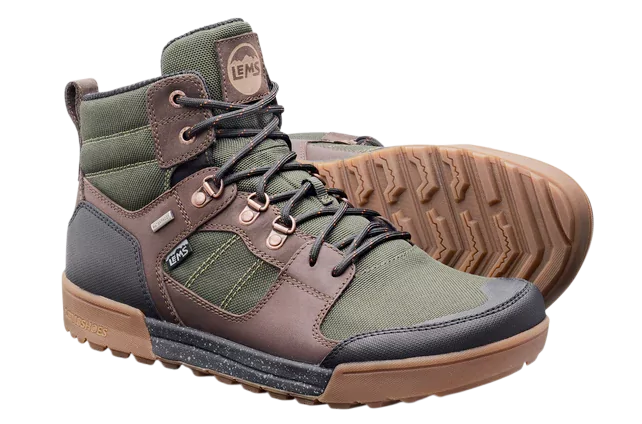
Outlander Boots Quick Look
For starters, let’s review the Outlander’s basic specifications.
- Price: $195.00
- Material: Leather and Nylon Upper
- Support: Zero-drop design with 5.5mm PU insole.
- Intended Activity: Hiking/Backpacking
- Sizing: Men’s and Women’s sizing with Lems WIDEST Natural-Shape™
Intended Use
The Outlanders are designed for rugged trails. With aggressive traction lugs, burly waterproofing, and a durable leather-nylon upper, these boots are aimed at serious hiking and backpacking in a range of environments. However, the colorways and overall aesthetic are casual and pleasing, giving these boots plenty of style for walks around the neighborhood or heading into town after leaving the trail.
Notable Features
The Outlander Boots include a couple of features that are worth discussing before we jump into the full review:
Zero Drop – with the heel and toes at the same height, which encourages a natural step.
Natural Foot Shape – gives your toes room to spread out to their natural shape. This promotes better posture and walking form while reducing injuries.
Lems Company Background
Lems’ founder, Andrew Rademacher, first started researching shoe design and production in 2008 after failing to find a pair of durable shoes that featured a wide, comfortable footbox. From that beginning and countless research hours, Lems released its first shoe in 2011 and has steadily grown, offering a “wide” selection of boots and shoes spanning from casual to rugged performance. Every one of Lems’ products features their signature natural footshape design, which provides a wide, comfortable space for your toes to spread out, promoting improved posture and foot health.
THE TEST – QUICK OVERVIEW
My testing involved almost everything the Olympic Peninsula has to offer.
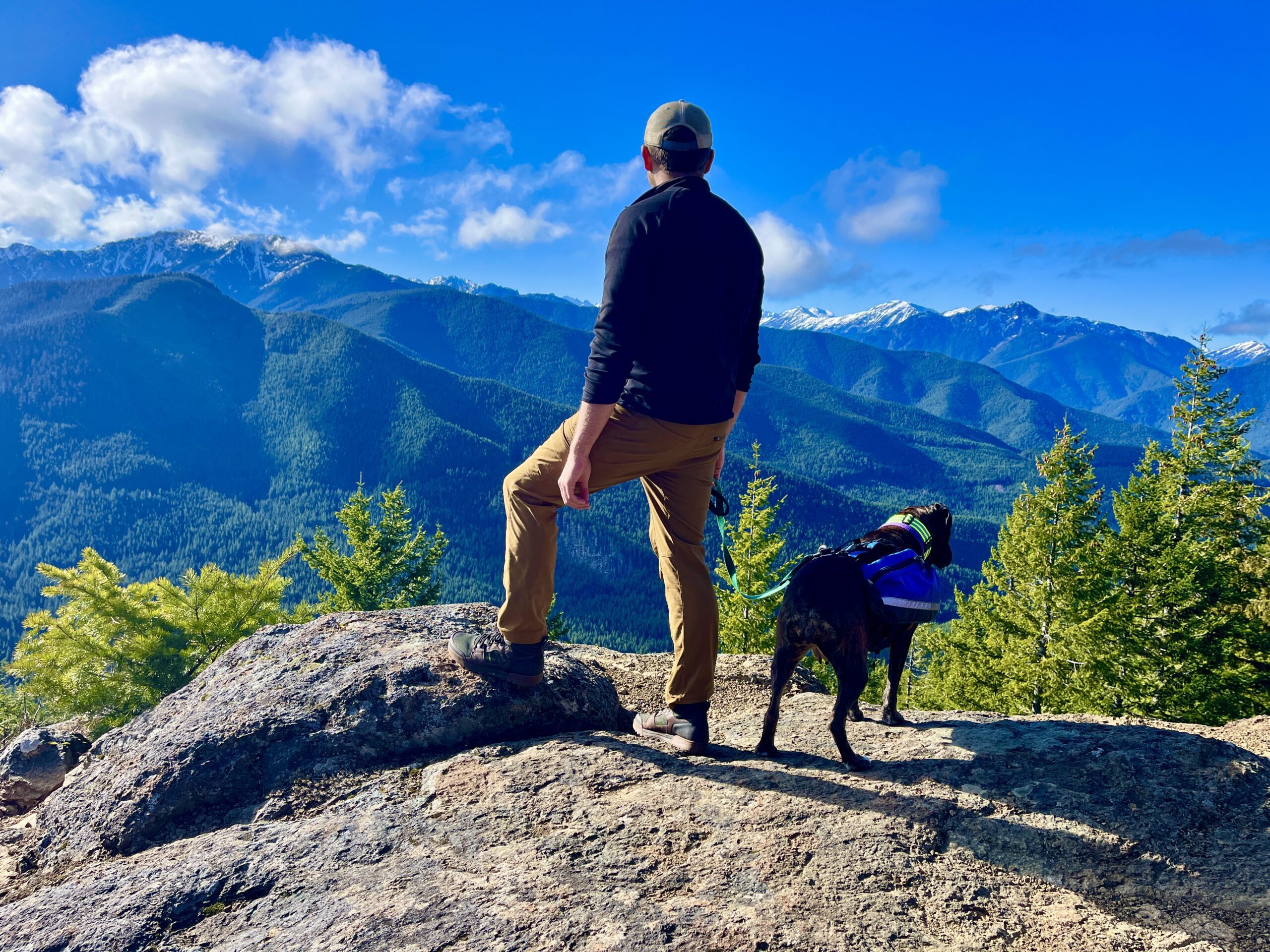
With these Outlanders, I encountered swampland, rocky alpine, steep and uneven trails, and abrasive blackberry patches. I also hiked both with a heavy backpack and without, testing the Outlanders' support for heavy loads versus moving fast and light.
The Review
Now that we’ve covered the basic characteristics of the Outlander Boots and the background of the Lems brand, it’s time for my full review. I’ll cover the main performance characteristics for hiking boots below (such as comfort, durability, breathability, and so on) and give each category a score from 1 to 5. The scoring key is below for reference, and I’ll back up each score with firsthand information from my field testing that led me to assign each score.
Test Score Key
1/5 – Poor
2/5 – Tolerable
3/5 – Fair
4/5 – Good
5/5 – Excellent
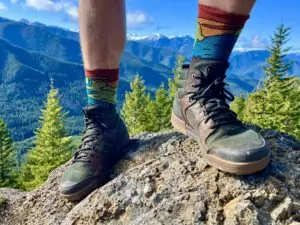
Durability – 5/5
These shoes are outstandingly durable, and I put them through a boot’s worst nightmare: pushing through thickets of sharp blackberries.
First off, understand that I don’t normally hike through blackberries for my own amusement. However, a recent search-and-rescue call put me in that exact situation, and these boots held their ground. Blackberry thorns are incredibly sharp, abrasive, and just awful for anything they come into contact with. This hike saw blackberry vines pull across the boots like jagged saw blades, me kick through sharp obstacles and rotten timber, and traverse saturated bogs. But after about two scratch-filled hours, the Outlanders emerged in quite good condition. Perhaps two or three extremely superficial snags on the exterior nylon upper, and that was it. No tears or punctures, and they’re ready for the next adventure!
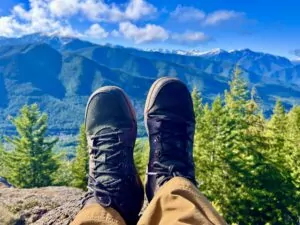
Comfort – 4/5
One of Lems’ main selling points is the wider, natural foot shape of their boots. As an excessively wide-footed hiker, I was incredibly excited to see how these boots felt. For years, most boots and their “wide” versions have caused very painful pinching in my feet.
For the Outlanders, I have to admit, I was initially disappointed when I tried them on. I immediately felt the telltale pinch at the widest point of my foot, and I was afraid I was condemned to another round of extremely painful hiking. But, I researched Lems’ natural foot shape design on their website, and they specifically state that the shoes are designed to be worn without the included insole. I immediately whipped those insoles out, and there was a night-and-day difference! My toes have enough room to spread out, and I don’t miss the insoles one bit.
These boots are so incredibly comfortable! I’ve hiked for hours and hours, and haven’t felt a single pinch. Additionally, the shoes are lightweight and flexible, so they truly feel like they’re moving with me on the trail and providing top-notch responsiveness and connection with the ground. In contrast, many heavy-duty hiking boots have such rigidity that they can’t conform to the terrain and rocks, and therefore feel overly clunky – not so with the Outlanders!
I deducted one point for this category simply because Lems touts its boots as incredibly wide and spacious. The Outlander, in particular, has Lems’ “widest” foot shape, but I still found them tight out of the box and needed to remove the insoles.

Quality – 5/5
I’ve found the Outlanders’ overall quality to be outstanding.
No fraying seams, no peeling rubber, and no cracking leather. These boots truly seem well-designed and built, and I fully expect them to last many seasons of heavy use.
My one teeny tiny piece of feedback is that the laces seem strangely short. I often find myself fiddling with oddly short ends of the laces in an effort to tie the boots, and double-knotting is just about impossible unless I pull the laces uncomfortably tight. Again, this is hardly a “quality issue” and is very easy to fix by swapping in a new pair of laces, but it’s worth being aware of.
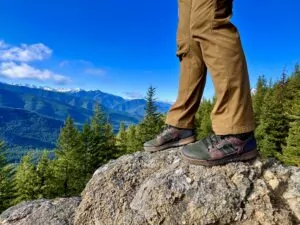
Support – 3/5
The Outlander’s support is fairly minimal compared to other backpacking boots. However, it’s supposed to be that way.
Lems boots have a zero-drop design, meaning the heel and toes are at the same height within the boot. This is intended to encourage a natural foot step and improve posture. However, this design is somewhat uncommon in hiking boots and can feel strange and unsupportive to the uninitiated. Along with this, Lems has a somewhat minimalist, laissez-faire approach to support, without beefy shims, bulky arch support, or rigid support structure.
Instead, Lems encourages a light, natural flow in their footwear with a lightweight, flexible design that easily moves through each step. Therefore, you won’t find the heavy-duty support you might expect from other boots, but I have to stress that this is very intentional and, in my opinion, extremely liberating.
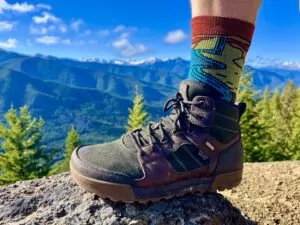
Weight/Bulk – 5/5
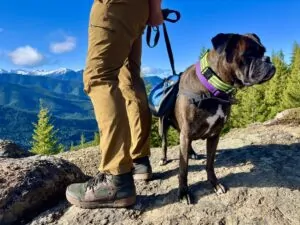
At only 14.7 ounces, the Outlanders are incredibly lightweight for a pair of hiking boots.
This lightweight design facilitates a feathery soft step that lets me move fast and light on the trail. As mentioned above, such a light design does mean a reduction in support, but this is a very fair trade in my opinion.
Honestly, the Outlanders are about the epitome of lightweight yet rugged hiking boots in my book. If you wanted lighter, I think you’d be looking at ultralight hiking shoes (not boots), or trail runners. And if you wanted more durability, you’d be looking at beefy, full-leather hiking boots that are significantly heavier.
Price – 4/5
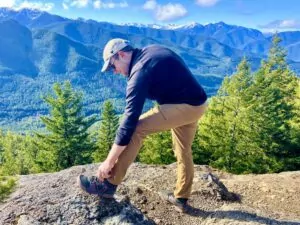
Let’s be clear, my good rating for this category does not mean the Outlanders are cheap. Far from it! At almost $200, these are quite an expensive pair of boots. However, I gave these boots a good rating for two reasons.
First, the sticker price of $195 is quite in line with the hiking/backpacking boots market. This price squarely matches the competition in the lightweight/minimalist boot category, and is actually on the low side for more beefy leather boots with all the bells and whistles.
Second, I firmly believe these boots deliver exceptional performance, comfort, and reliability for the price you pay. Yes, it’s a lot, but the investment yields solid quality and utility that, I believe, makes the price worth it.
Breathability – 3/5
Breathability is tough in fully waterproof boots. Much of the boot industry’s time is spent trying to bridge the gap between a fully waterproof membrane and allowing air and water vapor to pass through so your feet don’t turn into a swampy mess.
So, the Outlanders are “fair” for breathability. I definitely felt a little bit of heat and moisture build up while I was pushing hard on a mountain summit. But in most of my other tests with less intensive effort, these boots felt quite comfortable and could keep up with my output.
Waterproofing – 5/5
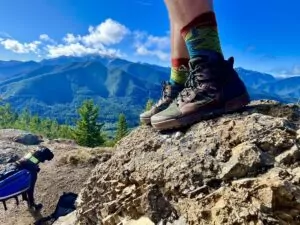
When I broke through a rotten log and landed directly in swampy muck, the Outlanders performed beautifully.
Zero, zip, zilch water intrusion. I was doubly impressed with this waterpoofing since my foot stayed submerged for several moments while I found a way to pull myself out of the muck, so top points for waterproofing!
Now, the long-term effectiveness of the waterproofing is still to be determined. I’m hopeful that the Outlanders will continue to perform fantastically season after season!
Bringing it Together
We’ve covered a lot of aspects of the Outlander Boots in this review! To help keep these boots’ strengths and weaknesses clear, I’ve compiled the pros and cons from my testing below for our review.
Pros:
- Ridiculously comfortable with a wide, natural foot shape
- Extremely durable
- Effective waterproofing
- Competitive price
- Featherlight and flexible design that moves light and fast with you
Cons:
- Less support than other options (but it’s intentional for a light, natural step)
- Lower breathability
Final Thoughts
For me, the Lems Outlanders are outstanding. They’re durable with effective waterproofing atop a grippy rubber outsole. For the harsh conditions I hike in, from rainforests to alpine scrambles, these boots get the job done and more! What’s more, Lems’ natural, wide footshape perfectly fits my infuriatingly wide feet, which have struggled for years to find comfortable hiking boots. However, I needed to remove the 5.5mm PU insole to find the comfortable width my feet needed (and Lems states that their shoes are perfectly functional without the insole).
For downsides, I truly don’t have many! These boots are light, flexible, and move freely with your foot through each step. On the flip side, this minimalist design yields less structure and support than other boots on the market, and some hikers may find this a little too unstructured. But for my purposes, this lightweight-to-support tradeoff is 100% worth it, and I love the flexible simplicity of the Outlanders. Additionally, these boots have the potential to build up some heat and moisture when you’re really pushing, but this is a classic compromise with a fully waterproof design, and I believe the more breathable nylon upper (as opposed to leather) helps mitigate this issue.
So overall, 10/10, and I absolutely recommend these boots for anything from multi-day hikes through rough country to a short day hike before heading into town. Thanks, Lems!
 Don’t forget to follow us on Instagram for the latest gear news!