


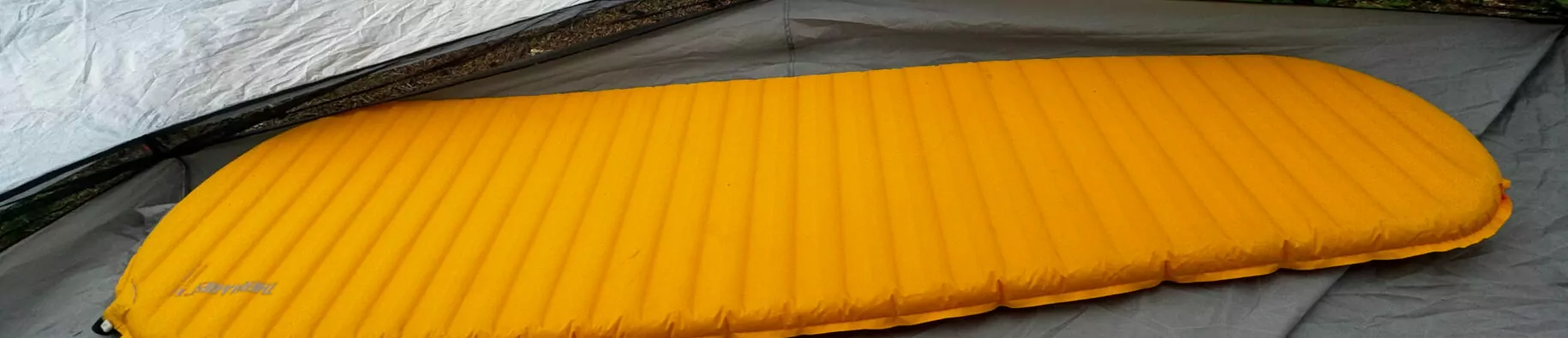
ProLite Pad Reivew
Getting good sleep in the backcountry is essential for a fun trip. Waking up in the morning feeling haggard, tired, and sore – although a little soreness may be unavoidable on a backpacking trip – is just a crumby way to start the day. So, one of the pillars of a comfy sleep system is your sleeping pad. This works with your sleeping bag, nighttime clothing, and pillow to form your cozy backcountry nest. But there are a bazillion sleeping pad choices out there. From foam to inflatable, extra thick to ultralight, and insulated to minimalist, there are so many options out there, and this particular choice can have huge implications for your sleep quality.
Hello everyone, I’m Carmelina, and I work as a backcountry guide for Wildland Trekking. Therefore, I’m acutely aware of just how important good sleep is in the wilderness because leading these adventures is my career, and I need to make sure that I’m rested and ready to rock and roll as soon as I get up in the morning. So, I was delighted to accept the Therm-A-Rest ProLite Pad this season to see what kind of comfort and support it has to offer. This review will detail the basic characteristics of this sleeping pad and my field-test results. Let’s get to it!
Award Winning Trekking Adventures

Since 2005, Wildland Trekking has been providing all-inclusive, guided hiking and backpacking trips across the USA and the world. Explore your world with the hiking experts!
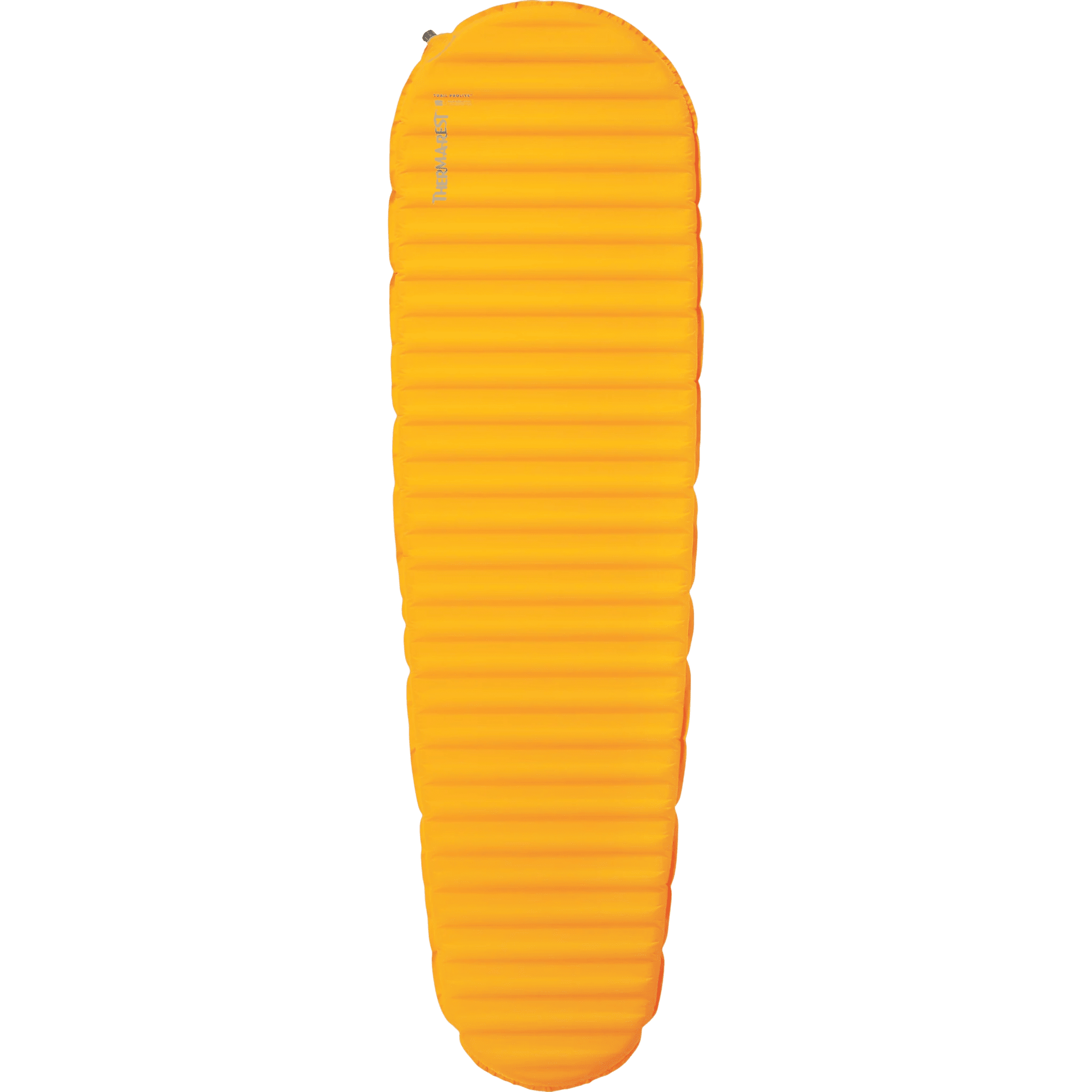
Trail ProLite Pad Quick Look
We’ll start with the Prolite Pad’s basic specifications. Note the mid-range R-value, good for 3-season camping, and the different size options.
- MSRP: $134.95
- Sizes: Regular, Regular Wide, Large
- Weight: 1lb 80z (Regular) to 2lb (Large)
- Insulation/R-Value: 3.8 (3-season)
- Thickness: 2 inches
Intended Use
The Trail ProLite pad is aimed squarely at backcountry camping. The compressible stuff sack, mid-thickness, mid-weight, and competitive insulation R-value are all designed to deliver the best possible performance while remaining lightweight enough to earn a spot in your backpacking kit. Of course, this sleeping pad also functions just as well for car camping, and about any other scenario where you could use an inflatable pad. However, classic 3-season backpacking is the main target here. Therefore, if you’re looking into winter backpacking or ultralight gear, then the Trail Prolite probably won’t fit the bill.
Notable Features
The Trail Prolite Pad has several features that set it apart from the competition. We’ll look at those features in more detail here:
- Self-Inflating Foam – expands on the inside of the pad when the valve is opened, automatically pulling in air and decreasing the number of breaths required for full inflation.
- Included Stuff Sack– Features a flared end design for easy loading, along with compression straps to minimize bulk in your backpack.
- One-Way Inflation Valve – Ensures there’s no wasted effort or breath when inflating this sleeping pad.
Therm-A-Rest Company Background
Therm-A-Rest got its start in 1970 in Seattle, Washington. During a spate of layoffs at Boeing, friends John Burroughs, Jim Lea, and Neil Anderson started working on a new sleeping pad design as a side project. They figured that closed-cell foam within an airtight vessel could combine the comfort of air mattresses with the insulating benefits of foam, and they were right. A year later, the first prototype came together. The following year, in 1972, they filed their first patent application. Since that beginning, those three friends have grown their brand with new offerings and started the parent brand Cascade Designs. Therm-a-Rest continues to operate under Cascade Designs along with the sister companies MSR, PackTowel, Platypus, and Seal Line.
THE TEST – QUICK OVERVIEW
My testing took place while leading a Wildland Trekking trip to Enchanted Valley on the Olympic Peninsula in Washington State.
During the summer season, this area is dry and sunny with relatively temperate temperatures. We encountered highs in the mid-70s Fahrenheit and lows in the high 50s. Therefore, I didn't push this sleeping pad's insulation to the edge since I was always comfortable and warm, but I did get a good appreciation for this pad's other capabilities.

The Review
So, we know the Trail Prolite Pad’s basic specifications and standout features, along with Therm-A-Rest’s background. Now it’s time to get into the nitty-gritty of my in-depth review. Below, I’ll describe the sleeping pad’s performance in several categories ranging from comfort to durability. For each category, I’ll assign a score from 1 to 5, with 5/5 being the best possible score. So let’s see how the Trail Prolite did!
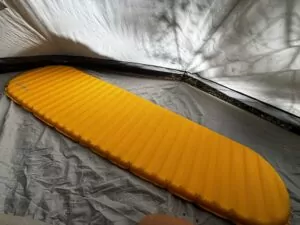
Comfort – 5/5
Weight/Packability – 3/5
Unfortunately, the excellent comfort that I discussed above comes with a weight penalty.
At approximately 1.5 lbs, this pad is on the heavier side of what I’ve used in the past. Also, that extra weight translates to increased bulk as the rolled-up pad (even with the provided compression sack) took up more space in my pack than I’m used to.
This doesn’t disqualify the sleeping pad from being a solid backpacking option. Not at all! And my middle-of-the-pack rating reflects this opinion. However, the Trail ProLite definitely isn’t an ultralite option, and this higher weight should be considered when weighing the pros and cons of this particular item.
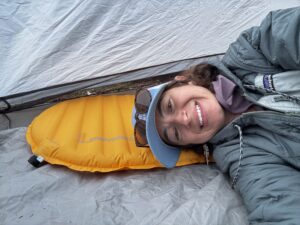
Set Up/Inflation Process – 4/5
Durability – 5/5
First of all, my sample Trail ProLite pad had zero leaks or punctures during testing. So that’s a great start for durability!
The outer fabric felt quite tough, and I had zero worries about durability for my testing. I feel that this pad can handle the usual buffet of backcountry foes quite well (such as abrasive rocks, sharp twigs, and dog toe nails). Of course, I can’t speak to the long-term toughness of this sleeping pad after only a couple of backcountry trips. But my initial results are very promising, and I believe this sleeping pad will last for many many seasons.
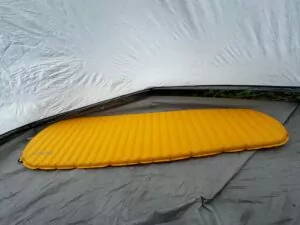
Warmth/Insulation – 4/5
The nighttime lows during my test were mild in the mid-50s Fahrenheit. So I can’t speak to extreme cold that you may find in alpine conditions or winter. However, mid-50s is a solid number you can expect to encounter on most 3-season adventures (spanning Spring, Summer, and Fall), and in this arena, the Trail ProLite proved to provide excellent insulation.
I never felt that I was losing heat to the cool ground beneath me, and I stayed warm and comfortable each night on the pad. The 2-inch thickness also felt like a sufficient buffer between me and the ground, and I never felt like my body was pressing through the pad and contacting the ground on the other side. So, for mild 3-season camping, the Trail ProLite appears to offer good insulation, but be sure to pair it with a decent sleeping bag for optimal comfort and warmth.
Price – 4/5
Bringing it Together
We’ve covered several aspects of the Trail Prolite Sleeping Pad. To help us see the big picture, I’ve compiled all the pros and cons from my review below for easy reference.
Pros:
- Easy to inflate
- Good comfort
- Quiet and not crinkly
- Decent insulation for 3-season camping
- Comes with its own compression sack
Cons:
- On the heavier side
- Slightly more bulky than other options
- A smidge more expensive than I’d expect, considering the weight and bulk
What is R-value, and why is it important?
R-value measures thermal resistance, aka how quickly heat gets transferred from a warm body to the cold ground. The higher the number, the more insulated an object is and the slower that transfer will occur.
Until 2020, there was no standardized testing for R-value, so manufacturers did their own testing or gave the pad an arbitrary temperature rating. But under ASTM F3340-18, sleeping pads are tested using the same equipment, giving the consumer a more accurate comparison from product to product.
In the world of backpacking sleeping pads, we typically see R-Values ranging from around 1.0 to 6.5. Where an R-Value of 1.0 has very little insulation and is perfect for warm or tropical hiking, while a 6.5 R-Value is highly insulated and ideal for shoulder seasons to mid-winter camping.
Final Thoughts
Overall, I would rate the quality of this pad as “good”. It’s a very comfortable sleeping pad, no doubt about it. I felt cozy every night, and I very much appreciated that the pad didn’t crinkle loudly as I shifted my position in the night. The pad material was also soft and forgiving, yet durable enough for heavy use in the backcountry. However, its bulkiness knocks down the overall score a few points. It’s slightly heavier and bulkier than my regular sleeping pad, and I definitely noticed these drawbacks on my testing trips.
But overall, the Trail Prolite Sleeping Pad gets the job done as a solid, middle-of-the-pack contender.