

Washington State Through the Seasons
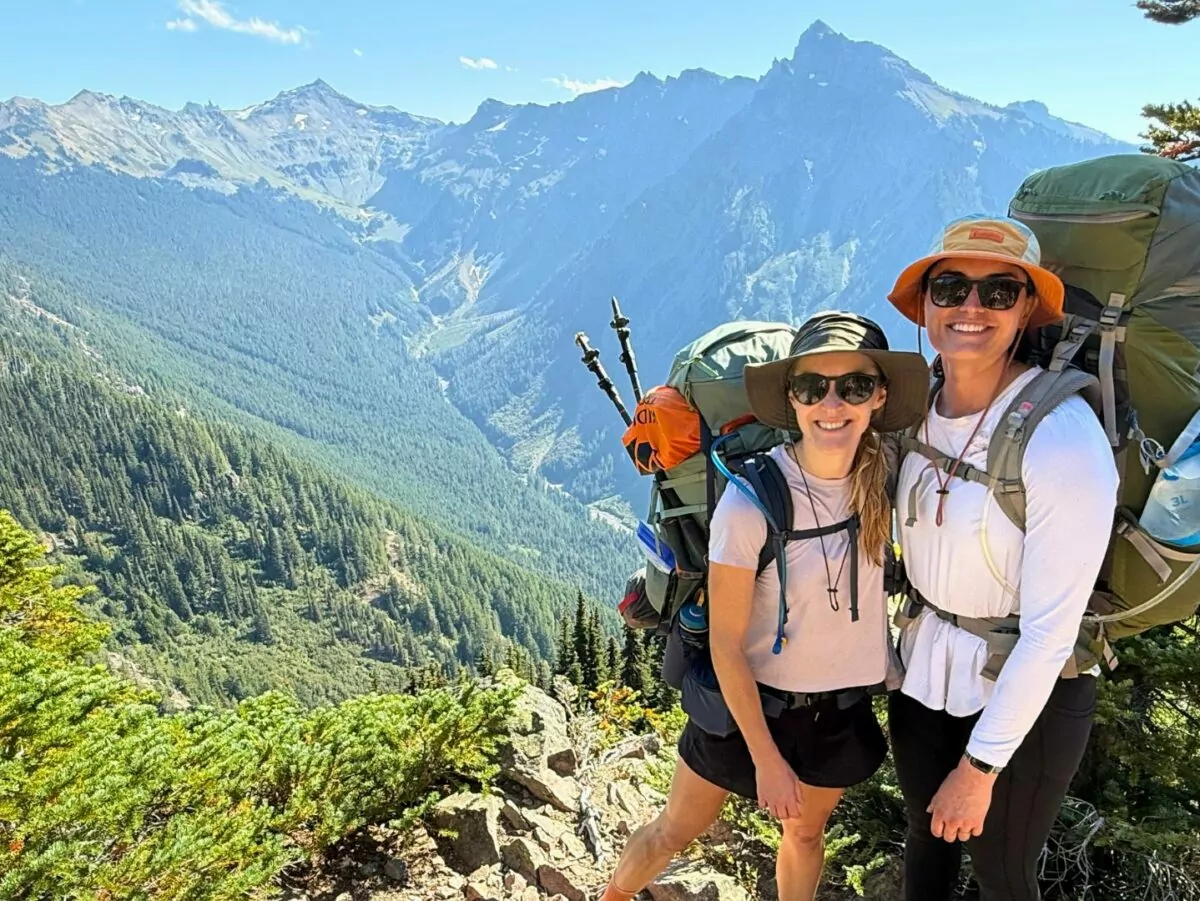
From the towering rainforests of the Olympic Peninsula to the imposing glaciated slopes of Mount Rainier and the improbably steep, vegetated cliffs of the North Cascades, Washington holds a nearly unparalleled diversity of terrain and habitat within its borders. That geographical diversity, combined with the state’s position in the path of westerly winds from the Pacific, contributes to a unique climate stereotypically known for its frequent cloud cover and drizzly, gray skies.
However, there is much more to Washington’s climate than rain and dreariness. Seasonal differences are stark: winter tends to see the bulk of the precipitation, while summer offers remarkably consistent sunshine and blue skies. As hikers, the best time to visit Washington state will depend on what you are looking to get out of your experience. Let’s explore the differences in seasonality so you can decide for yourself which is the best time to visit the Evergreen State.
Washington’s climate
Terrain influences
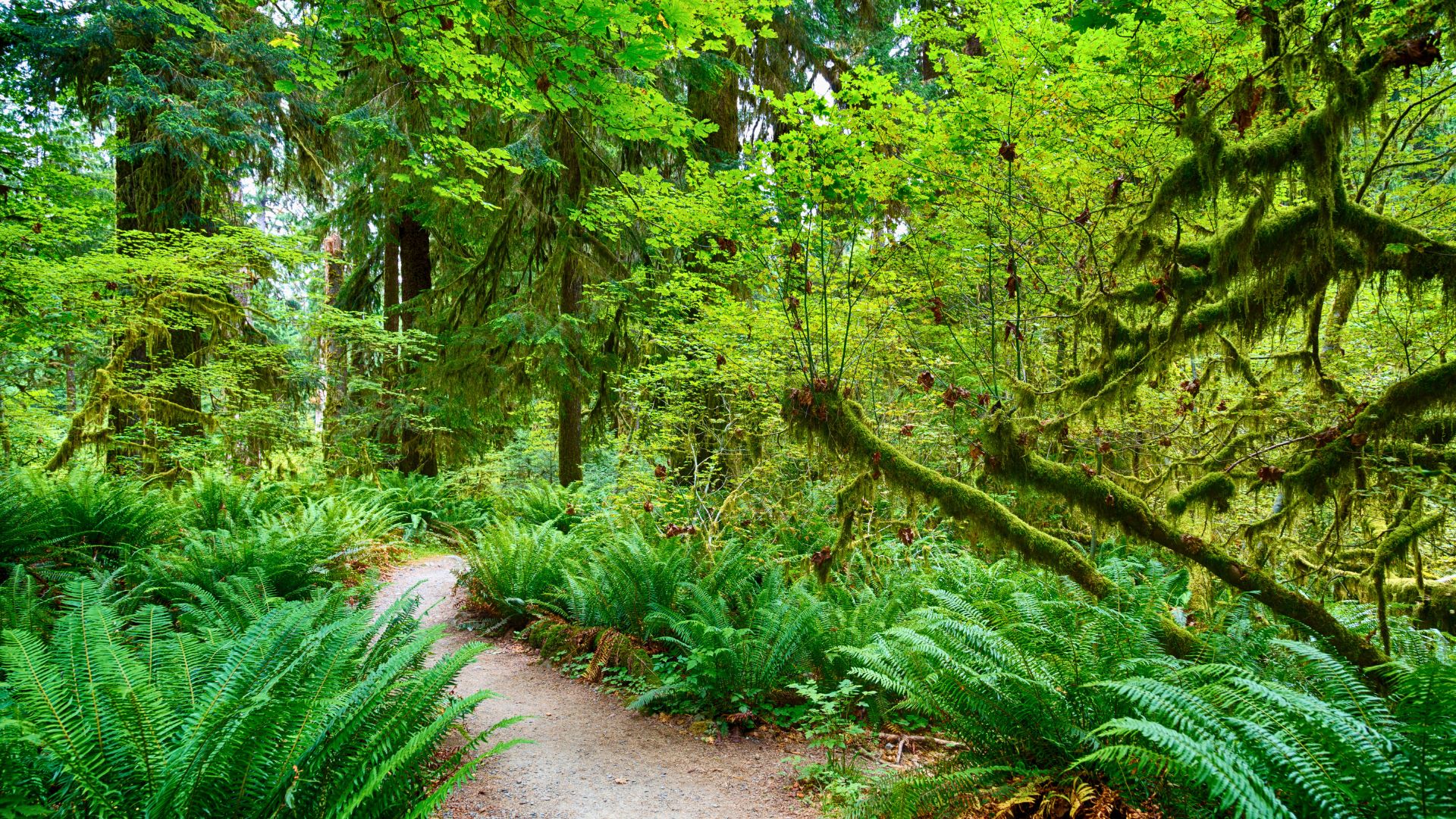
The very terrain features that draw millions of visitors to the state are what contribute to Washington’s unique climate. When warm, westerly winds blow in from the Pacific, they come face-to-face with the steep slopes of the Olympic and Cascade mountain ranges. That moisture-laden wind is then lifted, cooled, and released in the form of precipitation in a process known as orographic lift.
Seasonality
Seasonality plays an extremely vital role in Washington’s weather. In winter, low pressure systems routinely push moisture-rich winds from the Pacific into the state–roughly 75% of the state’s annual precipitation occurs between October and March. Conversely, high pressure systems in the summer act as a barrier to those wet Pacific storms and keep the area dry and warm.
Geographic differences
Places on the western edge of the ranges are some of the most heavily-precipitated in the contiguous US–the Hoh rainforest on the Olympic Peninsula receives ~140 inches of rain a year, and the slopes of Mount Baker in the North Cascades annually average over 600 inches of snow. Conversely, areas of Eastern Washington lie in the “rain shadow” of the Cascades; after all the precipitation is released over the mountains, there is little left for the areas further inland. Some parts of Eastern Washington average less than 10 inches of rain a year.
For hikers, many of the areas of interest lie in the wetter western portion of the state. The Olympic peninsula, Mount Rainier, and the North Cascades are all within 120 miles of the ocean as the crow flies. For these mountainous areas in particular weather and seasonality play an important role. For the purposes of this hiking-centric blog I’m going to focus primarily on these western areas of the state.
Summer in Washington State
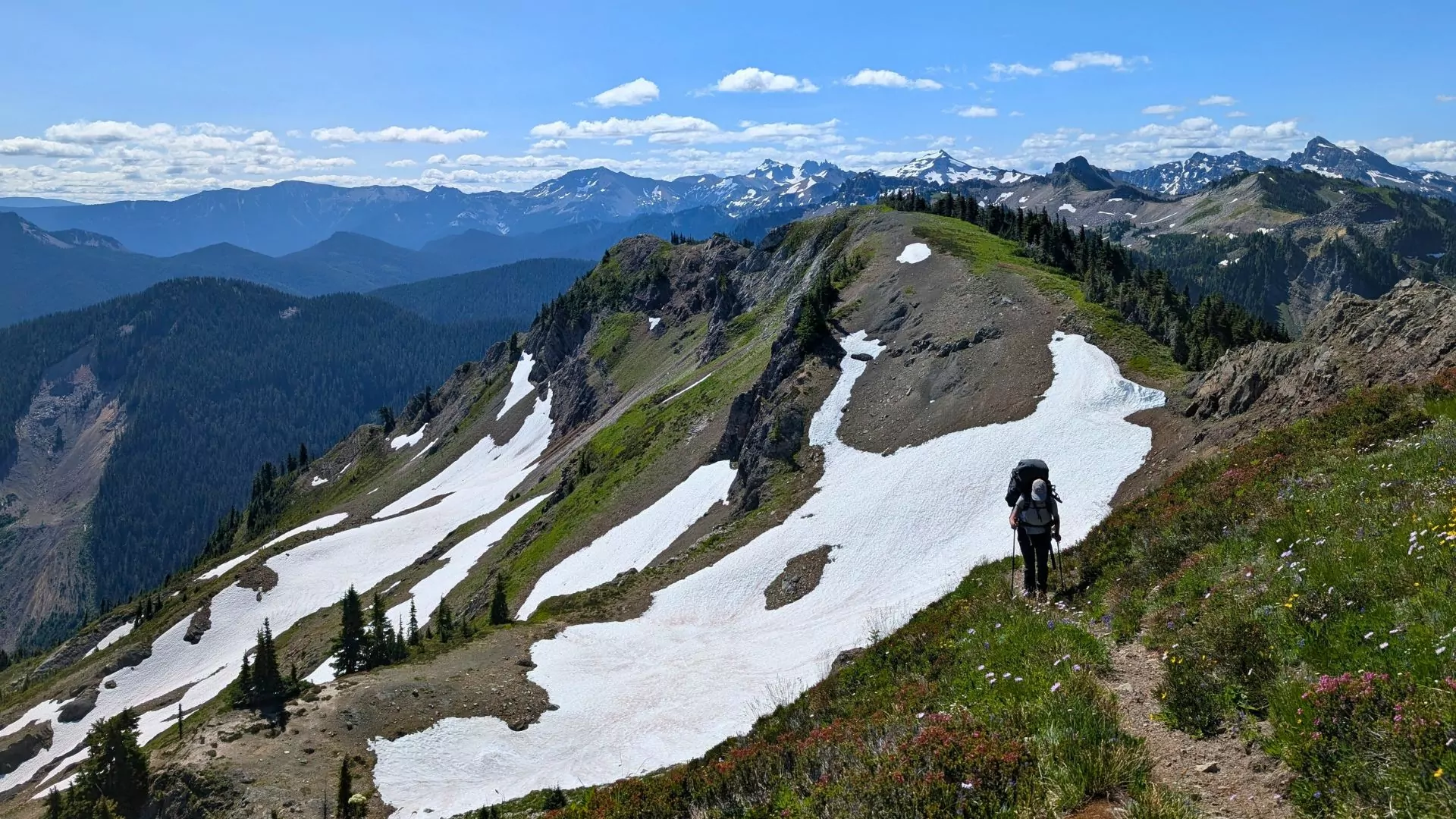
Summer is undoubtedly the best time to visit Washington state if you are looking to maximize your chances of blue skies and sunshine. By late June, weather has begun to stabilize and long days of clear skies are the norm. The western part of the state is cooled by the Pacific, and you can expect comfortable temperatures for hiking, with highs averaging in the 70’s. The six week stretch from mid July to late August in particular is remarkably stable and known for its “six weeks of perfect weather.”
For hikers, June marks the beginning of the prime camping season. The trails along the coast of the Olympic peninsula begin to dry out after the long rainy winter, and in the mountains of the Olympics and Cascades most trails are snow-free by July. Late July to mid August offers prime wildflower viewing at high elevations–Hurricane Ridge in the Olympics and the Skyline Trial in Mt. Rainier are just two examples of areas known for their world-class wildflower displays. By mid-September, the days begin to shorten and weather becomes slightly more unpredictable, but still can offer excellent conditions.
Unsurprisingly, with the good weather comes an increase in visitation. Memorial Day to Labor Day is peak season, particularly in the National Parks which see millions of visitors a year. It’s best to plan well in advance when booking accommodations and other reservations, and be prepared to share the trails with others, especially on the weekends.
Pros:
- Gorgeous, stable weather
- Ideal hiking temperatures
- Long, sun-filled days
- Prime wildflower and wildlife viewing
- Snow free mountain trails
Cons:
- Heightened visitation
- Smoky conditions some years starting July/August
Winter in Washington State
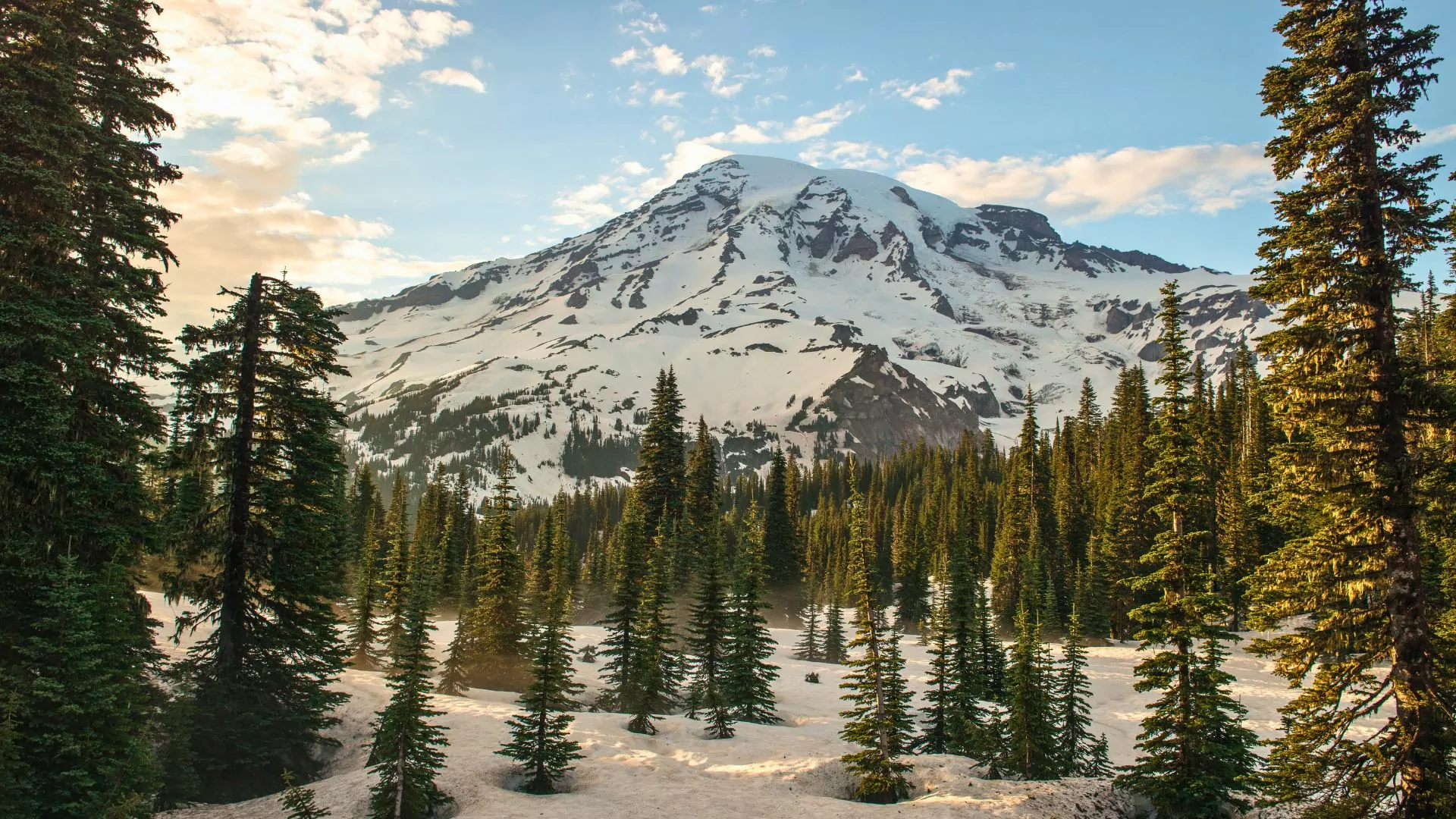
November to March is when the state sees the majority of its precipitation. Expect to find wet conditions and limited services in the National Parks–campgrounds, trails, and some roads are closed through the winter in all three of the parks of Western Washington.
This is the best time to visit Washington for snow lovers. Resorts like Mt. Baker ski area and Steven’s Pass offer exceptional skiing and are known for their high volume snowstorms. In Olympic National Park, check out Hurricane Ridge for a unique skiing opportunity that on a clear day offers incredible panoramic views of the Olympic mountains. Opportunities for cross-country skiing and snowshoeing are endless as well–the Paradise area at Mt. Rainier and Artist Point at Mt. Baker are top destinations.
For hikers, winter can offer some beautiful clear days, and at the lower elevations temperatures stay fairly mild; but it’s more likely than not that you’ll encounter some inclement weather. If you are in the area or able to book a trip on a whim, you can often enjoy some beautiful hiking weather, but booking a trip in advance is risky if you’re trying to depend on dry conditions.
Pros:
- Beautiful conditions for winter sports
- Reduced, offseason hotel prices
Cons:
- Limited services at National Parks
- Rainy conditions at lower elevations
Shoulder Seasons in Washington State
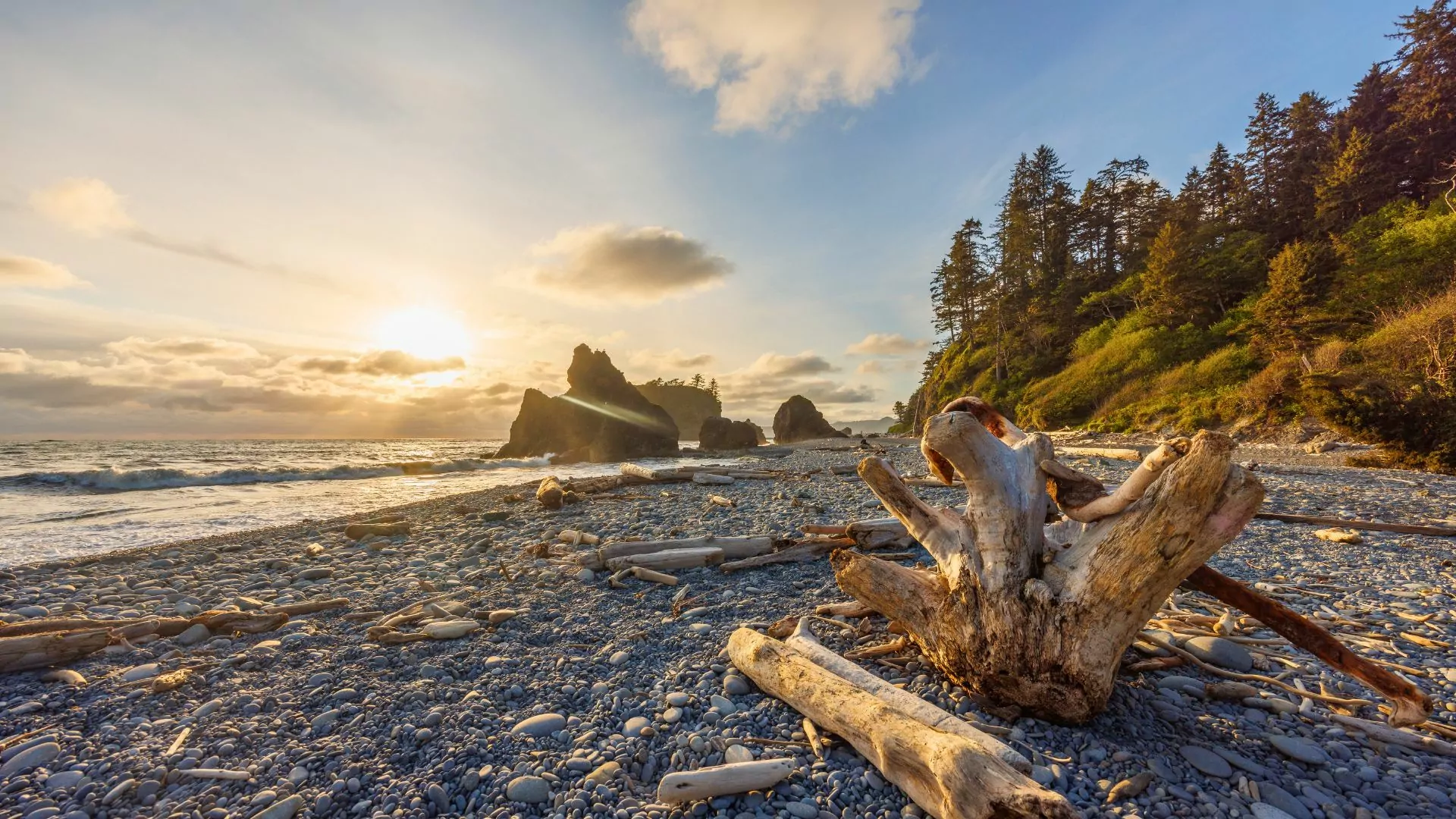
The shoulder seasons of spring and fall are the best time to visit Washington state if you want to escape the crowds and don’t mind the chance of some wet conditions. You’ll want to pack your poncho–you’re likely to encounter some rain–but there’s the chance you’ll get really great weather too.
Late September and October are often fairly dry, with cooler temperatures at night and increasingly more volatile conditions in the mountains as the season progresses. Fall colors are wonderful and if you time it right you can’t beat the combination of reduced crowds and moderate temperatures. Areas along the coast become moody and this can be a great time of year
Springtime (April through early June) sees similarly moderate temperatures. Showers are common, but there is less rain than in the winter months. Forests are vibrant and green, meadows are teeming with spring blossoms at lower elevations, and there is a keen feeling of rebirth after the long, gray winter. Mountain travel is still relatively inaccessible as roads and trails melt out from several feet of winter snowfall. Whale watching can be exceptional off of the Pacific coast, especially for Gray whales migrating through the area in May and June.
In conclusion
I’ve been lucky enough to visit Washington in each of the four seasons. It truly is a special place to visit at any time of year. Whether you’re looking to enjoy an alpine wildflower bloom in the July sun or seeking solitude in a misty autumn forest, each of the seasons has something special and unique to offer. Get out there and enjoy everything the Evergreen State has to offer. Happy hiking!