

Bear Country Common Scents: A Backpacker’s Guide to Coexisting with Bears
Recently, while doing some stream monitoring work I came up on some tracks in the mud. Five toes. Large, blunt claws. Curved heel pad. Yep; Ursa americanus – American Black Bear. Because it had rained the night before and there were no raindrops registering in the tracks, I knew they were fresh. So, I followed them through the creek and up an embankment. At the forest’s edge is where I lost them, underneath a whorled Sitka Spruce. Black bears, like their cousins, Ursus arctos horribilis (grizzlies) belong to the Ursidae family of the order Carnivora within the Mammalia class. Looking at the range map for both species would suggest that there’s a lot of bear country out there. For all the animals that we don’t see, it is abundantly clear that they are there. In my experience–and maybe yours–encounters happen.
Common Sense
To move safely through bear country, the most effective skill a backpacker can develop is common sense awareness. Understanding how bears perceive the world, their movements, what draws them, what discourages them, helps inform us on how to move through their environment. Everything begins with scent. A bear’s sense of smell is incredibly keen. Bears can detect the faintest scent of a berry patch or salmon spawning from a surprisingly far distance. Most conflicts stem from food conditioning. A forgotten snack wrapper, a bag with grease residue, or even the shirt you cooked in can produce a strong come-hither scent. Good scent management is the cornerstone of bear country safety.
Bears travel along efficient routes: riparian corridors, berry thickets, ridgelines, meadow edges, and well-used game trails. A tent pitched near a fruiting huckleberry bush or a trout-bearing creek may be directly in a bear’s path. Honing one’s skills of perception develops a wild awareness that feels empowering, and may help prevent an encounter where a bear returns for food and finds you instead.
Part of common sense awareness is learning about local bear populations before you get deep into bear country. Wildlife agencies maintain updated reports of sightings and human-bear conflicts. Bears are individuals, and any information about the habits of particular bears in the area is good beta. In years with poor berry crops or low fish populations, bears may expand their range and venture closer to humans.
No article can teach everything there is to know about bears, so I’ll briefly share my favorite educational strategy, which is: question everything! Questioning everything is a great way to test your knowledge and develop curiosity where you find knowledge to be lacking. For example: which species of bear is local to your nearest wilderness area? What are their preferred habitats? Are there just black bears? Both black bears and grizzlies? Are the local black bears always black? Are they brown? Could a young grizzly bear be mistaken for a black bear? You could really go on, but I’ll leave it there.
Read: Wildlife Safety on and off trail
Camping in Bear Country
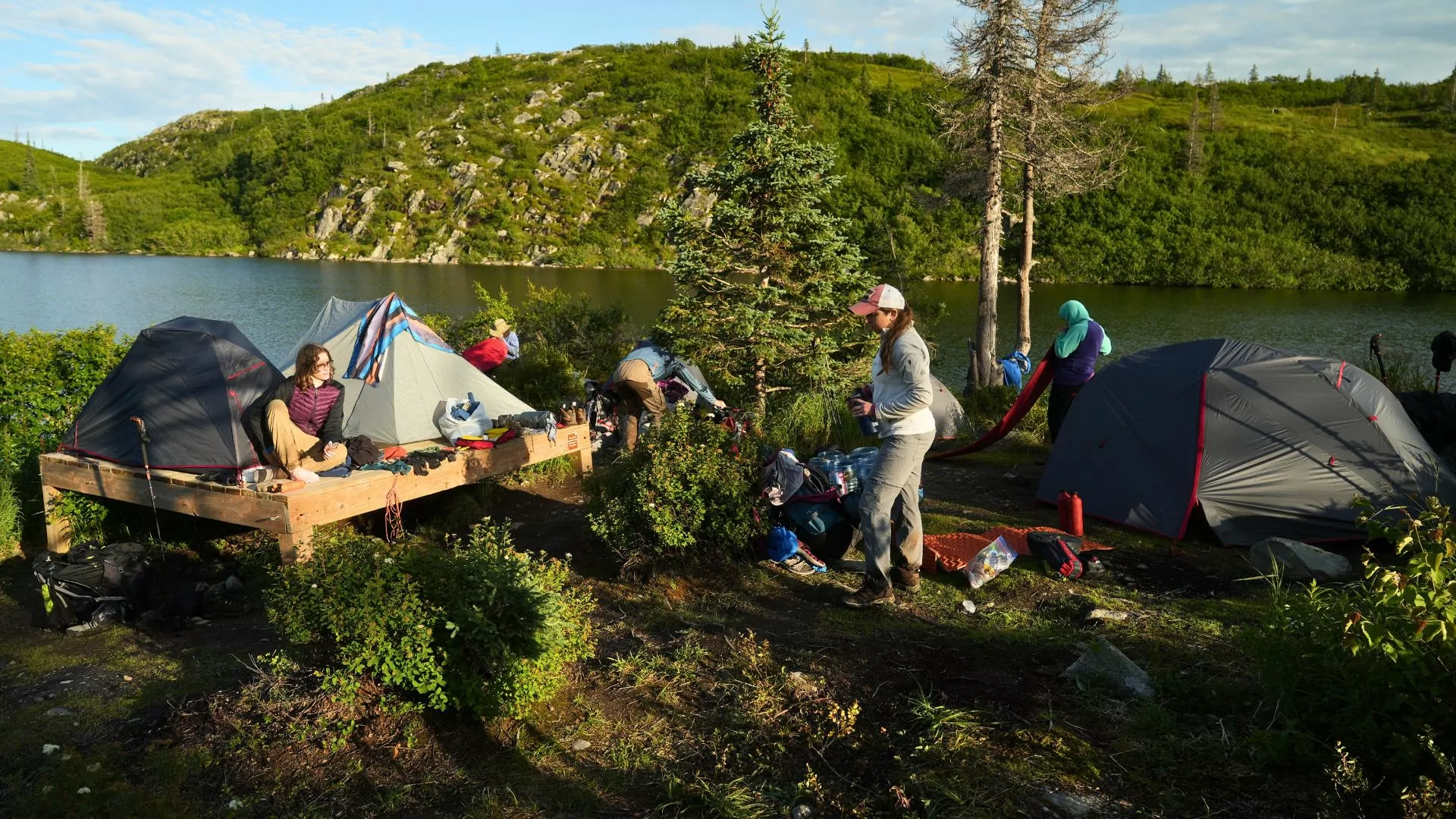
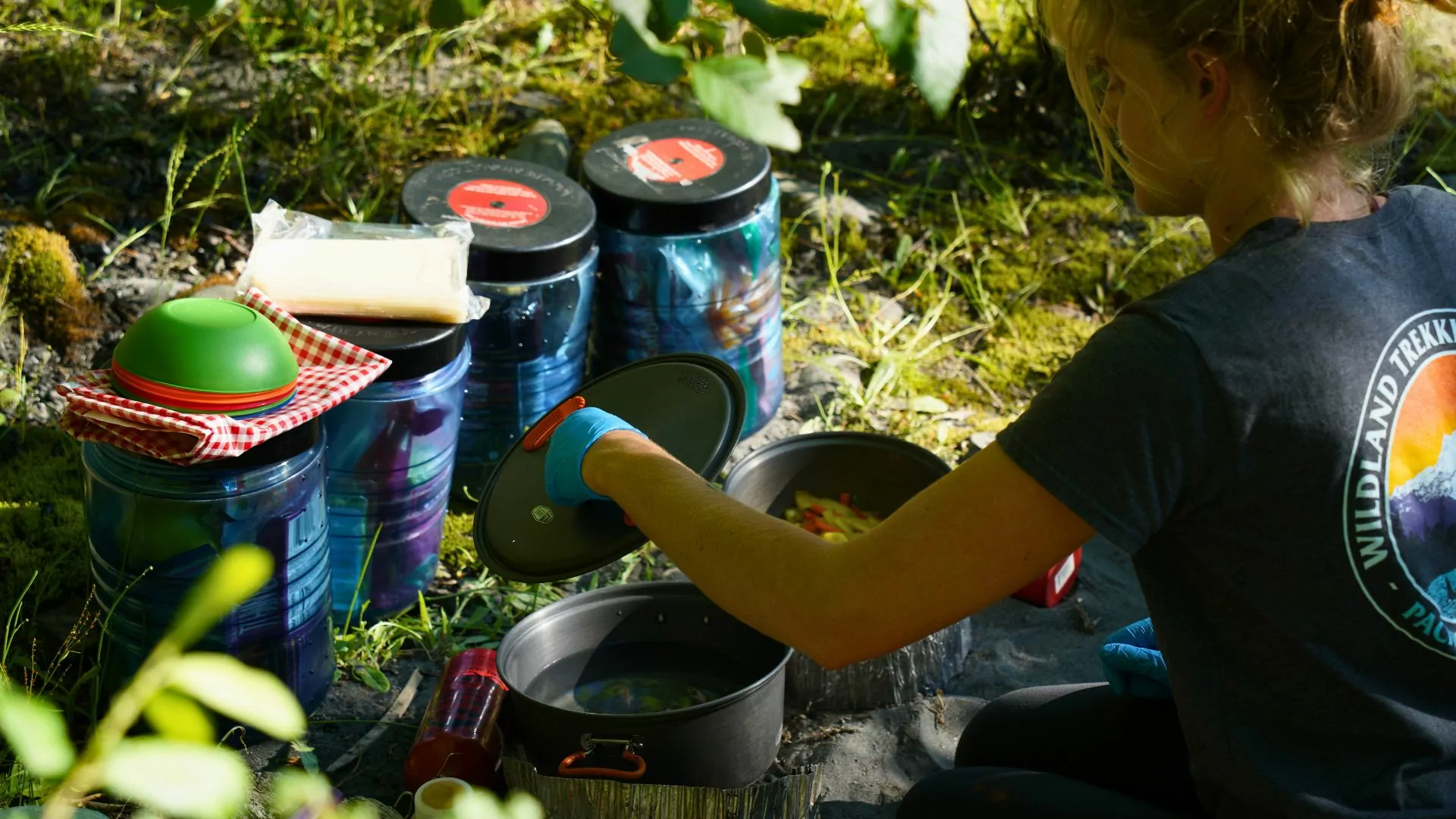
Camp setup in bear country should follow a scent-aware strategy. One useful model is the “Bear-muda Triangle”—three points arranged 70–100 yards apart: cooking zone, food storage zone, and sleeping zone. This separation ensures your tent isn’t part of the equation if a bear comes sniffing around. Bear canisters are heavy but the best method of backcountry food storage, even when not required. Pack all scented items—food, wrappers, chapstick, sunscreen, throat lozenges—inside. One time in bear country, I happened upon a campsite where someone had placed their muddy boots in a scented garbage bag and tucked the bag into the vestibule of their tent, before venturing for a swim in the alpine lake. When I happened upon the site, the tent had been ripped to shreds and Park Service had to get involved. This accentuates the point that scent awareness and proper storage is truly where most conflicts arise. Unfortunately, things did not end well for that bear.
Discerning bear behavior is essential for knowing when camp relocation is necessary. A bear simply passing through the outer edge of camp is usually neutral. A bear entering the Bear-muda Triangle or revisiting the site signals a need to relocate. Calm, firm and direct speech often works better than shouting or clanging pots and pans (although I have clanged my share of pots and pans), particularly with black bears. The reason for this is that bears tend to respond more predictably with calm and firm human voices than with sudden erratic noises.
Black Bears vs. Grizzlies
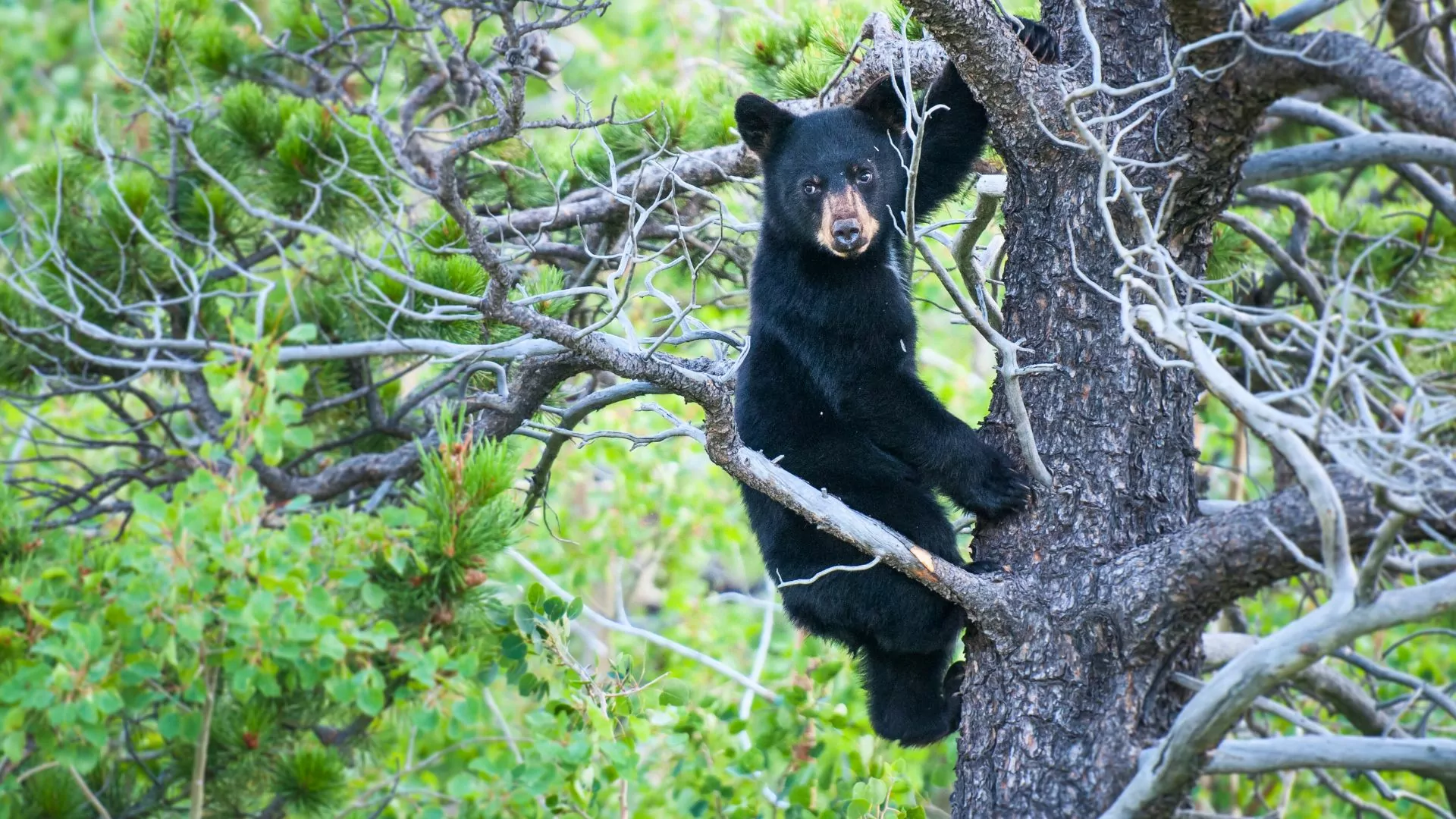
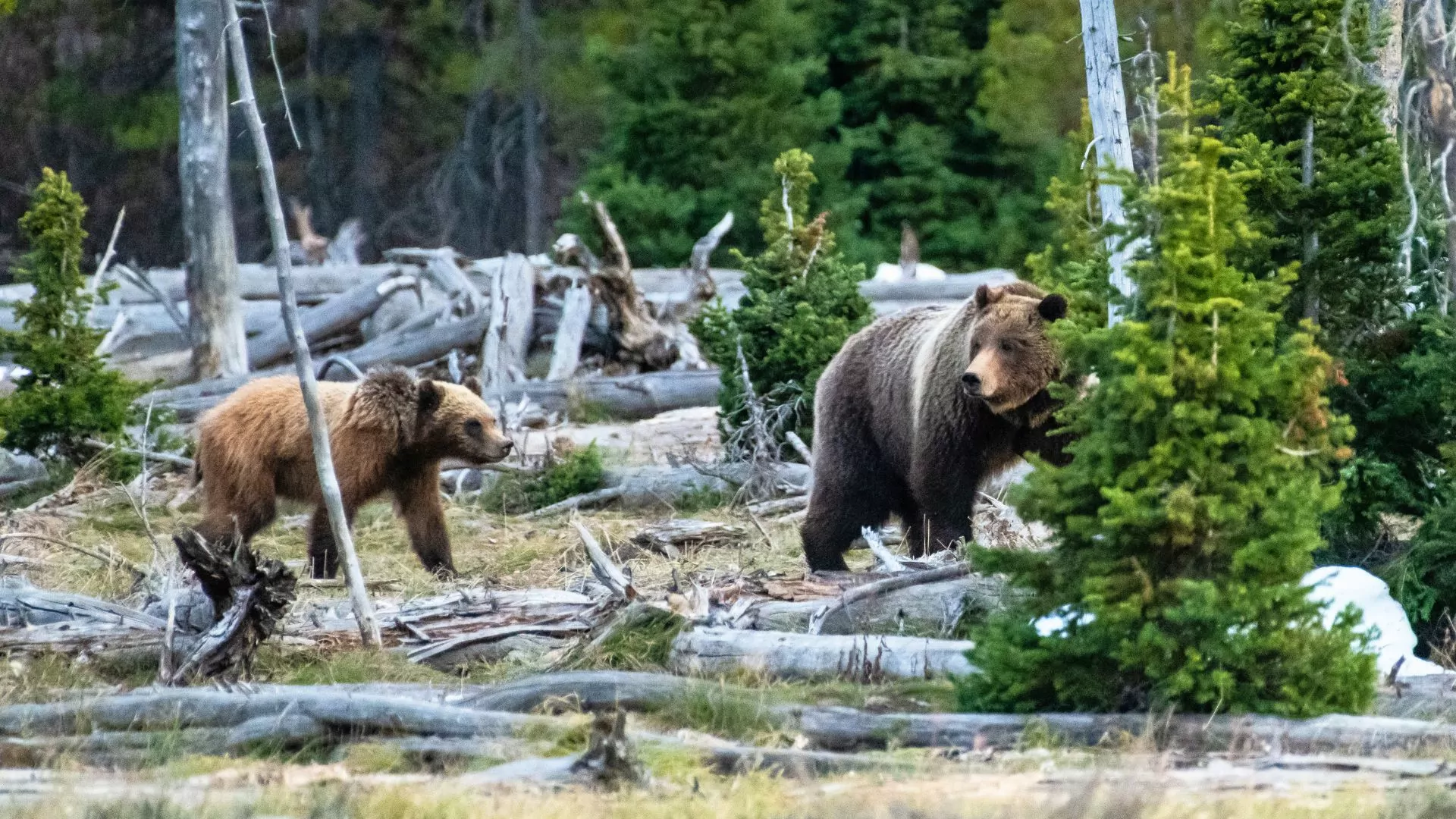
These practices apply to both species, but physical features and behaviors between these two species differ. Grizzlies, found in the Northern Rockies, Alaska, and parts of Northern Washington, are larger, have a shoulder hump, long digging claws, and a concave facial profile. Black bears are more widespread and are defined by a smaller, stockier build, straight snout, no shoulder hump, and short, slightly curved claws—plus a wide color range from black to cinnamon or even blonde in some areas.
With a larger territorial comfort zone and a greater tendency to stand their ground, grizzlies may exhibit defensive signals such as head-lowering and huffing when stressed. A grizzly rising onto its hind legs may indicate curiosity or aggression. Sows with cubs may bluff or retreat, while bears guarding carcasses might actually be more committed and dangerous. Any signs of a carcass—scavenger birds, strong odor, buzzing insects—or cubs warrant immediate detouring. In a grizzly encounter, stay calm, speak steadily, back away slowly, and prepare bear spray–which should be immediately accessible at all times. Grizzlies may perform short test charges or angled approaches. Practicing bear spray deployment before an encounter is useful in the rare event of such an encounter. Remember; never turn your back or run. Avoid direct eye contact, which may be perceived as a threat. In a rare defensive attack, playing dead is the protocol for a grizzly encounter. In grizzly country, triple ensure that every food particle, scrap, or sauce-stained article of clothing ends up in a bear canister.
Black bears tend toward non-confrontation. Firm, calm voices are more effective than yelling or whistling. Black bears who approach calmly may be food-conditioned and testing boundaries. In the event of a rare black bear attack one should deploy bear spray and fight back. A bear returning after initial contact signals the site is compromised and should be relocated by at least a kilometer if possible.
As fall approaches, bears enter hyperphagia, consuming thousands of additional calories per day to build fat for winter. During this period they are intensely food-motivated, making good camp hygiene and scent discipline even more critical in bear country.
Final Thoughts
Human food is tempting, and bears are opportunistic. Once food-conditioned, a bear becomes vulnerable to conflicts that often end poorly for the animal. By planning ahead, practicing scent management, maintaining spatial awareness, and respecting natural travel routes, backpackers support the long-term well-being of bear populations under pressure from habitat loss, climate change, and shifting food availability. Seeing bear country through a bear’s senses—scent, season, listening, and movement—keeps both people and bears safer. Finally, getting curious about bears and wildlife is as simple as questioning everything, then striving to find answers to those questions.
Beneath the whorled spruce tree, the presence of a claw-marked cedar and a large pile of fresh scat rich with fish scales, bones, and rose-hips illuminated how this bear was being supported by the land’s abundance. Recognizing that we share our world is essential to peaceful coexistence. This bear had returned and would likely return again, so I decided that staying to meet it was not good bear country protocol.