

I Hiked the Highest Mountain in Africa and You Can Too
When I first committed to hiking Mt Kilimanjaro, I knew it would be physically demanding, but I had no idea how deeply it would affect me emotionally, mentally, and spiritually. What surprised me most was that my journey didn’t begin at the trailhead. It began months earlier, with preparation, anticipation, and the determination to take on one of the world’s most iconic climbs.
Getting There
Traveling to Tanzania required nearly 24 hours of flights, connections, and waiting in airports. When I finally stepped off the plane at Kilimanjaro International Airport (JRO), everything suddenly became real. The airport is about a 45-minute drive from Moshi, where I stayed before the climb, and that drive offered my first authentic glimpse of Tanzania. I watched men and women walking along the roadside, some carrying baskets or buckets of water on their heads with astonishing balance, while others pushed heavy loads on their bicycles. It was my first moment of feeling fully immersed in a part of the world so different from my own.
Experiencing Tanzania
After such long travel, I was thankful to have a recovery day before starting the Mt Kilimanjaro hike. That day turned out to be one of my favorite parts of the entire trip. I hiked with my group through lush farmlands to the stunning Materuni Falls, where the mist from the powerful cascade cooled the warm air around us. Later, we visited the Chagga people and learned how coffee is grown, harvested, dried, roasted, and brewed all by hand. They sang and danced throughout the entire process, turning something as simple as making coffee into a joyful cultural celebration. Their warmth made me even more excited for the days ahead.
Training for The Trip
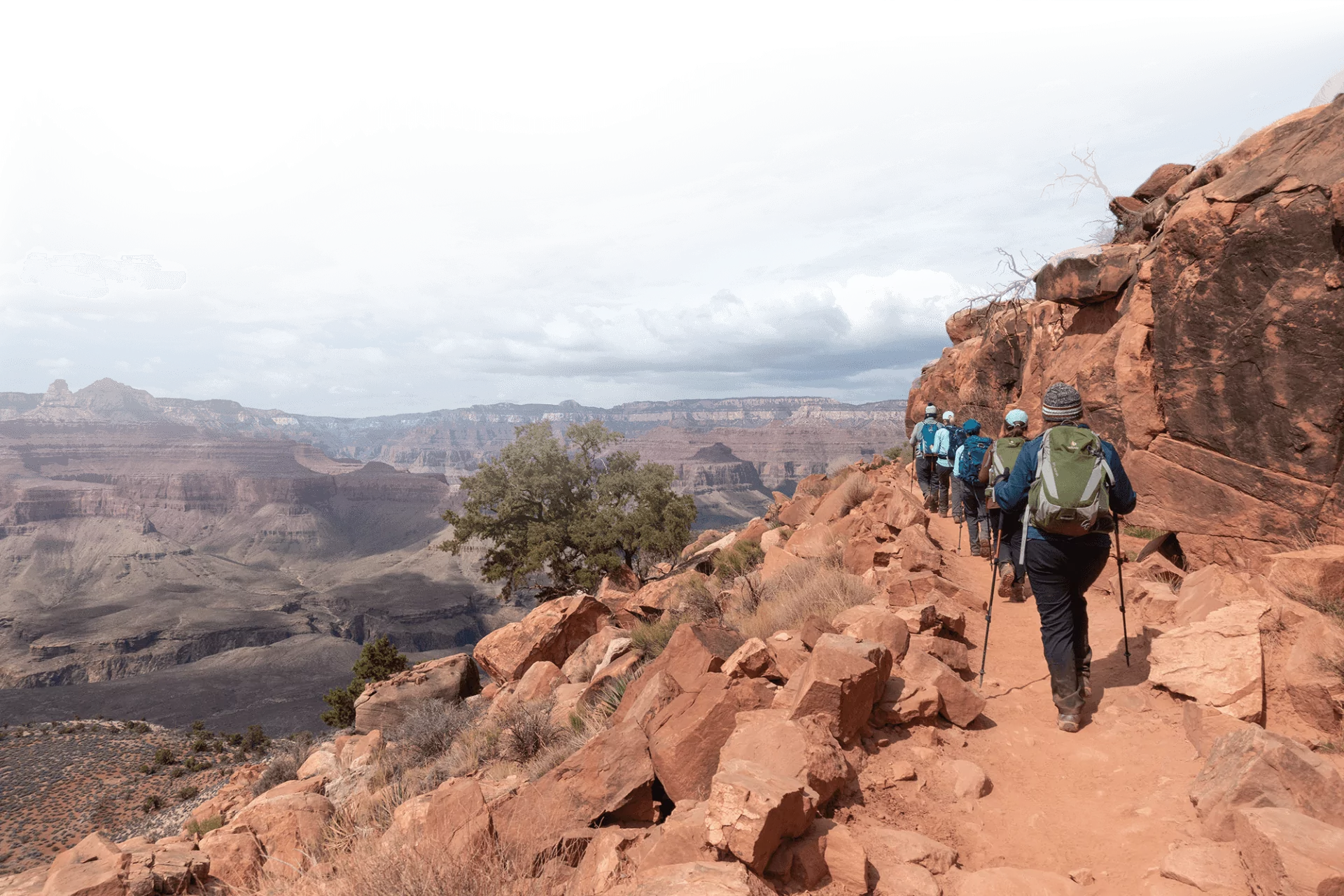
Preparing for the Mt Kilimanjaro hike required true commitment. I trained for months by running several times a week, incorporating strength training, and finishing weekends with long hikes. Still, no amount of conditioning can fully prepare you for the unpredictable effects of altitude. I recommend that anyone training for this climb includes steep ascents, long descents, and if possible a higher altitude hike. My trekking poles became my most valuable tool, especially during the long downhill sections, helping reduce impact on my knees and maintain my balance.
The Hike
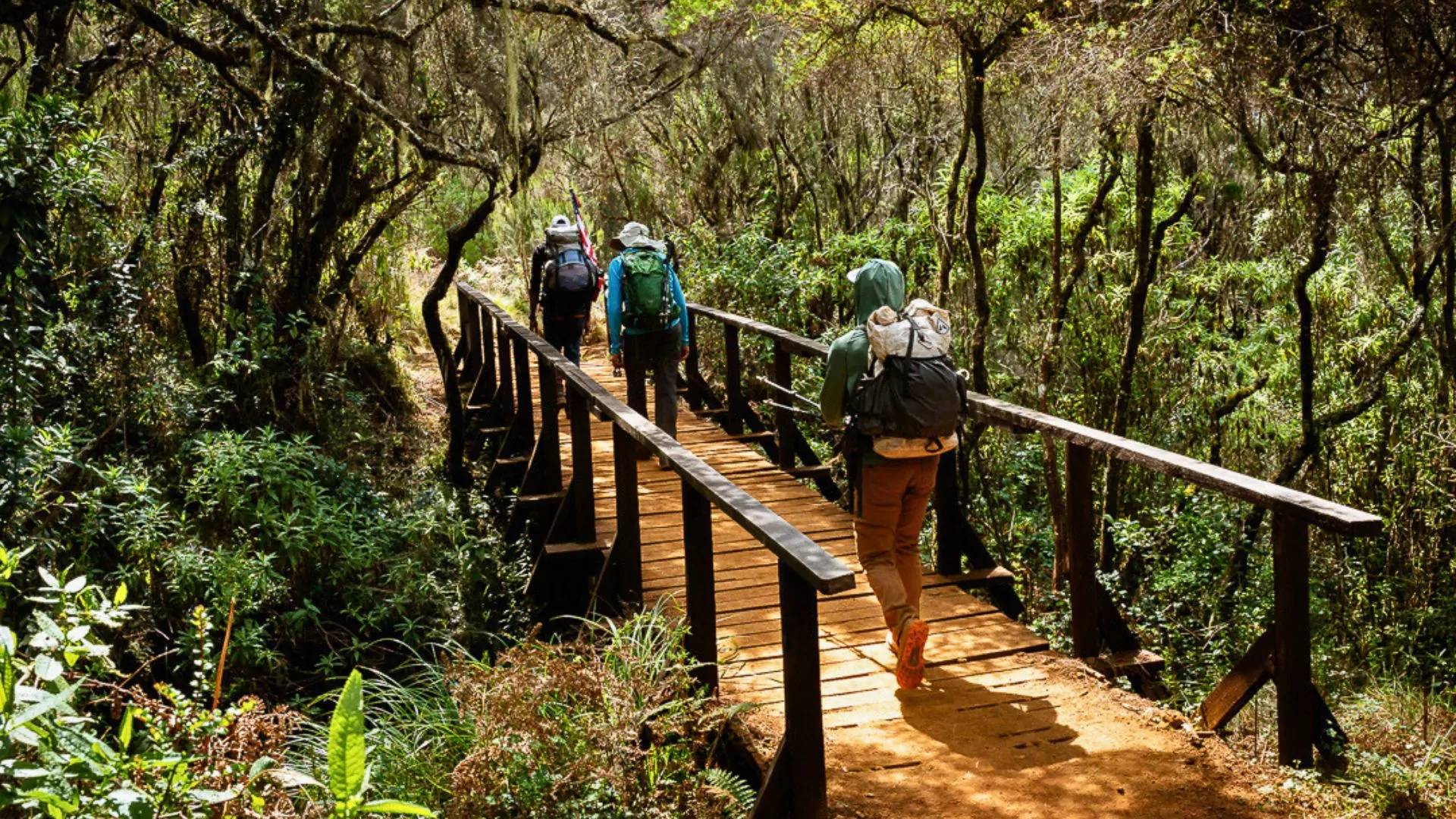
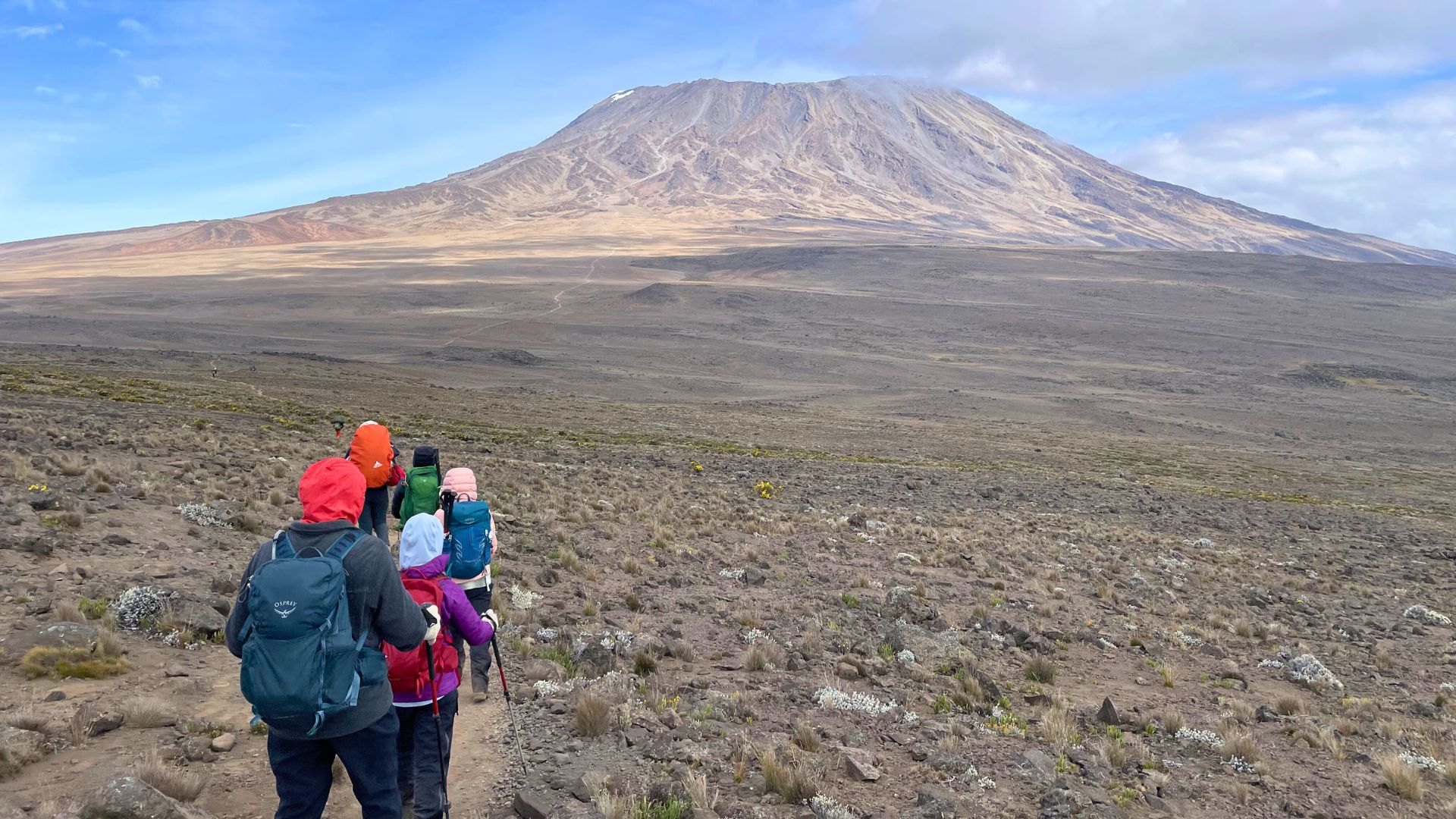 The first day of hiking Mt Kilimanjaro was more beautiful than I imagined. The hike started in a dense rainforest surrounded by towering trees, vibrant green leaves, and monkeys jumping from branch to branch overhead. Each day the trail and scenery changed as I climbed higher. The trail gradually shifted from soft soil to rocky paths and natural stone steps. By the time I reached the high shrub landscapes, I felt like I was ascending into the clouds and a layer of fog settled around us. As I moved into higher altitudes, the scenery transformed dramatically into an alpine desert, barren yet breathtaking, with sweeping horizons and powerful winds. Sunrise and sunset at those elevations were some of the most surreal moments of my life. The colors seemed sharper, the sky wider, and the silence deeper.
One of the phrases I heard constantly while hiking Mt Kilimanjaro was “Jambo” which means “hello,” and “pole, pole,” which means “slowly, slowly” in Swahili. At first, the slow pace felt almost unnatural, but it soon became meditative. Moving slowly gave me time to breathe, to take in the scenery, and to reflect on how far I had come. I found peace in the stillness of the evenings. After dinner, I would step out of my tent and stare up at a sky filled with endless stars, brighter and more abundant than anything I had ever seen back home. 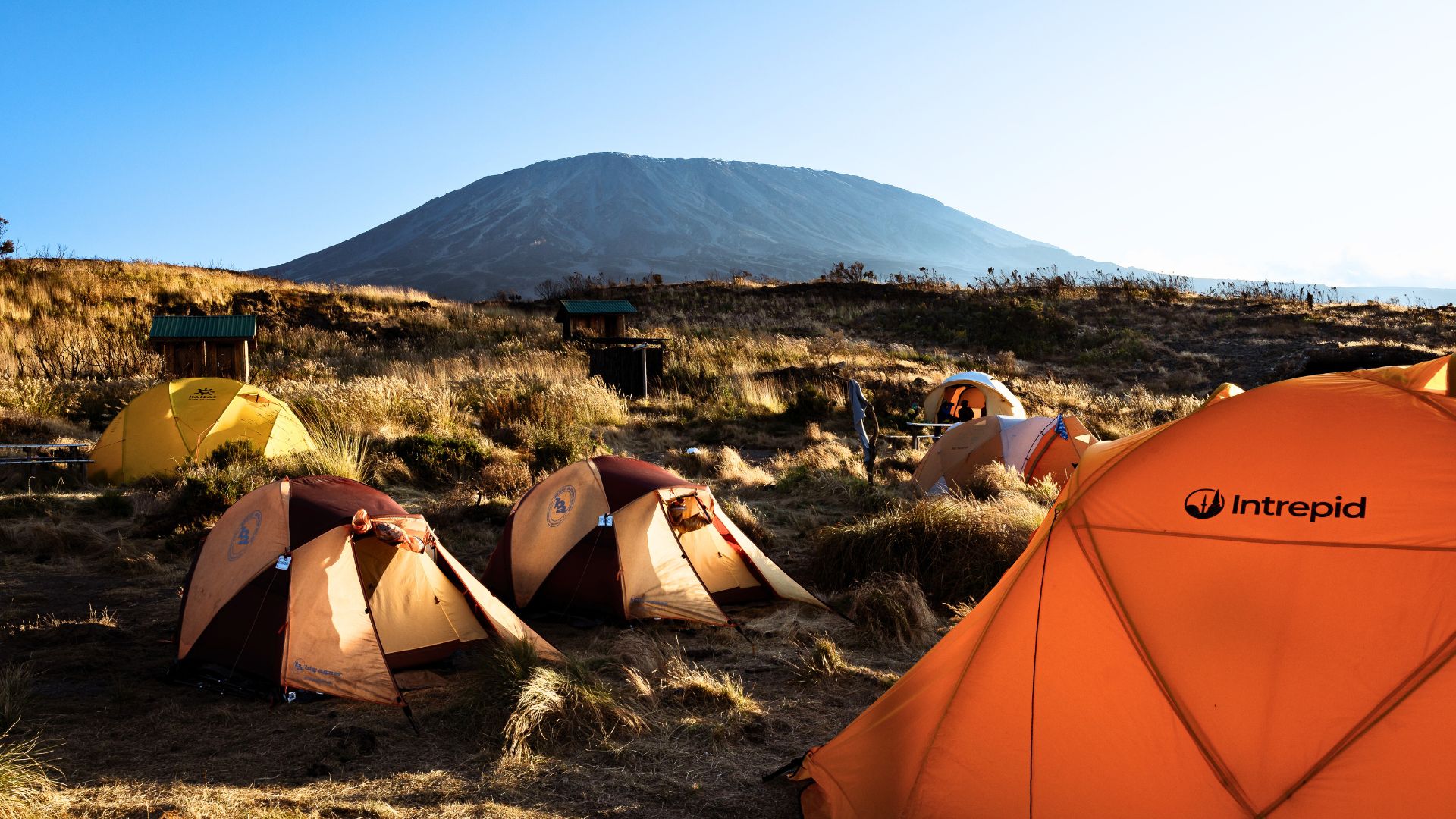 Throughout the Mt Kilimanjaro hike, I felt incredibly well supported by the guides, porters, and chef. Their teamwork made it possible for me to focus entirely on my physical and mental wellbeing. Evenings at camp were warm and welcoming. We shared stories, discussed what to expect the next day, and talked about life in Tanzania. The chef prepared the most comforting meals, soups, fresh vegetables, ugali (a popular Tanzania carbohydrate), and soothing teas that felt like medicine after long hours on the trail.
Each night, the guides checked my oxygen levels and monitored how my body was adjusting to the altitude. The porters carried all the gear, set up camp, and often arrived hours before we did, always greeting us with smiles. Most days ended with a short acclimatization climbing up a bit higher, then returning to camp to sleep low, helping our bodies adjust to the high elevation.
The Summit
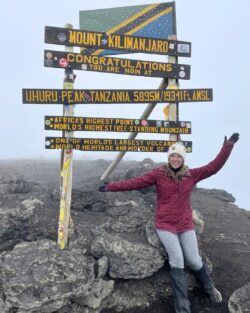
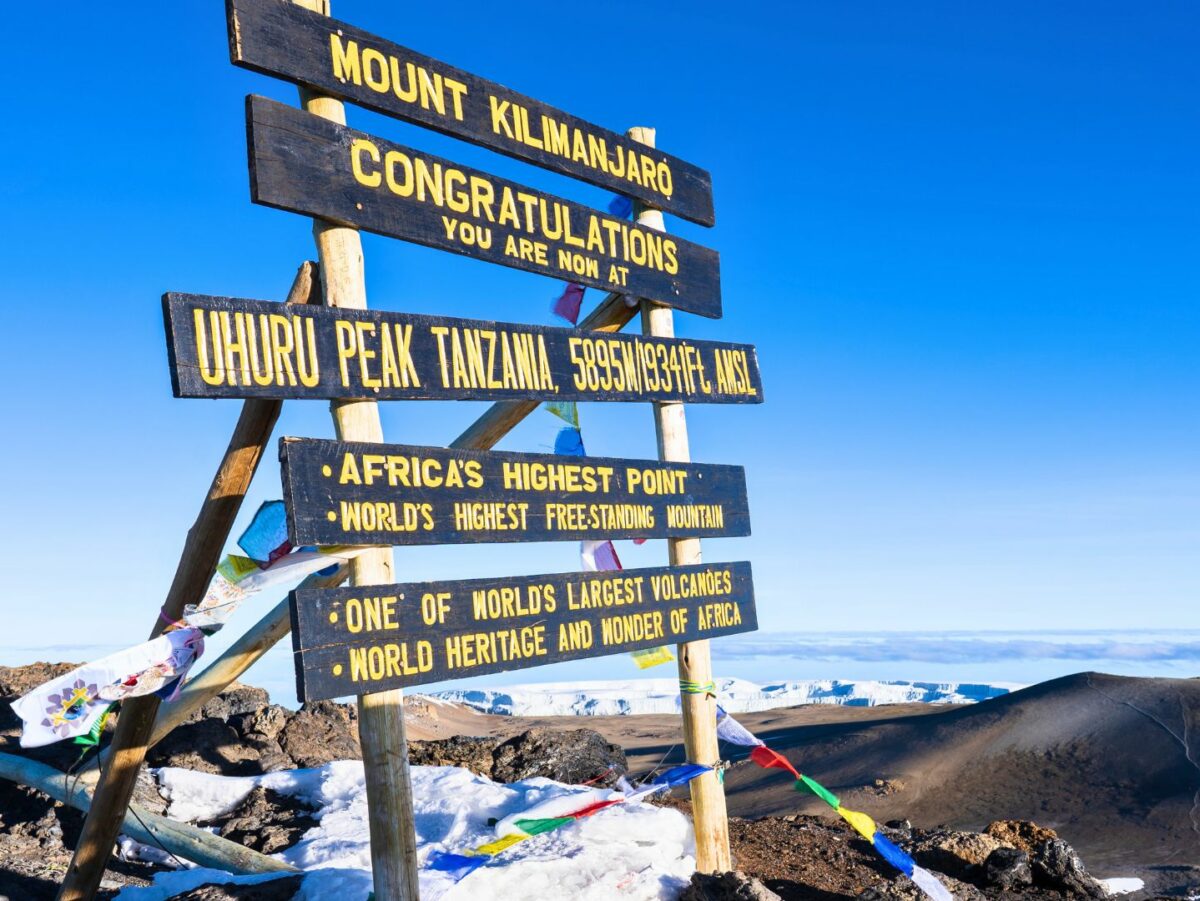
Summit day of my Mt Kilimanjaro hike was both exhilarating and exhausting. We began in the dark, wearing headlamps that cast small pools of light onto the trail. The cold was sharp, and the air felt unbelievably thin. As I climbed higher, I battled fatigue, nausea, loss of appetite, and a foggy mind. At one point, I even started to cry because I feared I wouldn’t make it, only to realize that crying at high altitude is almost impossible, you simply can’t catch your breath enough to do it. My guide stayed right beside me, encouraging me to keep moving. He reminded me repeatedly that slow and steady was the only way to reach the top. 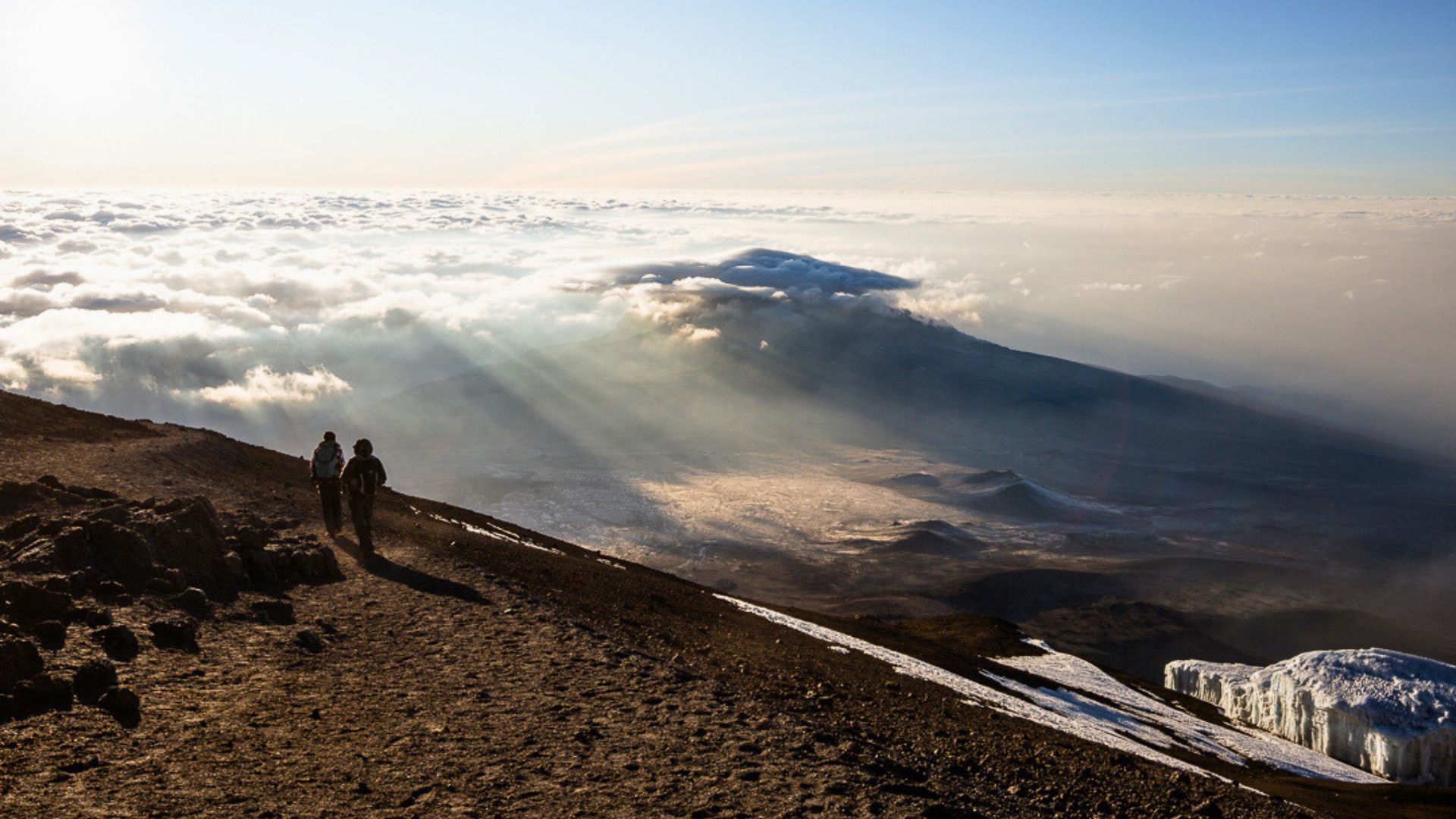 When I finally saw the sign for Uhuru Peak, emotion washed over me all at once – relief, pride, disbelief, and gratitude. The 360-degree views were unlike anything I’ve ever seen, towering glaciers around the peak highlighted how massive the mountain is. Standing there, above the clouds, I understood why hiking Mt Kilimanjaro is transformative for so many people. The mountain challenges you in every possible way, but it also rewards you with a sense of accomplishment that stays with you long after the climb is over.
Hike Kilimanjaro with a Local Guide
Coming Down
The journey down the mountain took an entire day and covered about twelve miles. I was more than ready for a hot shower by then, but the descent was its own challenge. My trekking poles became my lifeline as I carefully navigated steep, dusty slopes. After days of climbing uphill, the downhill stretch was surprisingly welcome, though equally demanding in its own way. When I reached the base and received my certificate marking the completion of the Mt Kilimanjaro hike, I felt immense pride.
The Takeaways
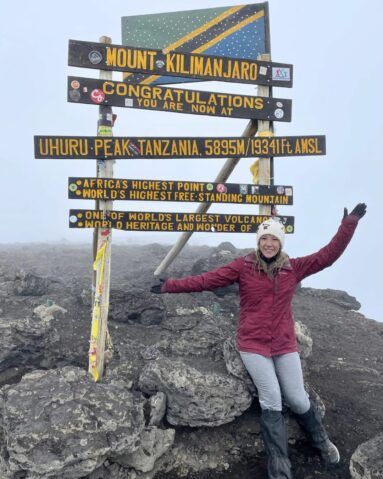 Reflecting on the experience, I realized that hiking Mt Kilimanjaro reshaped my understanding of perseverance. It challenged me physically, pushed me mentally, and broadened my perspective on the world. I learned that preparation matters, attitude matters even more, and the support of a skilled mountain crew can make all the difference. If you train consistently, layer for unpredictable weather, and respect the altitude, you’ll be ready for your own unforgettable adventure.
Because the travel time was so long, I extended my trip with a safari after completing the Mt Kilimanjaro hike. Witnessing elephants, lions, zebras, giraffes, and endless savannah landscapes made the entire journey feel even more extraordinary. It was the perfect way to celebrate everything I had overcome, everything I had learned, and everything the mountain had given me.