

Wildlife Watching in Yellowstone National Park
My first visit to Yellowstone was on a family trip during high school. We went in the winter, when all but one of the park’s roads is closed to regular traffic. We took a tour in a specialized snowcoach to see the park’s iconic sights.The steam from Old Faithful stood in stark contrast to the frigid air around it, and the gushing flows of Yellowstone Falls were barely visible beneath a delicate rime of ice. Despite all the wonders we saw, the incredible wildlife sightings stuck with me the most. We watched in awe as wolves passed within feet of our tour coach in Hayden Valley, and I couldn’t help but feel compassion for the frost-covered bison herds huddled tightly together around thermal features to stay warm.
Years after that initial trip, and after hundreds of days spent in the park as a backcountry guide, one thing that I still love most about Yellowstone is the balance of predictable wonders and wild surprises. Beyond famous sights like Old Faithful and the Grand Canyon of Yellowstone, there’s always the thrilling possibility of a unique wildlife encounter right around the next bend. There’s no guarantee that you’ll see any of the famous wildlife in Yellowstone on a trip there, but that’s part of the fun! Let’s explore some of the animals you might have a chance to see on your trip to Yellowstone, and I’ll offer some tips from my years of experience as a Yellowstone guide.
Wildlife Safety
First off, it’s important to note that a trip to Yellowstone is not a trip to the zoo. Animals in the park are wild and it is important to treat them that way. Each year numerous people are injured by wildlife in Yellowstone National Park by approaching too closely. It is important to keep your distance. Park rules prohibit approaching on foot within 100 yards of wolves and bears, or within 25 yards of any other wildlife.
All of Yellowstone is bear country, and it is important to follow food storage protocols and to carry bear spray.
Mammals
There is a reason Yellowstone is referred to as the “Serengeti of North America.” The variety of mammals, fish, birds, and reptiles is truly unmatched anywhere else on the continent. There are 67 different species of mammals, 100’s of species of birds, and many species who have specially adapted to the unique geothermal environment of the Park. Here are some of the noteworthy species:
Large Mammals
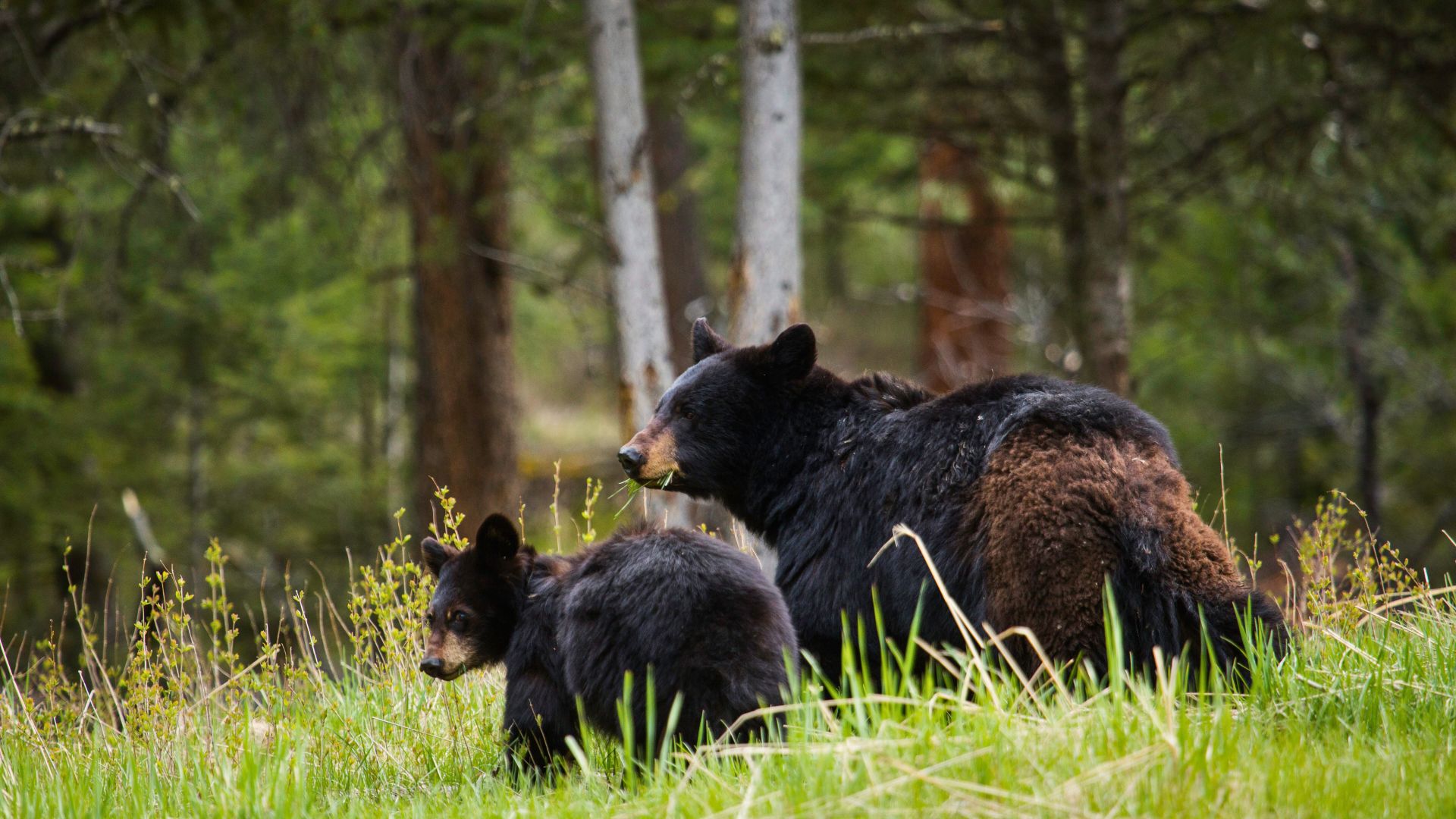
- Bears – Two species of bear inhabit the park: grizzly bear and black bear. Around 150-200 grizzlies live in the park, with a higher, undocumented number of black bears. Grizzlies once roamed a large swath of the western US, but today the Greater Yellowstone Ecosystem and Northwest Montana are the only places in the contiguous US where large populations are still found.
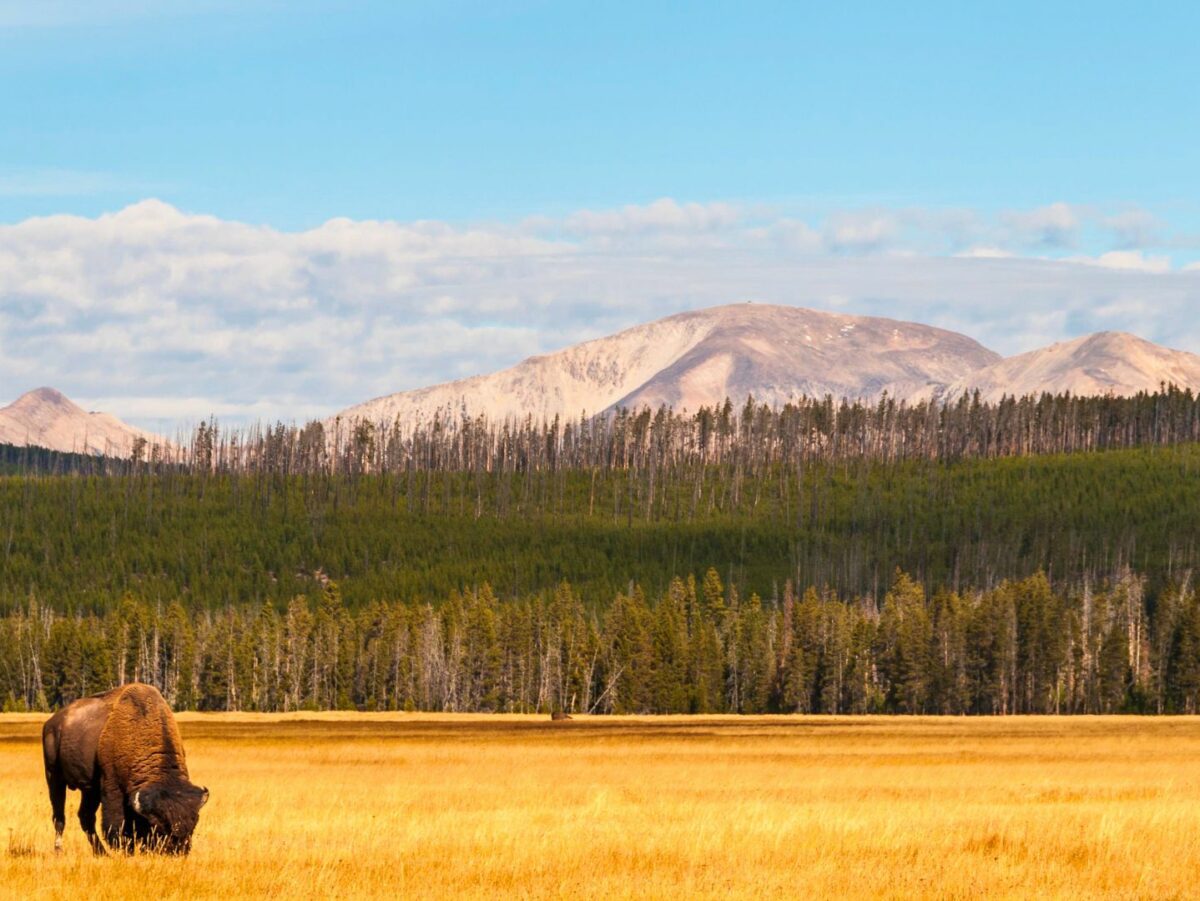
- Bison – Perhaps no animal serves as a better symbol of Yellowstone and the American West than the bison. Once numbering in the millions, bison were hunted to the brink of extinction by the turn of the 20th century. It is a testament to the conservation efforts of places like Yellowstone that we still have them around today. Today they are a quintessential part of the Yellowstone experience.
- Elk, moose and other ungulates – In addition to bison, there are eight species of ungulates that play a vital role in the Yellowstone ecosystem. Elk are the most prominent and number in the 10’s of thousands in the summer. Moose are the largest, although relatively rare to spot. Additionally, pronghorn antelope, mountain goats, bighorn sheep, mule deer, and whitetail deer all call Yellowstone home.
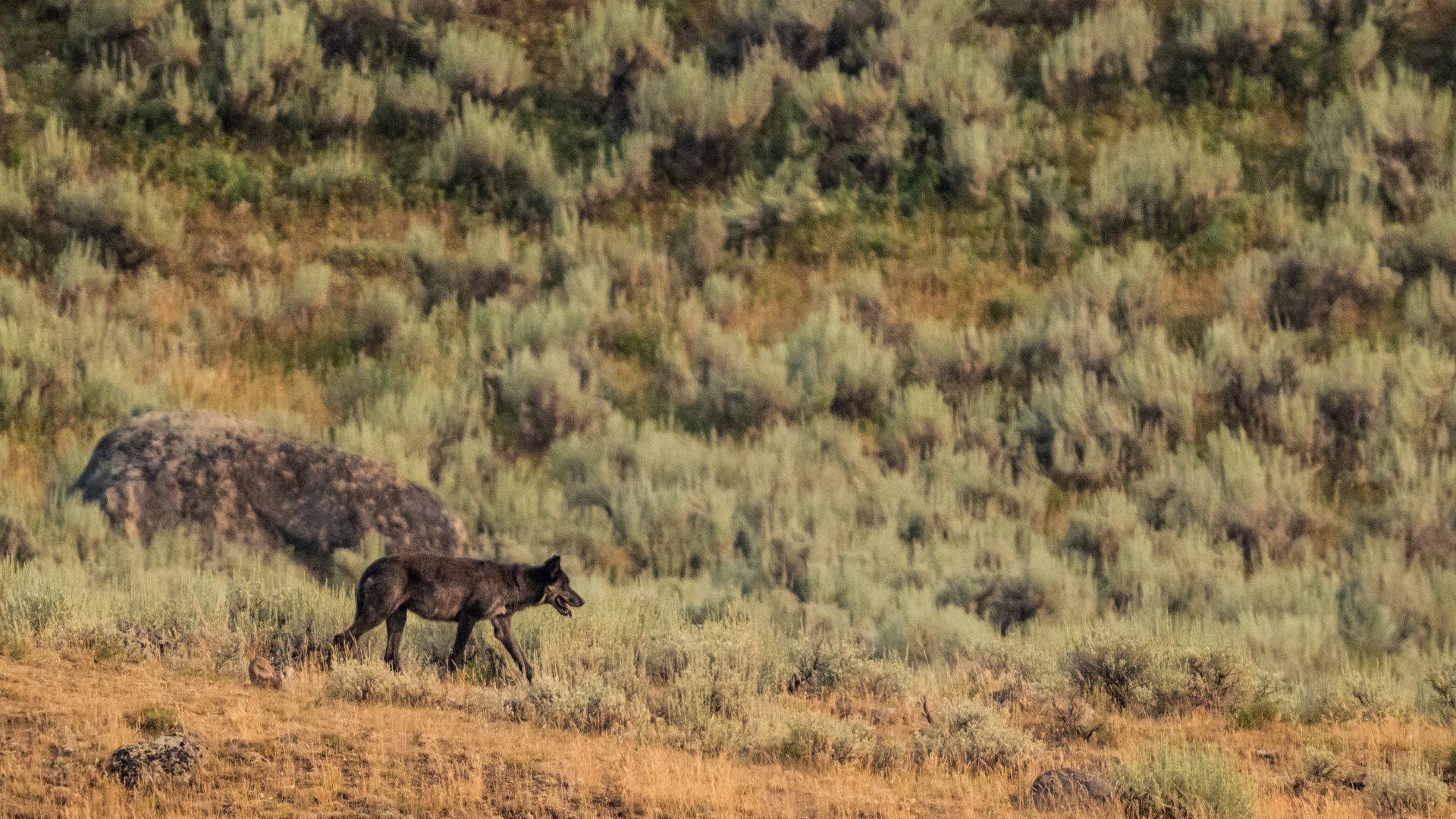
- Wolves – After they were hunted to extinction in the park in the 1920s, the reintroduction of grey wolves to Yellowstone in 1995 has been a huge conservation success story. Wolf numbers have hovered around 100 in the park for the last few years.
Small Mammals
- Marmots – These cute, easygoing rodents look like giant squirrels and can be seen basking in the sun on rocky outcrops.
- River Otters – Look for these cute, playful members of the weasel family on the banks of rivers and lakes.
- Pika – These tiny rodents look like something between a miniature rabbit and a hamster. Known for their high pitched chirps and cute demeanor, look for them scampering among rocky outcrops
Other notable mammals include:
- Coyote
- Pocket gopher
- Beaver
- Golden-mantled ground squirrel
- Badger
Birds, Fish and Reptiles
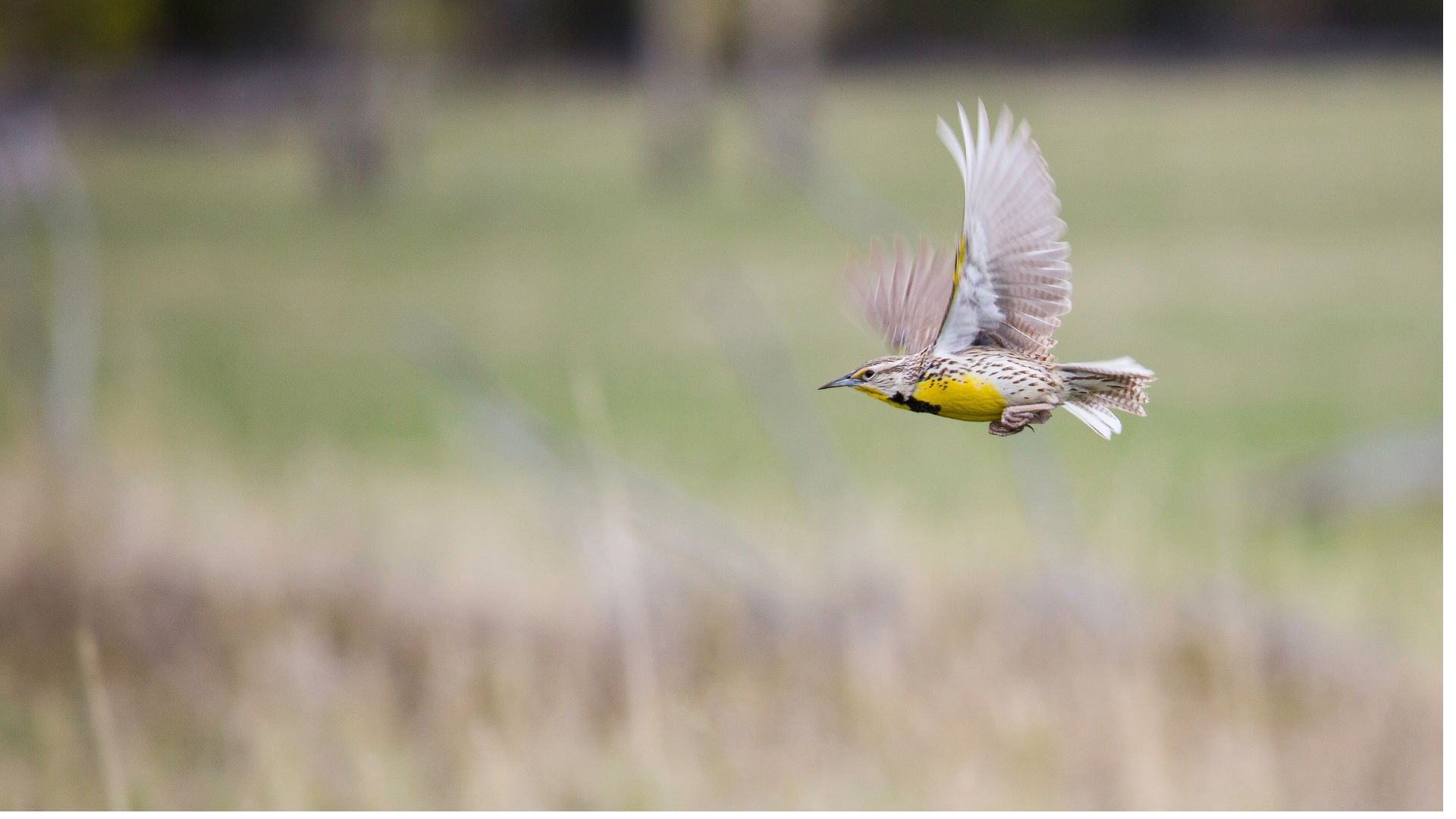
There have been approximately 300 species of birds documented in Yellowstone, with about 150 of those nesting in the park. Species of note include the golden eagle, bald eagle, trumpeter swan, white American pelican, Clark’s nutcracker, and osprey. Look for raptors perched in treetops above rivers and lakes as they scour for their next meal.
There are 12 native species of fish in the park as well as several non-native species. Key among those are the Yellowstone cutthroat trout and westslope cutthroat trout, both of which are important food sources for dozens of animal species throughout Yellowstone. Some fish have adapted to live in the unusually warm waters near geothermal features. People travel from across the world to fish the region’s notoriously pristine rivers.
There are also 5 species of snakes in Yellowstone. The prairie rattlesnake is the only venomous snake and is confined to the lower elevation areas of the Northern part of the park. If you see a lizard on the trail it’s the sagebrush lizard, the only species of lizard in Yellowstone.
Rare Wildlife
There are 3 species of cats in the park, all of which are extremely rare. The bobcat is the most commonly observed of the three. The Canadian lynx is similar in size and appearance to the bobcat but is extremely rare, having been observed only 112 known times in the park’s history. The cougar is the largest of the three; estimates put the cougar population around 40, mostly confined to the northern range of the park.
Other key rare species include:
- Wolverine
- Red fox
- Peregrine falcon
Seasons
Summer
Summer offers excellent chances to see wildlife. Hayden valley and Lamar valley are hotspots where you can usually see bison herds grazing and might be lucky enough to see a pack of wolves. July and August is bison mating season and bison are extremely active. Bears are active too, although less predictable for sightings than other large mammals like bison and elk.
Spring
Spring is a fun time for wildlife viewing in Yellowstone. Newborn animals of all ilks roam the park. Carcasses of animals that didn’t survive the winter provide food sources for bears hungry after a winter of hibernation. Higher elevations are still covered in snow so animals are generally still congregated in the lower elevations closer to roads. It is worth noting that roads don’t generally open to regular traffic until late April.
Fall
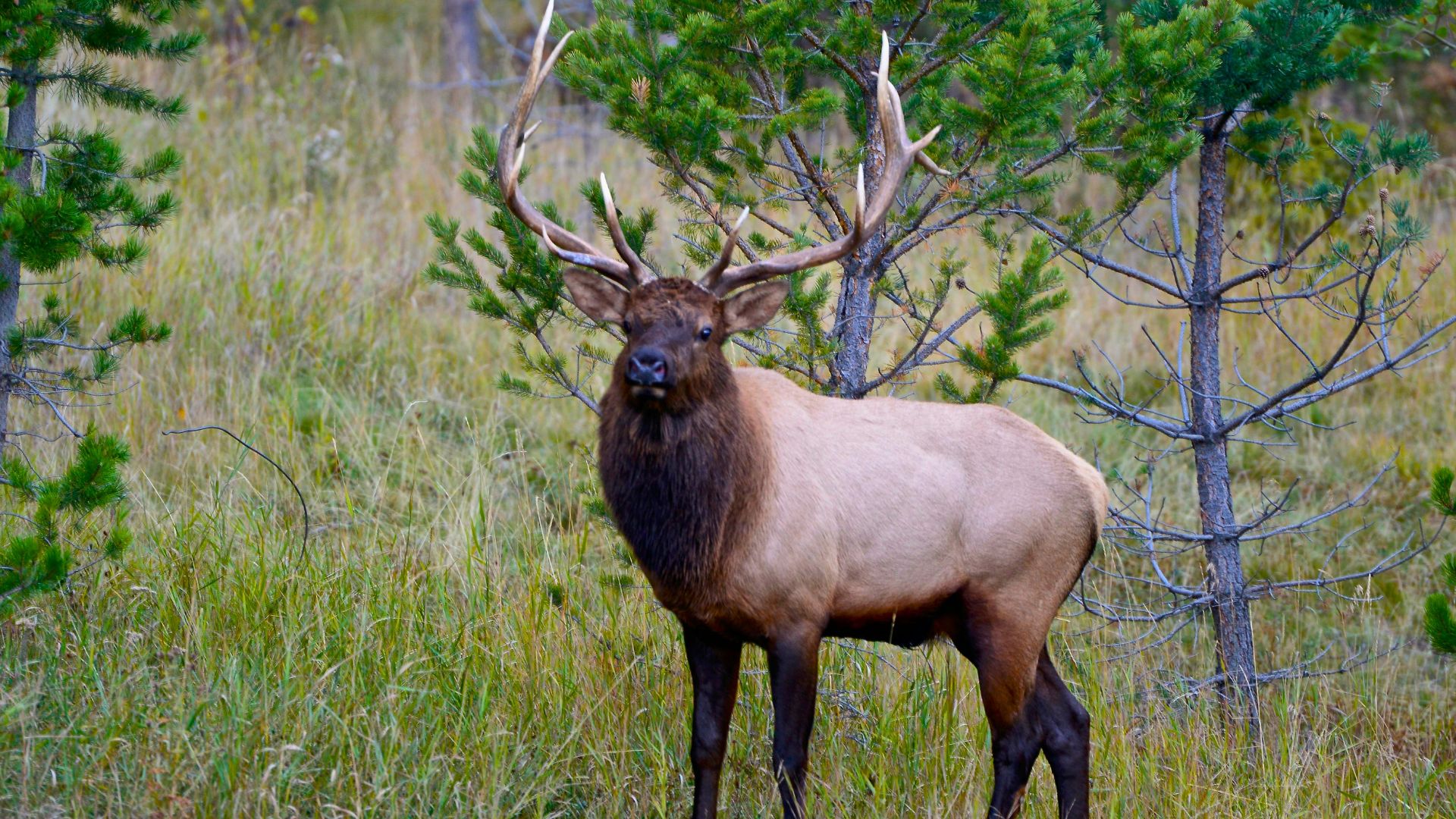
Autumn is noteworthy for the elk mating season which runs from September thru mid October. Visitors flock to the park for the chance to hear the unforgettable and unrivaled bugle of a bull elk. Wildlife is generally active as they prepare for the harsh winter ahead and upper elevations become draped in snow. Weather is more unpredictable than summer months and roads generally close around November 1st.
Winter
There is only one road open to regular traffic in the winter. Luckily for wildlife enthusiasts, that road runs directly through the notoriously wildlife-rich Lamar valley. Winter can be a great time to spot wolves in Lamar valley, along with bison and elk. Other parts of the park are accessed via snowmobile and guided snowcoach tour. The relative quiet and solitude you get in the winter can greatly enhance your chances of seeing wildlife. Although bears are hibernating and extremely rare to spot in the winter.
Tips for Wildlife Viewing

The amount and variety of wildlife you see in Yellowstone is in large part a matter of luck and coincidence. Sometimes there’s just no rhyme or reason to when or where you might happen upon a sighting. However, these are some steps you can take to give yourself the best chance possible:
- Know Wildlife Habits and Patterns. Wildlife in Yellowstone tends to follow distinct patterns depending on the season and environmental conditions. For example, during the winter, bison and elk often migrate to lower elevations and relatively warmer geothermal areas, such as Mammoth Hot Springs. Bighorn sheep prefer steep, rocky terrain like the slopes of Mt. Washburn or the cliffs in Gardiner Canyon. Additionally, the presence of ravens and bald eagles can indicate a nearby carcass, which frequently draws larger predators such as bears and wolves. Conducting a little research on the specific habits of your favorite animals before your trip can significantly enhance your viewing experience.
- Beat the crowds. Wildlife is most active during the cooler, peaceful hours around dawn and dusk. Get an early start and beat the crowds to maximize your chances.
- Look for the crowds. If you can’t beat the crowds, look for them! Oftentimes, a big crowd of people on the side of the road means there is something worth seeing nearby. It’s important to follow park laws and not stop the flow of traffic, but if you can pull over in an unobtrusive manner it’s worth looking around and seeing what the fuss is about.
- Talk to a ranger. Stop into a visitor center and inquire about wildlife sightings with a Park Ranger. Rangers are happy to share recent reported sightings so long as it doesn’t pose a threat to visitors or wildlife.
- Bring binoculars or a spotting scope. Not all wildlife you’ll see is going to be within a close distance. Bring a quality scope or pair of binoculars to greatly enhance your viewing power. A quality telephoto zoom lens is recommended for photography as well.
- Join a guided trip! Guides in Yellowstone know the habits of the animals in the park intimately. While sightings are never a guarantee, a trip through Wildland Trekking with an experienced Yellowstone guide can maximize your chances of seeing wildlife.
In conclusion
Early explorers to Yellowstone often referred to the area as a “wonderland.” Over 150 years after those initial forays, the term still holds as much weight today as it did then; and the unparalleled variety and abundance of wildlife remains a big reason why. There’s no telling what you might see, so come prepared and with a sense of adventure. You’re sure to make memories to last a lifetime!