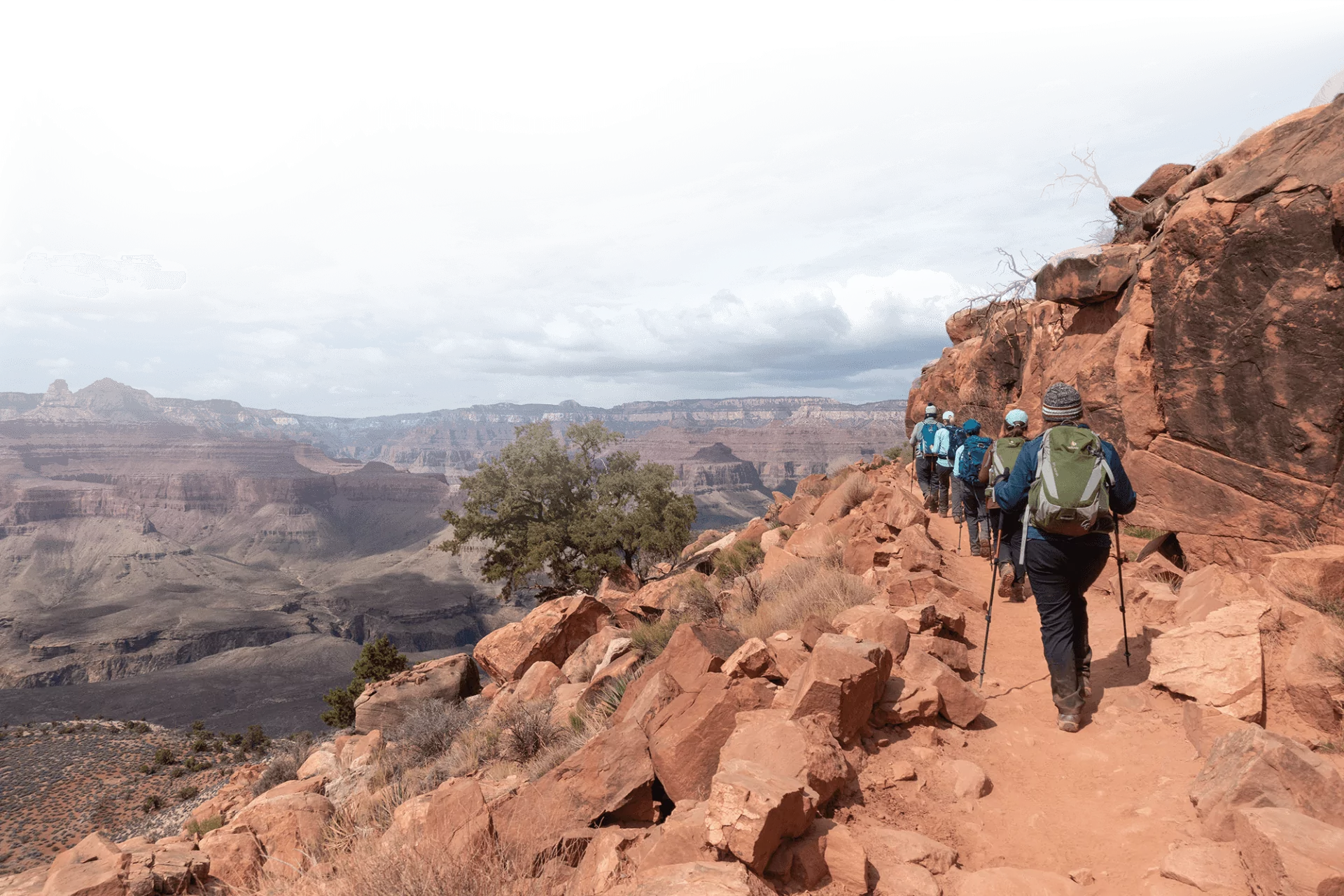


Grand Canyon National Park Wildlife
Our national parks provide premier opportunities to view nature’s wonders: glaciers at Mount Rainier, stalactites in Mammoth Cave, or hot springs and wildlife in Yellowstone. Like many national parks in the west, Grand Canyon is known above all else for its rock. The Colorado River has excavated a trench 5,000 feet into the earth, putting on display more than 10 different rock layers, each with their own unique color, texture, and erosional style. The rocks of Grand Canyon dominate most scenes.
But to an attentive eye, other treasures reveal themselves. Natural springs bring streams of clear water to the surface, riparian trees drink it up and add a splash of green, undisturbed biocrust covers any exposed soil, and anywhere, anytime, if you’re lucky enough, you may see the movement of an animal. Special wildlife is present not just in Yellowstone, but in all parks. Wildlife in Grand Canyon National Park is elusive, but beautiful, and fascinatingly adapted to their harsh desert environment. As a backcountry hiking guide in Grand Canyon, I’ve spent enough time in the park to cross paths with many of them. In this article, I’ll highlight some of my favorites, describing where they live and how they thrive. The rarest creatures of all live at the end of the list!
Scorpions
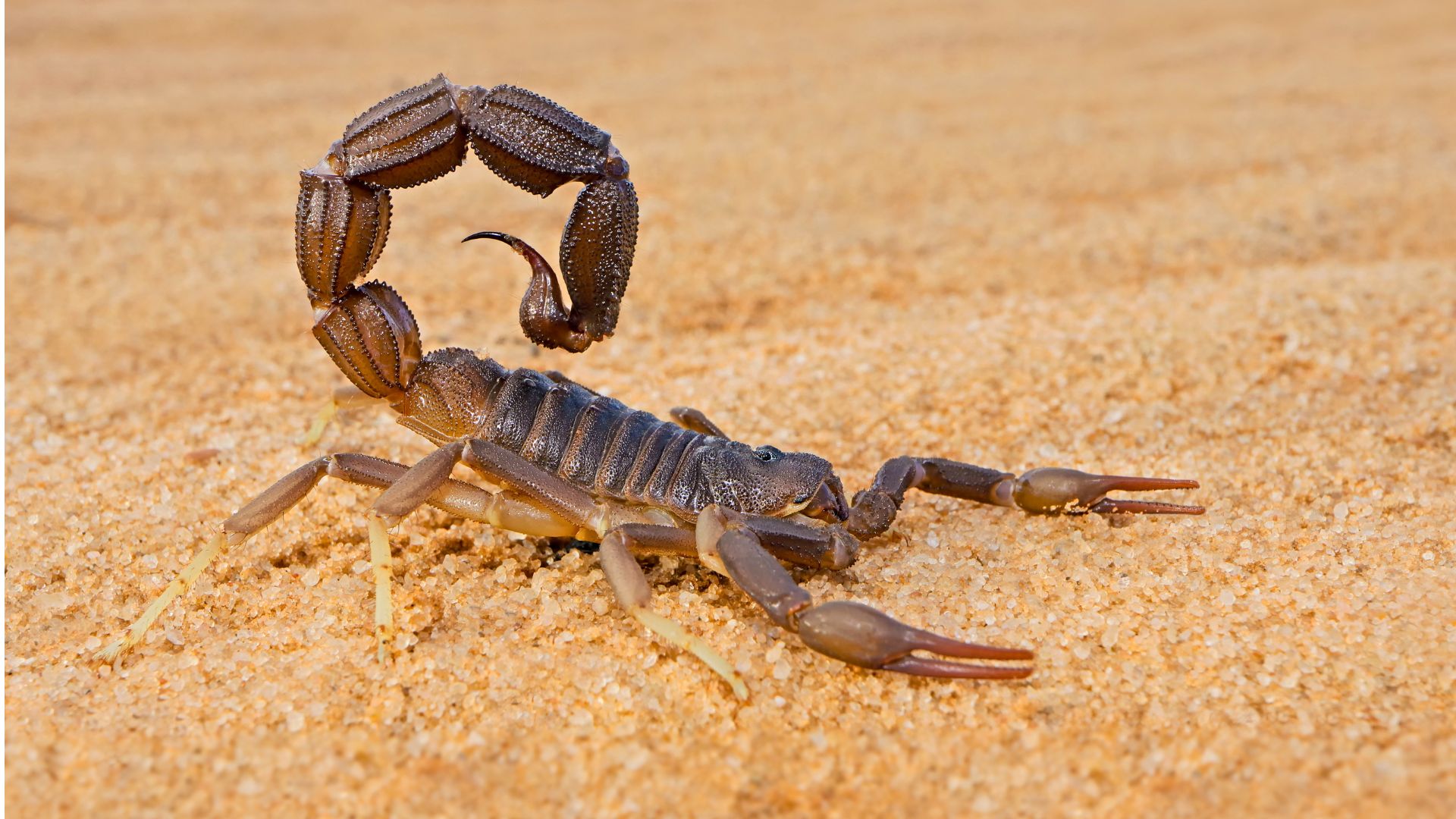
As insects, scorpions are among the most numerous types of wildlife in Grand Canyon, yet most visitors never see one. They are nocturnal, secretive, and superbly adapted to conserving moisture in an arid environment. During the day they shelter beneath rocks, inside rotting wood, or in shallow burrows, emerging at night to hunt insects and other small prey. Their tough exoskeletons reduce water loss, and their slow metabolism allows them to survive long periods without food.
Several species live in the canyon, including the Arizona bark scorpion, which is known for its very painful sting, similar to a wasp, or worse. The best way to avoid scorpion stings is to wear shoes when walking around camp at night, and use extra caution when sitting on or handling objects they may be hiding in. In the dark, scorpions can be spotted using ultraviolet light, which causes their bodies to glow an eerie blue-green.
Grand Canyon Pink Rattlesnake
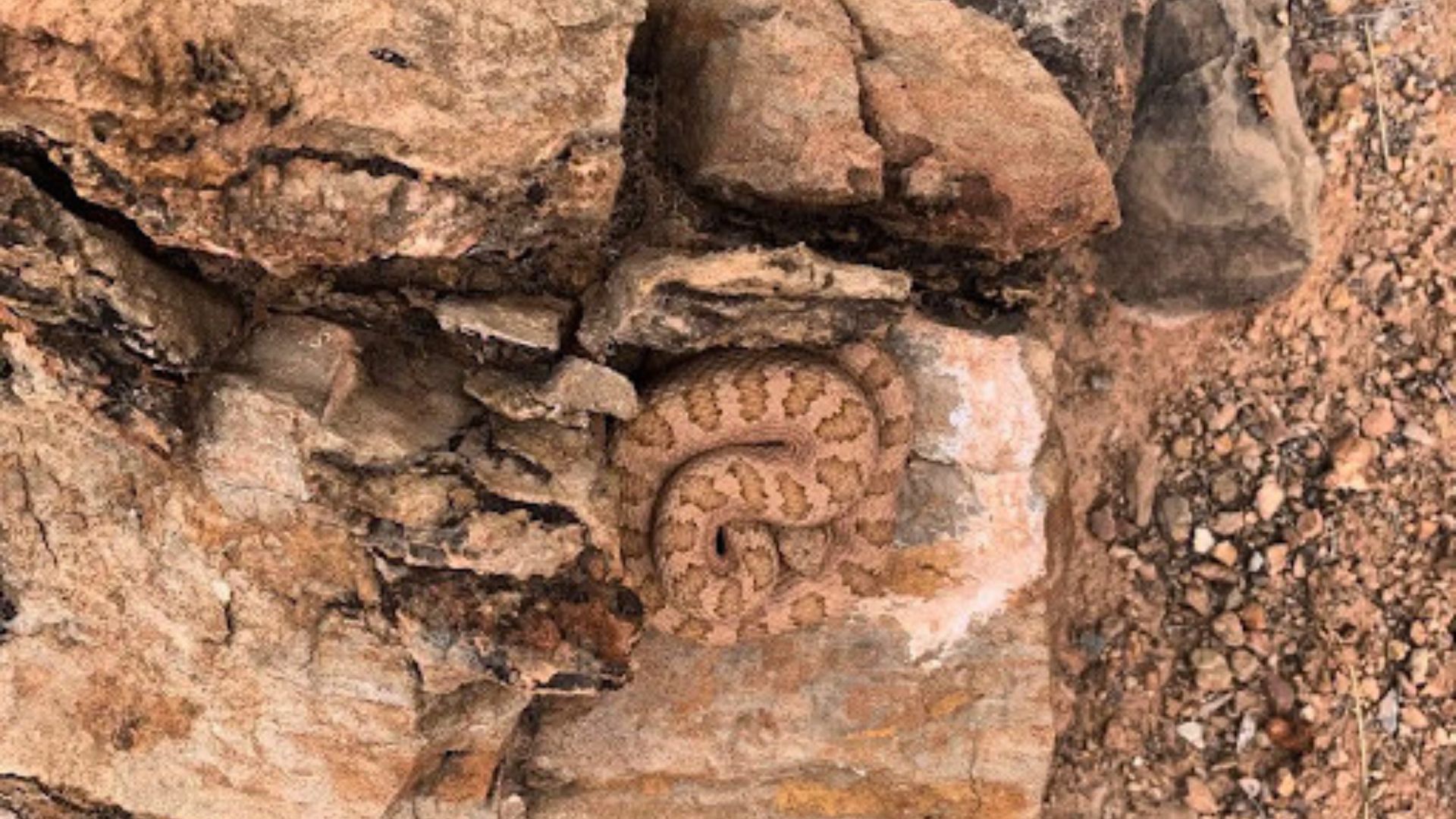
The Grand Canyon pink rattlesnake is a subspecies found only within and immediately around the canyon. Its coloration—soft pinks and pale grays—closely matches the limestone and sandstone it inhabits, making it remarkably difficult to see. This camouflage is its primary defense, and most encounters happen when a snake is already aware of you long before you notice it.
These rattlesnakes prefer rocky slopes, ledges, and talus fields, where they hunt small mammals and lizards. Like all pit vipers, they use heat-sensing organs to detect prey, allowing them to hunt effectively even in low light. Despite their fearsome reputation, rattlesnakes are shy and defensive rather than aggressive. Their loud rattle is a generous warning – they don’t want to bite, they want large approaching animals (like humans) to give them space. Seeing one is a privilege, and observing from a respectful distance is the best way to ensure the safety of both human and snake.
Desert Bighorn Sheep
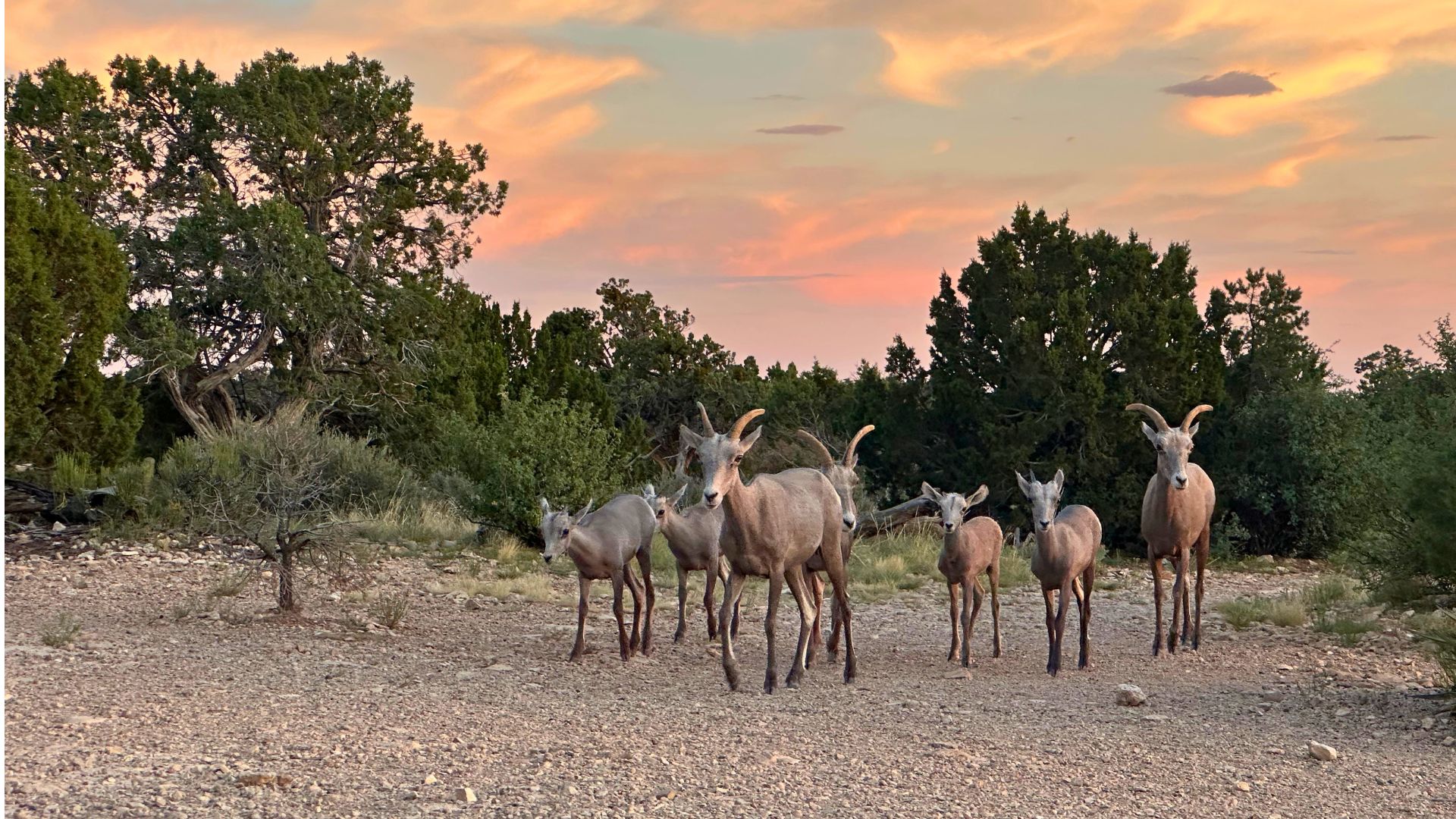
Desert bighorn sheep are among the most iconic wildlife of Grand Canyon National Park, perfectly built for life on steep, rugged terrain. Their muscular bodies, specialized hooves, and exceptional balance allow them to move rapidly across cliffs and narrow ledges that appear inaccessible to humans. Predators like mountain lions struggle to follow them into this vertical world, giving bighorns a crucial advantage.
Bighorns are sometimes seen near water sources, especially springs and seeps, though they may travel for a week or two between drinks, surviving only off the water in their scrappy desert diet. In times of drought, they can even take large bites out of moisture-rich cacti, seemingly unaffected by the spines. Their tan coats blend seamlessly with canyon walls, so movement is often the first clue to their presence. Watching a group navigate exposed rock faces is a reminder that the canyon is not just scenery—it is one of the most three-dimensional habitats on earth.
Elk
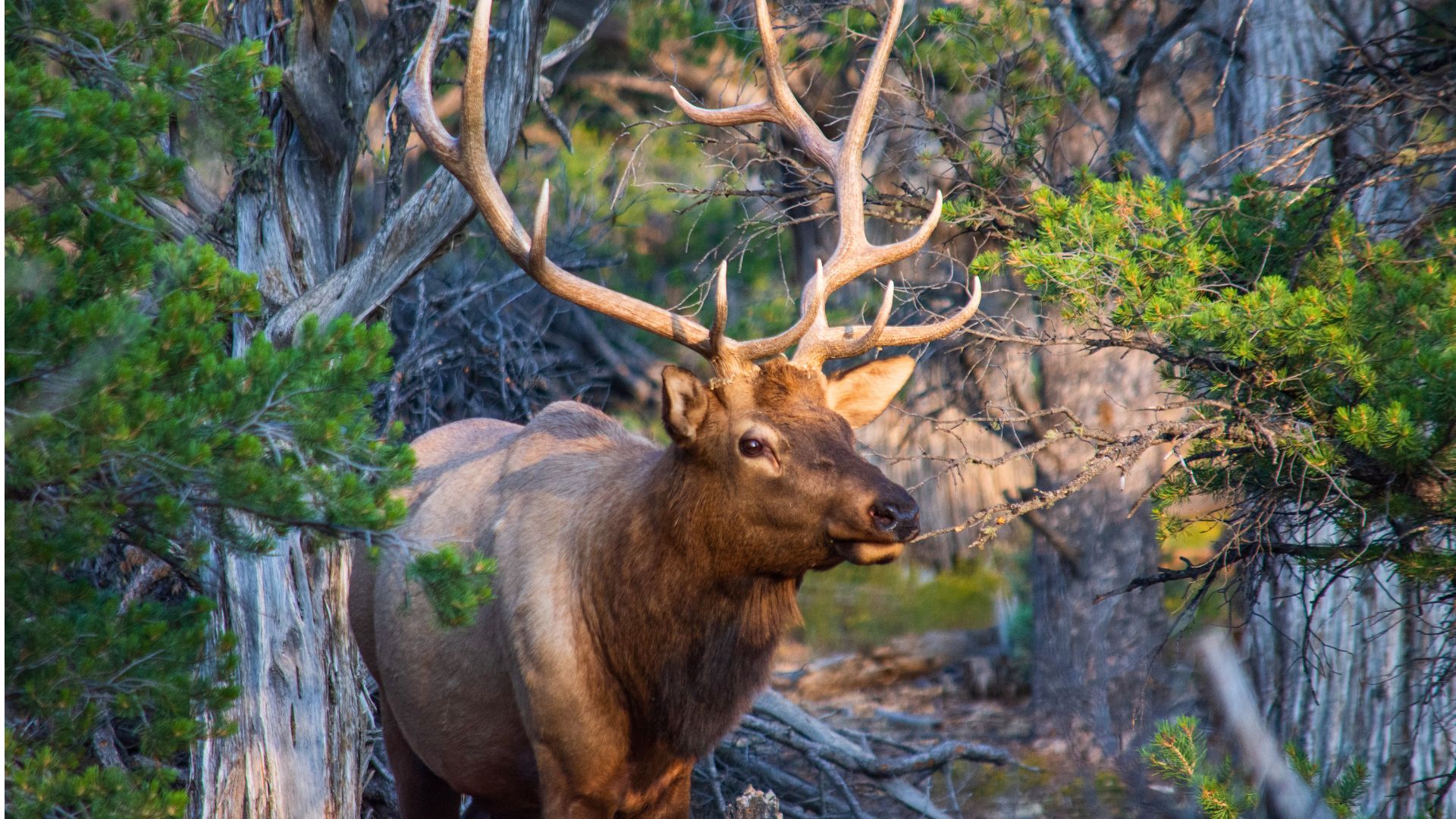
One of the largest species of wildlife in Grand Canyon National Park, elk are relative newcomers to the area, introduced throughout northern Arizona in the early 20th century as a game animal. Today, they are most commonly found in the park’s high-elevation forests and meadows, especially near the South Rim Village. It’s commonly understood that the elk inside the park boundary have less fear of humans, since hunting is prohibited.
Their presence has altered parts of the ecosystem, particularly through heavy browsing on young trees and grasses. In fall, the sound of bugling bulls echoes through forests, an unexpected soundtrack in a place better known for silence and stone.
California Condor
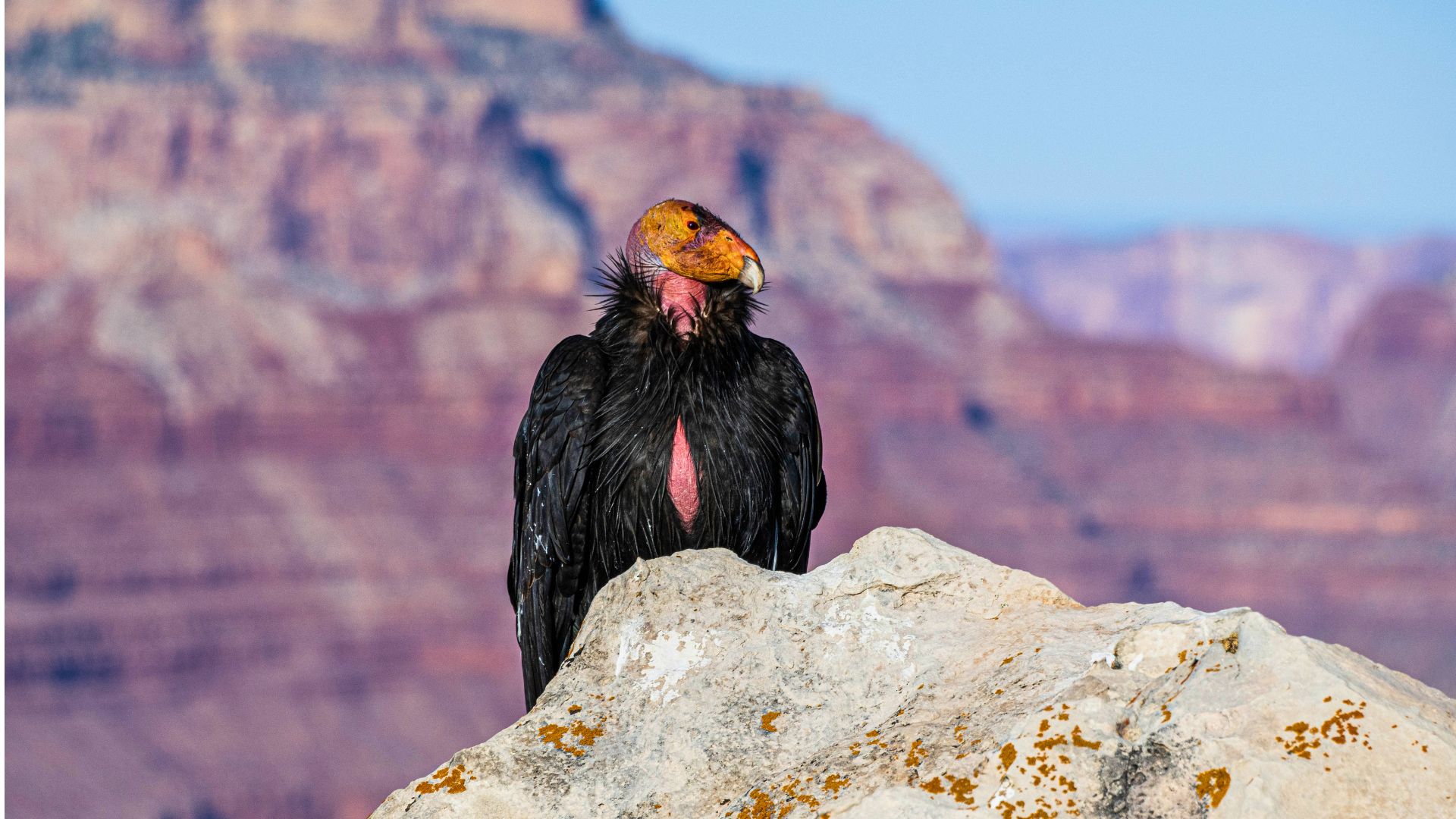
The California condor is the most visually striking bird in Grand Canyon National Park, with a wingspan approaching ten feet. Once on the brink of extinction, condors were reintroduced to northern Arizona in the 1990s, and the Grand Canyon has become a critical part of their recovery. They are most often seen roosting near Navajo Bridge, or soaring effortlessly on thermal currents, covering immense distances with barely a wingbeat.
Condors rely on large expanses of open land and carrion for food, making the canyon an ideal habitat. They nest on remote cliffs, inaccessible to most predators and humans. Despite their size, they can be surprisingly difficult to spot until they move. Seeing one glide silently overhead is an unforgettable experience, connecting modern visitors to a deep prehistoric past.
Raven
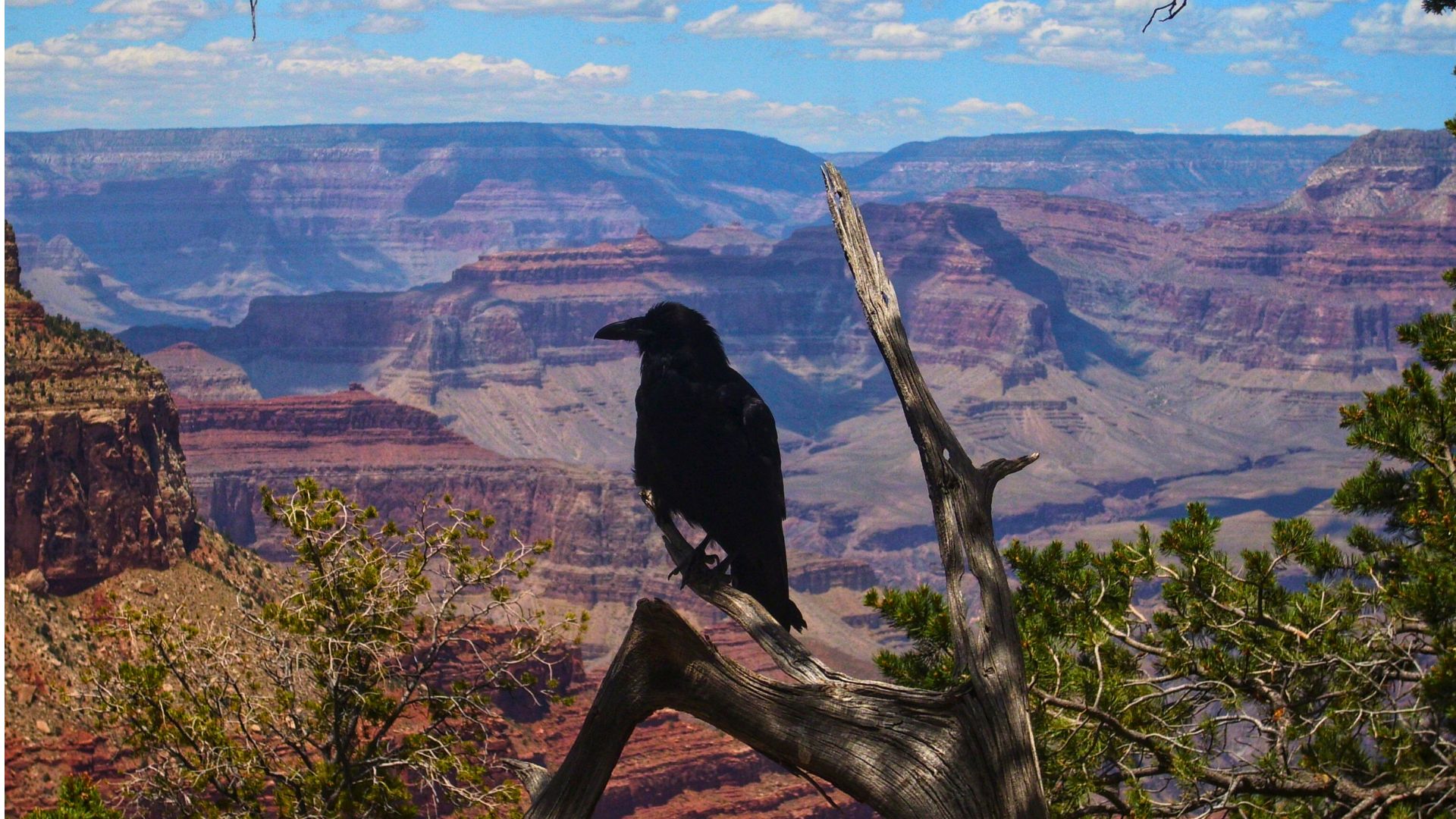
Ravens are everywhere in the Grand Canyon, from busy overlooks to remote backcountry camps. Intelligent, adaptable, and endlessly curious, they have learned to coexist closely with humans, sometimes too closely. Their problem-solving abilities are legendary, and they quickly exploit food opportunities left unsecured by careless visitors. I’ve watched intently as one raven poses for a picture in front of a group of tourists, while another sneaks behind them to open the zippers on their backpacks.
Beyond their bold behavior, ravens are masterful flyers and vocalists. They perform acrobatics in rising air currents and communicate using a complex range of calls. In many Indigenous cultures, ravens are seen as tricksters or messengers, fitting roles for a bird that seems to observe everything. They are a constant presence, equally at home in solitude or crowds.
Ringtail
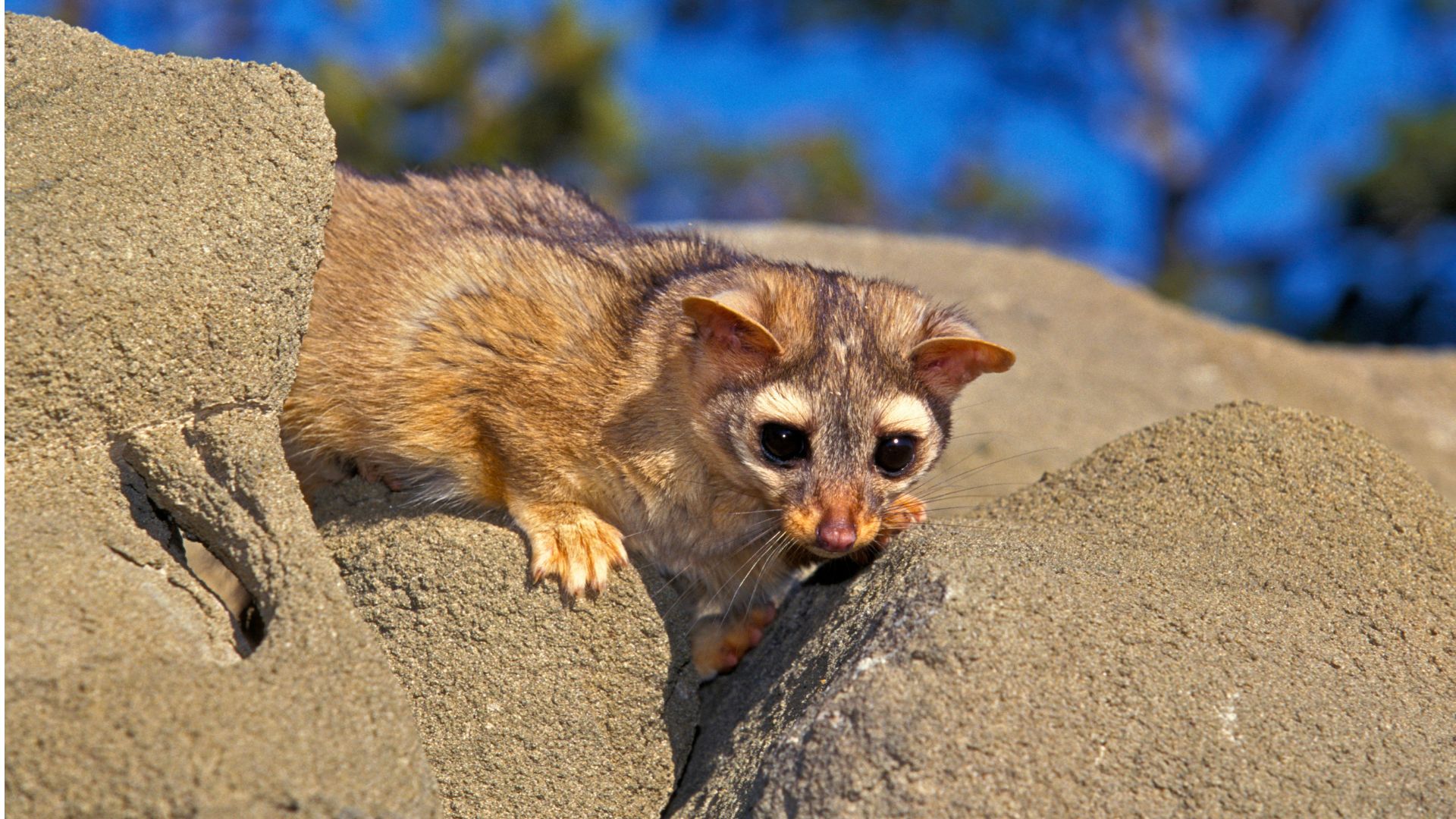
Ringtails are rarely seen, but they live throughout much of the canyon. Often mistaken for small cats, they are actually more slender members of the raccoon family. With large eyes, nimble bodies, and long, ringed tails, they are perfectly adapted for nocturnal life among cliffs and rocky alcoves.
Ringtails hunt insects, rodents, and fruit, using their agility to move through vertical terrain with ease. They den in caves, rock crevices, and old structures, sometimes even historic buildings. Most sightings happen at night, often around camps, by headlamp, when a pair of glowing eyes reflects light from the darkness during dinnertime. Their secretive nature makes every encounter feel personal and fleeting.
Coati Mundi
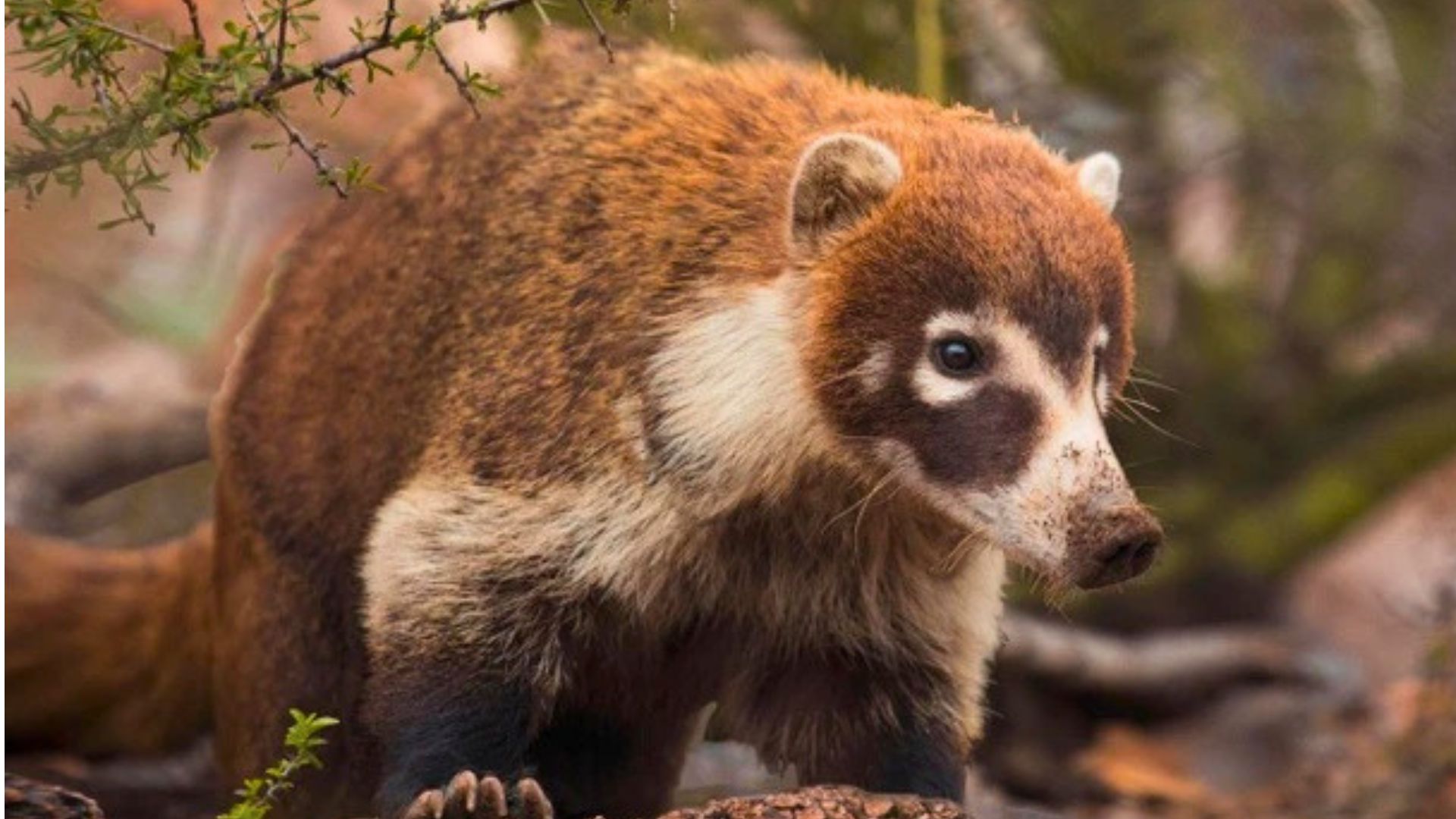
Coatis are not on any other list of wildlife in Grand Canyon National Park, because they aren’t known to live here. But, I’ve seen one. Its identity was undeniable — I was alone, jogging through a remote slot canyon along the Colorado River Traverse and I spooked one, then followed it for a minute as it trotted away. It’s my favorite sighting of wildlife in Grand Canyon.
These are social relatives of raccoons, more commonly associated with tropical environments but present in southern parts of Arizona. Unlike ringtails, coatis are often active during the day and may be seen traveling in small groups. They use their long snouts to root through soil and leaf litter in search of insects, fruit, and small animals. Agile climbers, coatis move easily between trees and ground, exploiting a wide range of food sources. Though not otherwise known to be in the Grand Canyon, I’ve found internet reports of them migrating farther north and into higher elevations of Arizona, perhaps as a factor of drought and climate change.
Mountain Lion
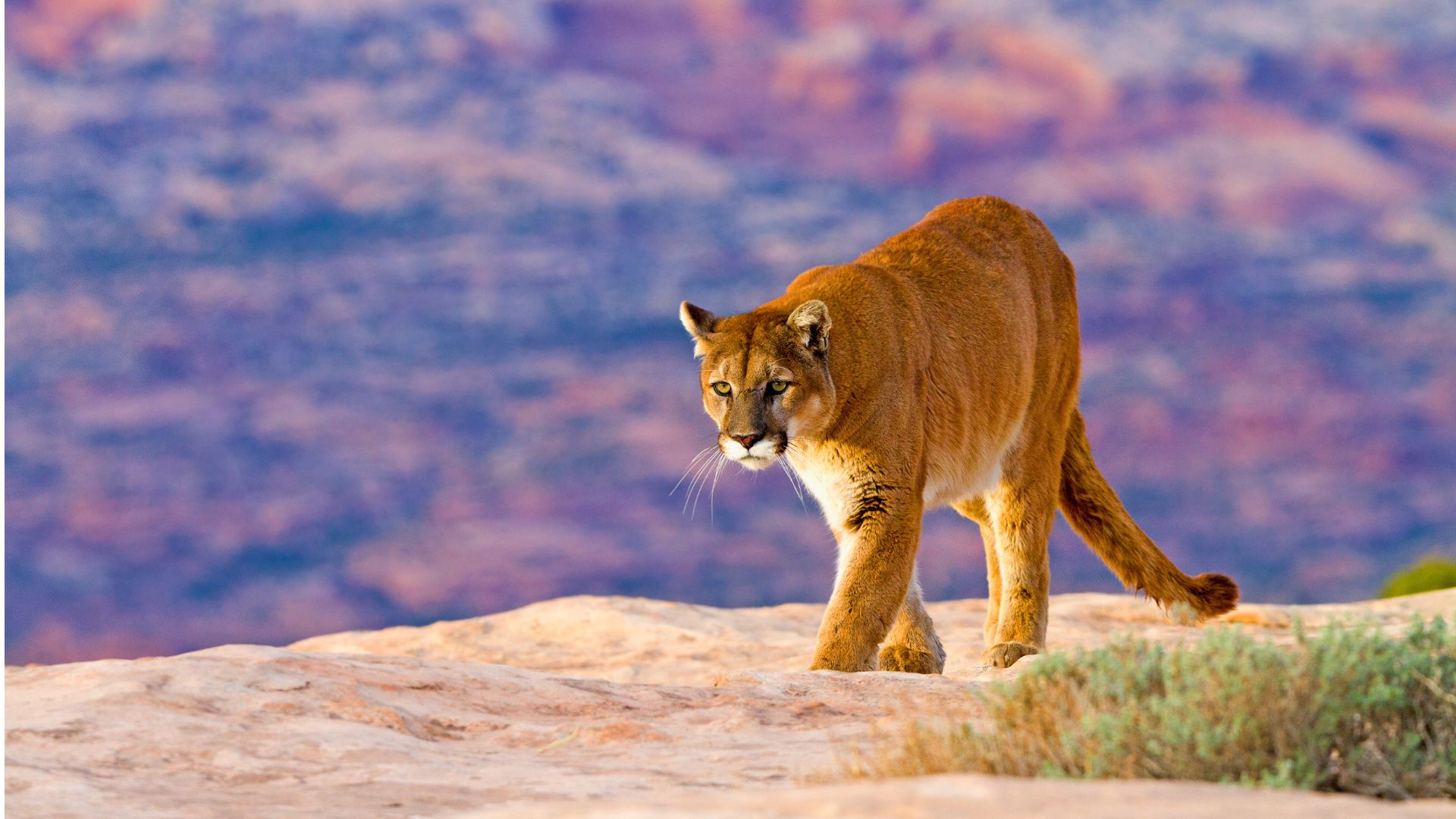
Mountain lions, or pumas, are the rarest and most elusive large wildlife in Grand Canyon National Park. They range widely and quietly, often moving through areas shortly before or after humans pass by. Seeing one is extraordinarily uncommon, but their presence is felt through tracks, marks, the behavior of prey species, and often the corpses of their kill.
Due to a long history of trophy hunting, mountain lion numbers are low and the canyon’s vastness allows them to easily remain hidden. It’s important to remember the history of how they were targeted as enemies of the livestock industry. Jimmy Owens for example, was an experienced guide and legendary mountain lion hunter on the North Rim. Ownes became the game warden for the Kaibab Plateau Preserve in 1907 tasked with the main job of hunting and trapping mountain lions and wolves on the North Rim. Over his career, Owens claimed to have killed 532 lions.
These apex predators play a critical role in maintaining ecosystem balance. Luckily, they’ve recovered enough to largely resume that status. They prefer remote terrain with access to cover and water, hunting primarily deer and bighorn sheep. For me, knowing mountain lions are present, unseen, adds a subtle depth to every hike—a sense that the canyon is alive in a natural way. Even after all my days outside, I still feel uneasy while walking alone in the Canyon at night. I remind myself that pumas are rare, want to avoid me, and that I should focus on preventing other, much more likely types of injuries.