

Best Time of Year to Visit Colorado
Growing up, our family defined the seasons in Colorado by our activities—skiing, ice skating, and snowshoeing in winter, hiking, biking, and backpacking in summer. Gear was properly stowed at the end of each season, only to return next year.
However, one of the things I have really enjoyed about being a hiking guide for Wildland is that I can be called on to hike or snowshoe any of the 365 days each year. Now I follow the seasons in and out, from the first snowflake of autumn to the snowpack’s deepest point, and back to nothing again.
As I watch Coloradoans relate to their environment, I see that there are no days when no one goes out to play. There is no day so cold or unruly that it will keep everyone indoors. The weather, rambunctious as it may be, is only an invitation to test your mettle, and in the case of snow sports, many like it gnarly!
Many people here have adopted an old Nordic philosophy that says there is no such thing as bad weather, just inadequate clothing. This saying originally implied that children should be outdoors regardless of the weather.
All the seasons in Colorado have occasional choppy days, but overall, Colorado enjoys a splendid climate with over 300 days of sunshine a year and 4 distinct seasons.
There is about 15” of annual precipitation in Denver and the eastern plains, and up to 60” in the wettest parts of the mountains. Denver, while exhibiting plenty of roller coaster behavior with its weather, enjoys an average high low temperature range of 46/20F in January, and 89/56F in July.
As a rough guideline, temperature changes about 3.5F degrees for each 1000’ in elevation gained or lost. For example, from Denver at 5,280’ to the top of a 12,000’ mountain nearby, the temperature changes about 25 degrees.
Visiting Colorado in the Spring
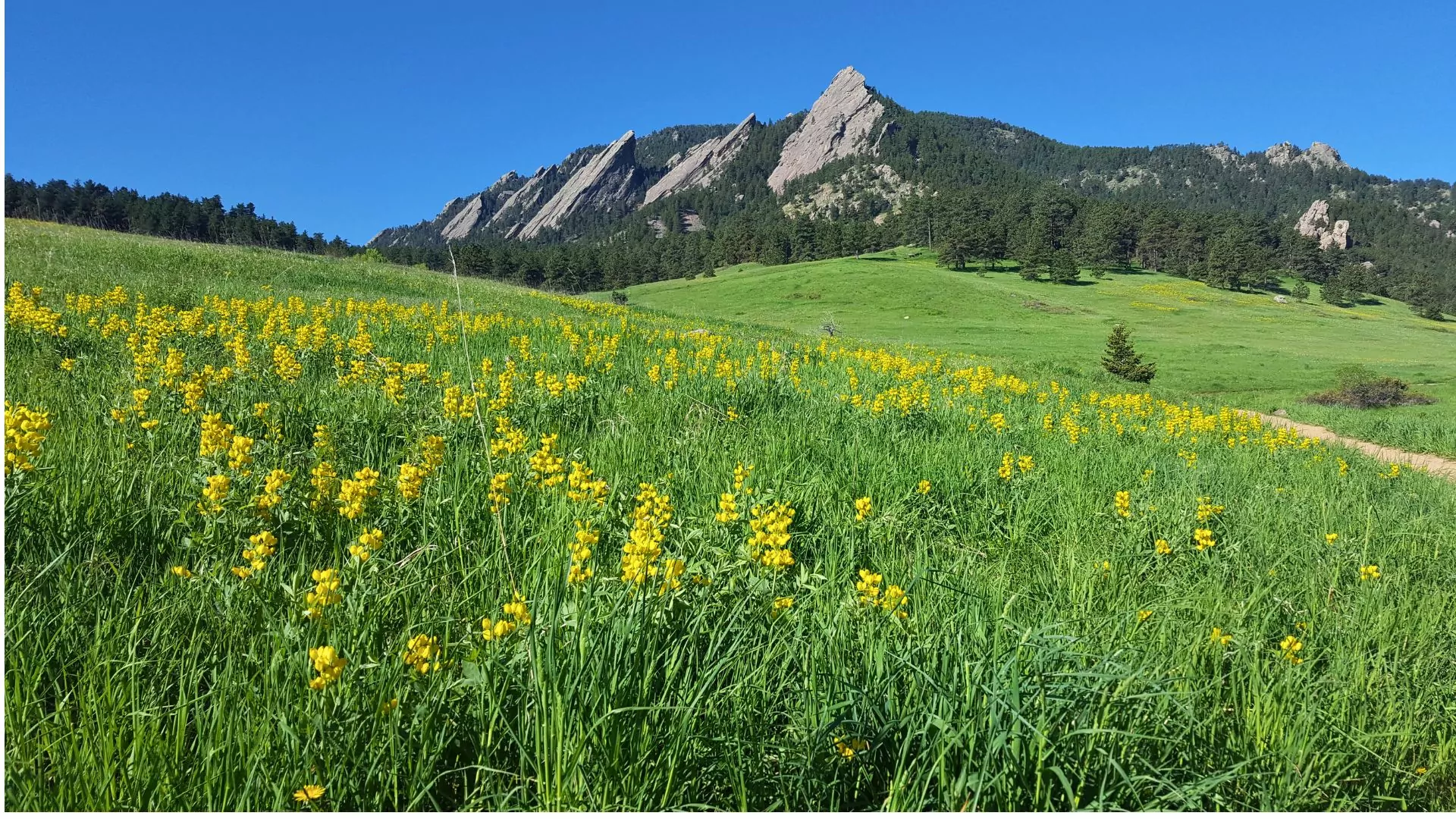
Precipitation amounts and patterns vary considerably around the state and whether you are in the mountains or on the plains, but broadly speaking the spring season in Colorado is volatile with a mix of warm sunny days, heavy wet snowstorms, and multi-day cool, soaking rains. Spring is a wetter time of year with about 30-35% of annual precipitation occurring in Denver during that time.
In the mountains, spring is “mud” season, as vast quantities of snow slowly melts and keeps the land water saturated for weeks. Trying to find dry camp spots or climbing over scattered snow mounds can make spring camping and hiking difficult. Local wisdom says that the 3rd week of June is when the high country is snow free enough for uncomplicated travel.
Late June to mid-August is when our wildflowers peak. The frost-free period in the mountains is short, just 30-45 days depending on elevation. Surprisingly, the historic deepest point of snowpack development occurs about April 8th. We at Wildland who live and work in the high country are still busy leading snowshoe tours into May.
In spring, animals are having their young. Elk, deer, and moose calve late May to early June. Bouncing babies abound! Beware—mamas aggressively defend their young, and moose and elk with young are to be feared.
Elk shed their antlers in March and begin regrowing them immediately. By mid-summer, they are fully regrown. In May, they shed their scruffy winter coat and take on a velvety smooth appearance.
As the days warm, many people are eager to start climbing peaks. Spring high elevation hikes often begin easily in early morning walking on frozen snow. However, frozen snow softens quickly on warm days and by mid-day can be soft many feet down into the snowpack. Carry snowshoes if you travel on spring snow! Search and rescue calls for people stuck in deep snow have been increasing in recent years.
Visiting Colorado in the Summer
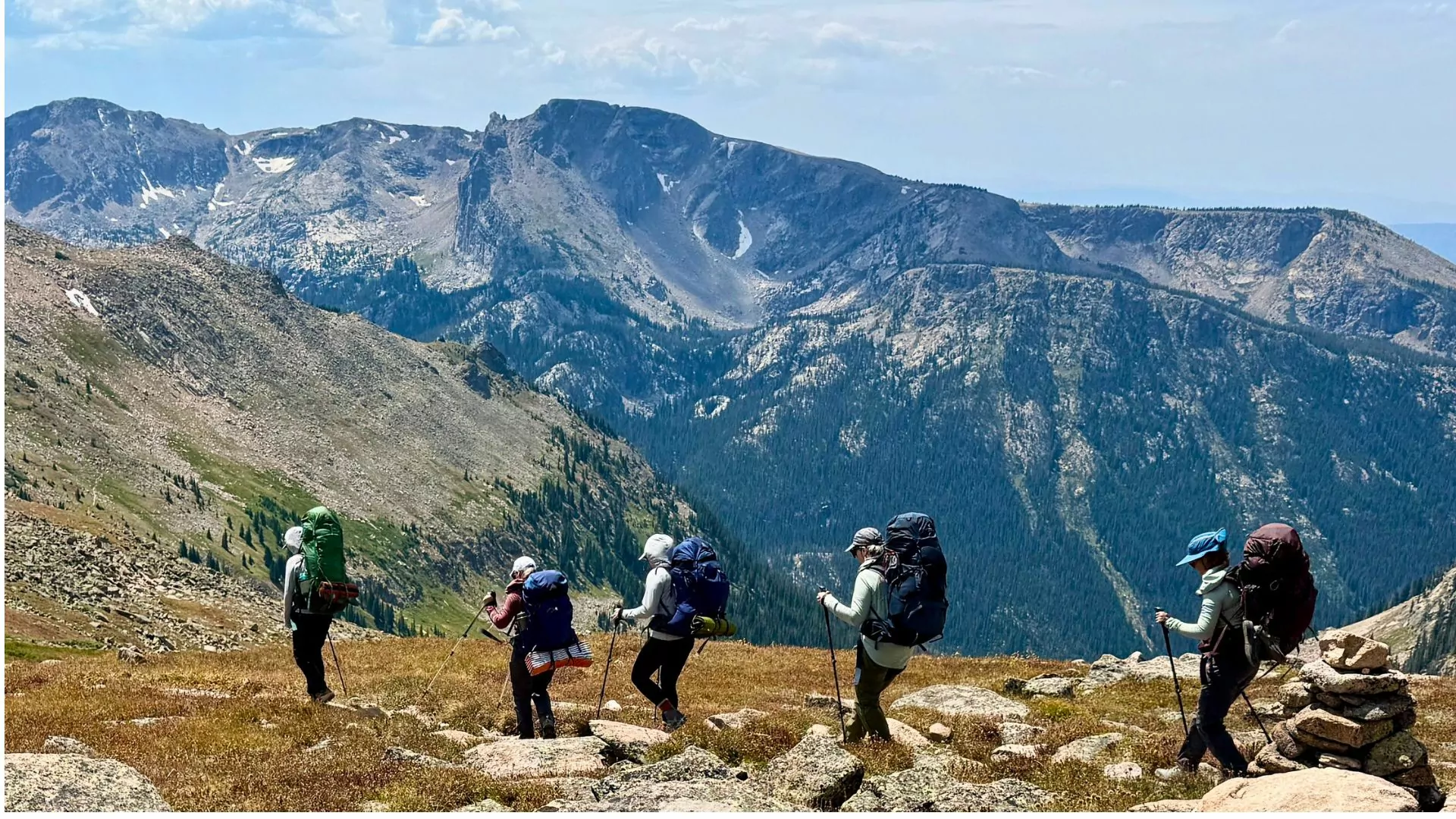
The summer season in Colorado is described well by a 1933 song composed by George Gershwin: “Summertime, and the livin’ is easy!” Cool nights, hot days, full moon hikes, grand summits, and Colorado peaches. Life is good!
One rule we live by here is to schedule your day by the weather. Keep an ever-vigilant eye out for afternoon thunderstorms—get going early, summit early, and get down early. Early to bed, early to rise is the hiker’s life. July and August often see a monsoon moisture pattern with frequent afternoon thunderstorms, and they are a couple of the wetter months of the year.
Wildland trips are in full swing daily from early July on. Backpack trips reach far and wide throughout Rocky Mountain National Park. Private day hikes are customized to the group, hitting summits, alpine lakes, or relaxed strolls in the woods. Fishing is a fun evening activity while on backpack trips, and your guide may even cook up a trout for you.
As soon as elk calves can get around, elk head to the high country. Bull elk begin bugling in mid-August as the rut commences and continues until fall. Bull elk in rut are a force to reckon with, and occasionally thrash their massive antlers at cars, trees, other bull elk and, sometimes humans who get too close. Once the rut passes, they enter a docile time through winter.
Visiting Colorado in the Fall
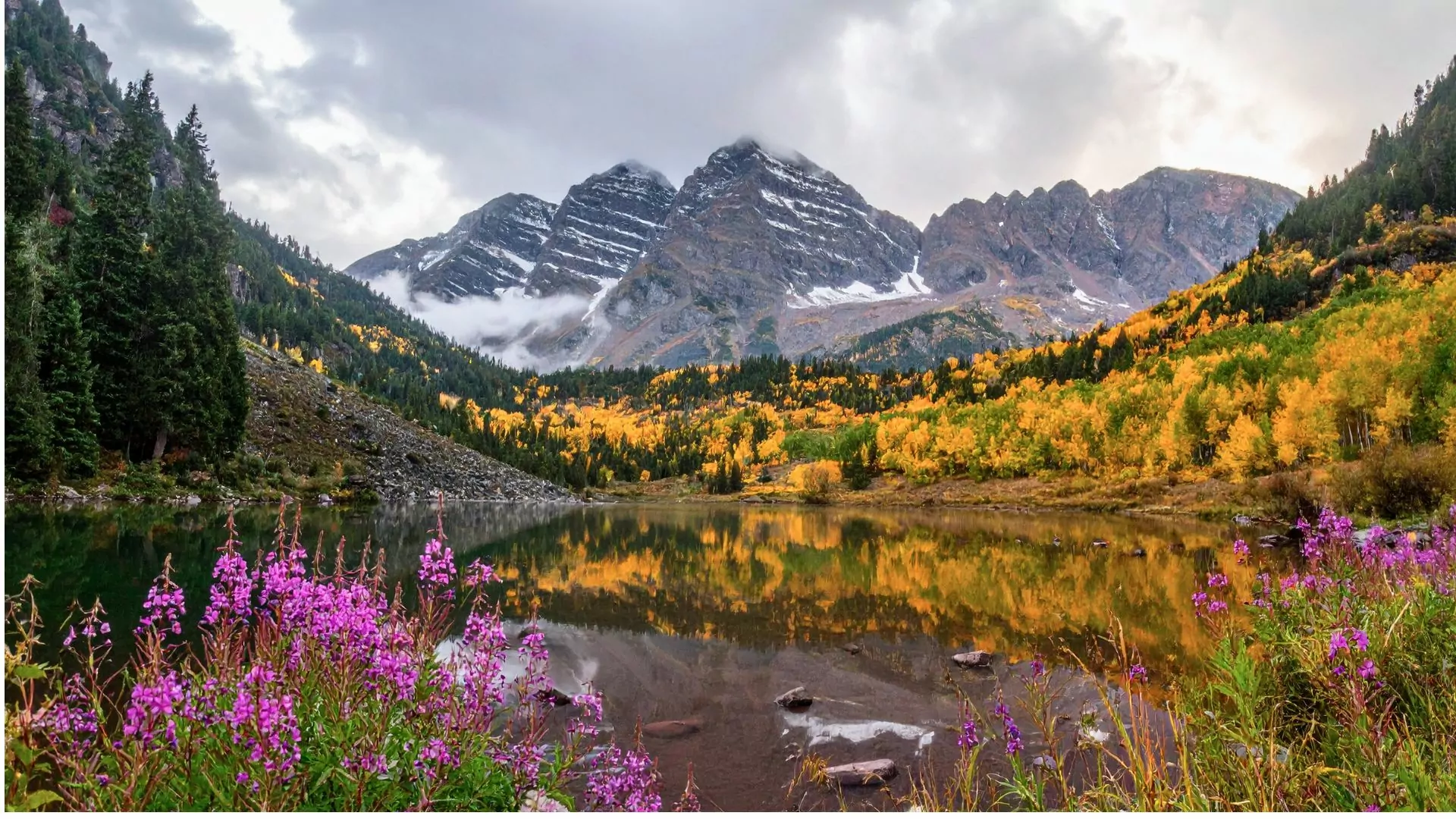
Clear, crisp blue sky days, frosty nights, and the driest of seasons in Colorado. Denver’s first snow average is October 18th, while the mountains get dusted from late August on. The tundra transforms from green to red to brown. The yellow color of aspen trees electrifies!
At Wildland we look forward to our fall lodge trips—good food, a warm cabin, pleasant day hikes, and good camaraderie. Some summits remain accessible into fall weather permitting. Early October onward alpine lakes can begin to freeze.
Statewide, there are corn mazes, pumpkin patches, and roasted peppers. In Palisade Colorado, one of our great agricultural regions, fall is the season of all things produce. Apples, grapes, wine, winter squash, and small batch apple ciders hard and soft.
Fall color peaks about the last week of September.
Fall in the Rockies hiking Tour
Visiting Colorado in the Winter
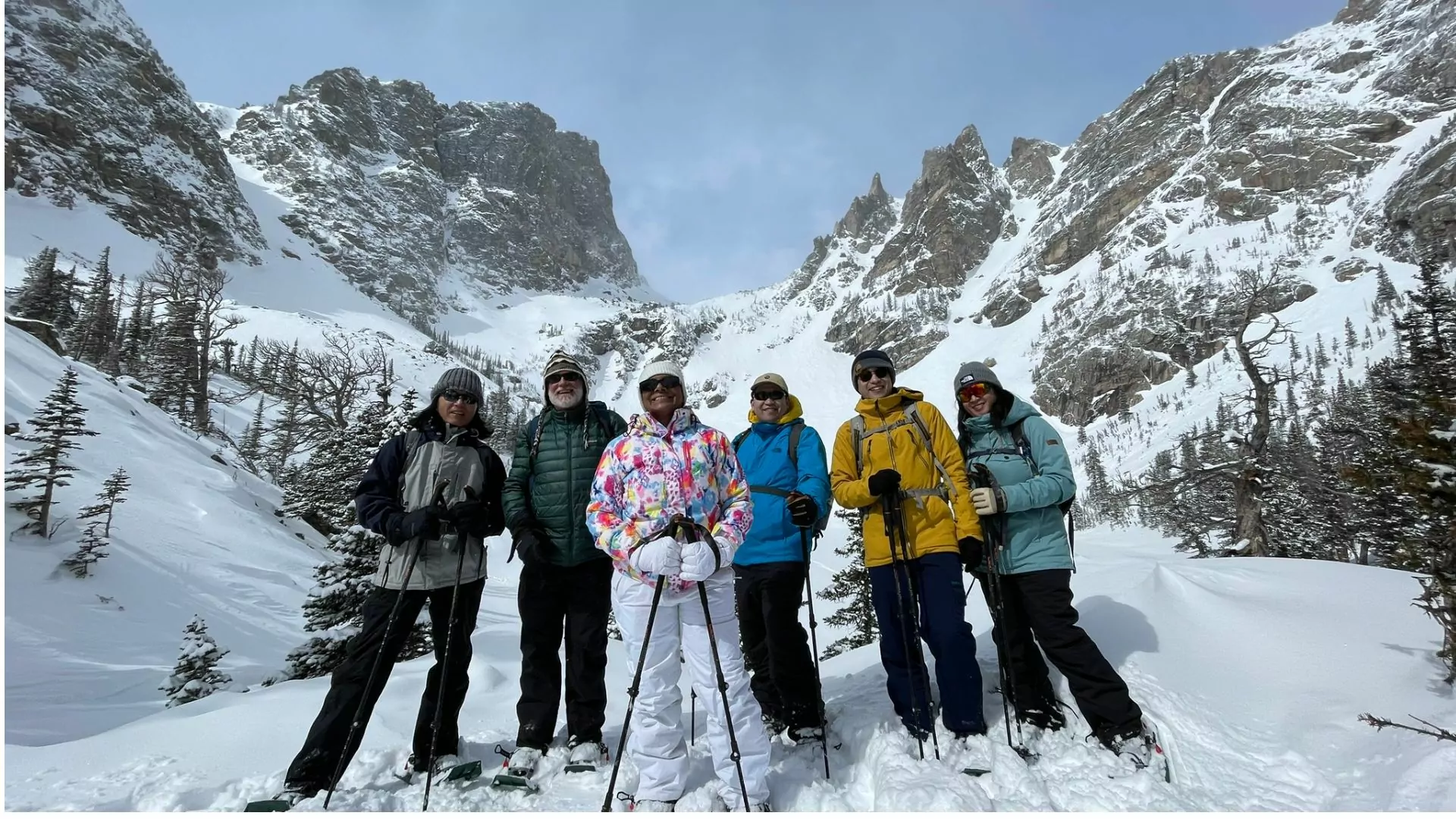
Winter is the season of seasons in Colorado! Cold, sunny, dry Denver days. Heavy snow in the mountains.
Of all the seasons in Colorado, this is the season many people get most excited about. In the highest mountains, winter may be a 7-9 month season. On average, Denver gets about 55 inches of snow a year, Estes Park about 70”, and the high mountains closer to 300-350.”
Winter is the season when there are many opportunities to see evidence of wildlife. Animal tracks abound, and the fun of a snowshoe trip is discovering many different animal tracks in the snow. Snowshoe hares, so named for their large back feet, leave lots of tracks. Mice often drag their tail as they run through the snow. You might see tracks of a fox and a snowshoe hare running together in a chase.
About 21 animal species worldwide are known to change color as the seasons change. Four are native to Colorado. Snowshoe hares change from brown in summer to white in winter. Ptarmigans, a tundra bird, change from speckled brown and gray to white, and long and short tailed ermines (weasels), change from tan body with cream belly to white.
A Season for Everyone
The seasons in Colorado are distinct and spectacular, and no two days are alike. Each day brings new sensations of wind, temperature, air feel, smells, clouds, and brightness of the sun. This is a dynamic environment with unforgettable experiences in all seasons, and we hope you enjoy many adventures to come!