

The Do’s, Don’ts, and Other D’s of Pooping Outdoors
As backpacking guides, we spend a lot of time teaching people how to move comfortably and respectfully through the wilderness. We talk about packing efficiently, staying hydrated, navigating terrain, and practicing Leave No Trace principles. Yet one topic always makes people squirm, laugh, or panic a little: pooping outside. It’s an essential part of backcountry travel, and doing it responsibly helps protect water sources, wildlife, fellow hikers, and the places we love most.
This guide breaks down the do’s, don’ts, and “other D’s” of pooping outside so you can approach the process with confidence and care. Whether you’re guiding clients, hiking with friends, or heading into the backcountry for the first time, these principles make the experience sanitary, environmentally responsible, and surprisingly simple.
Desire: When the Urge Hits, Go Early and Go Smart
Let’s start with the first D: Desire. When nature calls, don’t ignore it. Holding it in can lead to abdominal pain, constipation, bloating and trapped gas. New backpackers sometimes try to “wait for the perfect spot” only to find themselves in crisis mode half an hour later.
When you feel the desire to go, start scanning for an appropriate area that follows Leave No Trace guidelines. Not every landscape is suitable for burying waste, and some areas require very specific practices. Recognizing the urge early gives you time to find a safe, appropriate, and responsible place to relieve yourself instead of rushing into the nearest bushes.
Devices: The Tools That Make Pooping Outside Easier
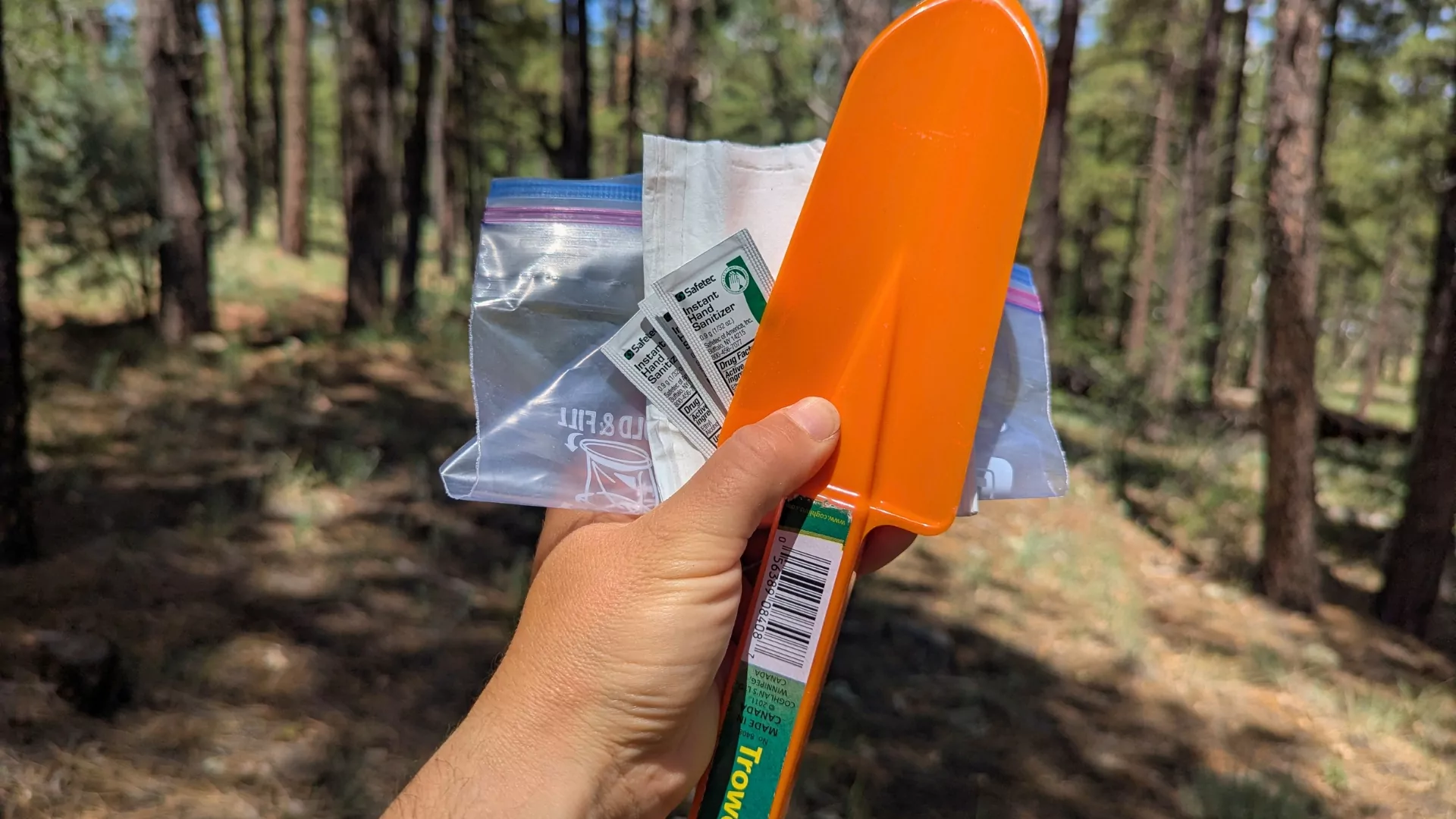
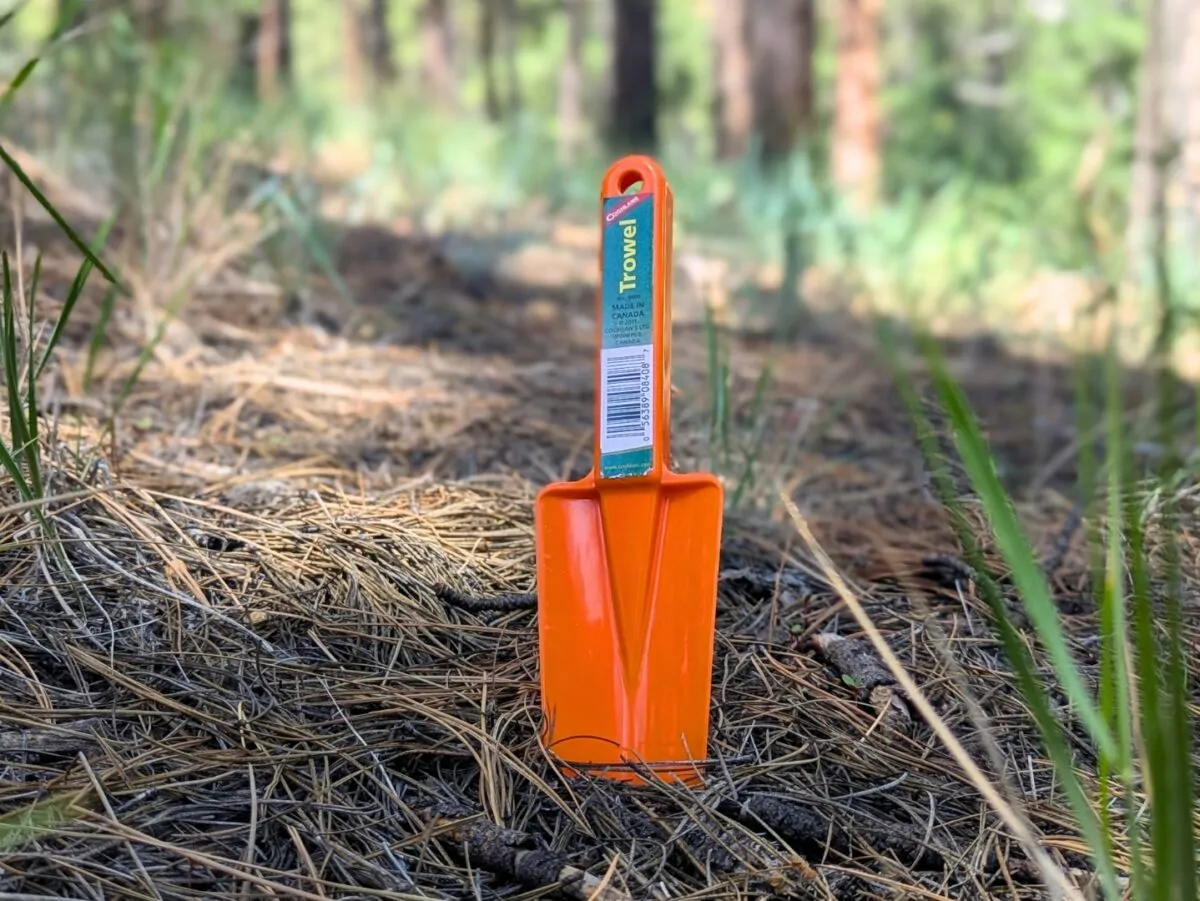
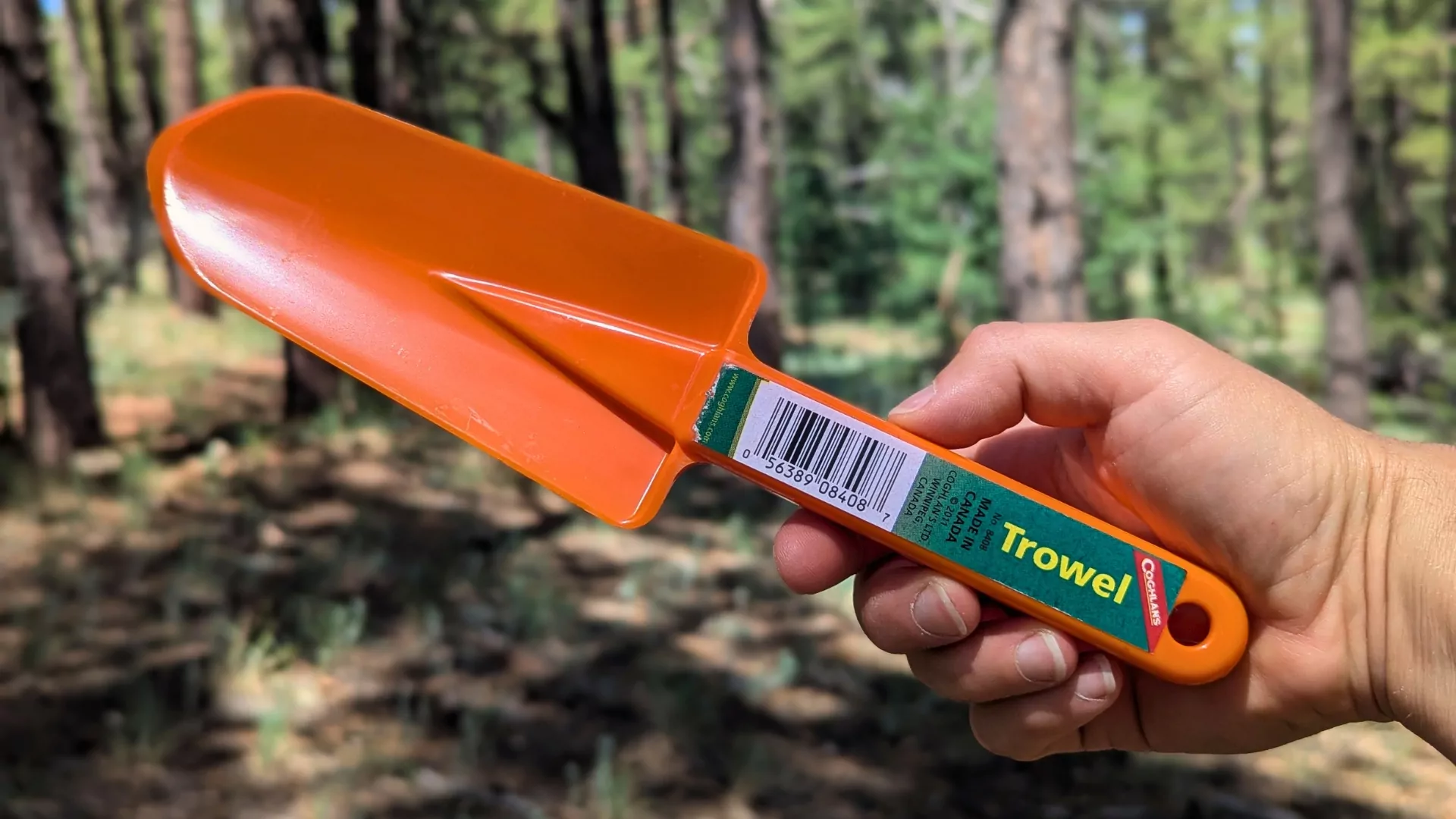
There are a few lightweight devices that make pooping outside clean and efficient. A small trowel is the classic tool for digging a cathole. Many guides prefer metal trowels because they can break through compact soil, but ultralight plastic trowels also work well in softer terrain. Bring a Ziploc bag to carry out your used toilet paper instead of burying it, as rodents often dig it up.
In areas where burying waste is not allowed or not effective—desert environments, high alpine zones, deep snow, or anywhere with fragile soil—wag bags become your essential device. These sanitation kits typically contain a durable disposal bag, a gelling agent that neutralizes waste, and a small amount of toilet paper (Pro Tip: Bring extra toilet paper, because it’s never enough). Using a wag bag can feel unfamiliar the first time, but it’s simple: go directly into the bag, add the used toilet paper to the bag, seal it, and pack it out. Check the local regulations for the area you’ll be hiking in to determine if you’ll be digging catholes or carrying wag bags.
A few other helpful devices include:
- A reusable backcountry “bidet” bottle
- Hand sanitizer for post-bathroom hygiene
- A sealable plastic baggie for storing used toilet paper to carry out with you
Having the right devices on hand ensures that pooping outside stays safe and low-impact.
read: Feminine Hygiene in the Backcountry
Distance: How Far You Should Be From Water, Trails, and Camp
One of the most important principles of pooping outside is maintaining proper distance. This prevents water contamination, minimizes the chance of spreading diseases, maximizes decomposition, and addresses the social reality that nobody wants to discover someone else’s cathole next to the trail.
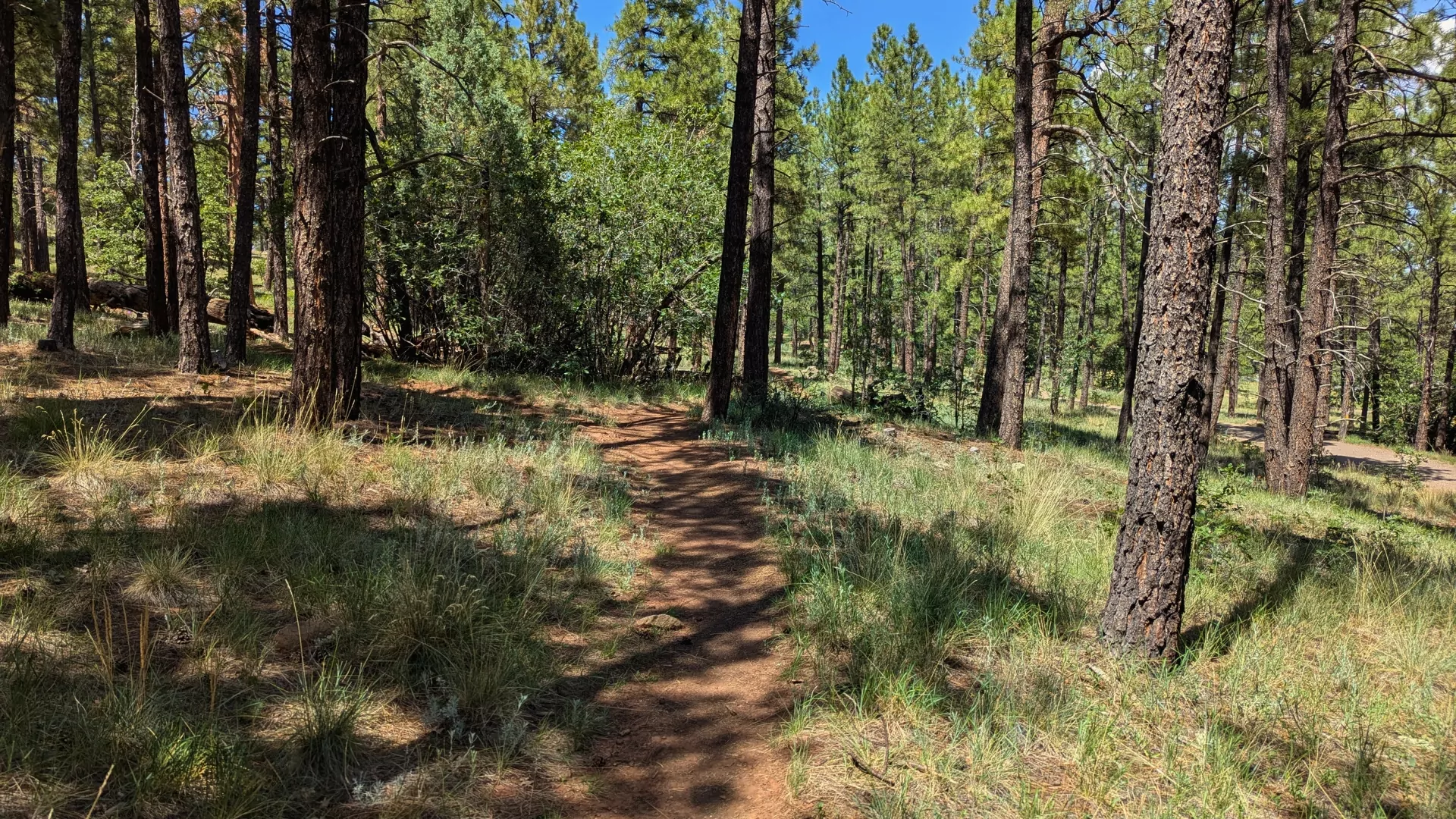
When nature calls, you’ll want to walk at least 200ft (70 big steps) from any water source to prevent human waste from leaching into water systems and 200 ft away from any trails or campsites both for hygiene and wildlife safety. These boundaries hold true across almost all backcountry regions. If you’re in a narrow canyon, a small alpine zone, or a region where it’s impossible to be 200ft from water sources, camp, or trails, the correct solution is almost always to use a wag bag instead of digging.
Dig: How to Create a Proper Cathole
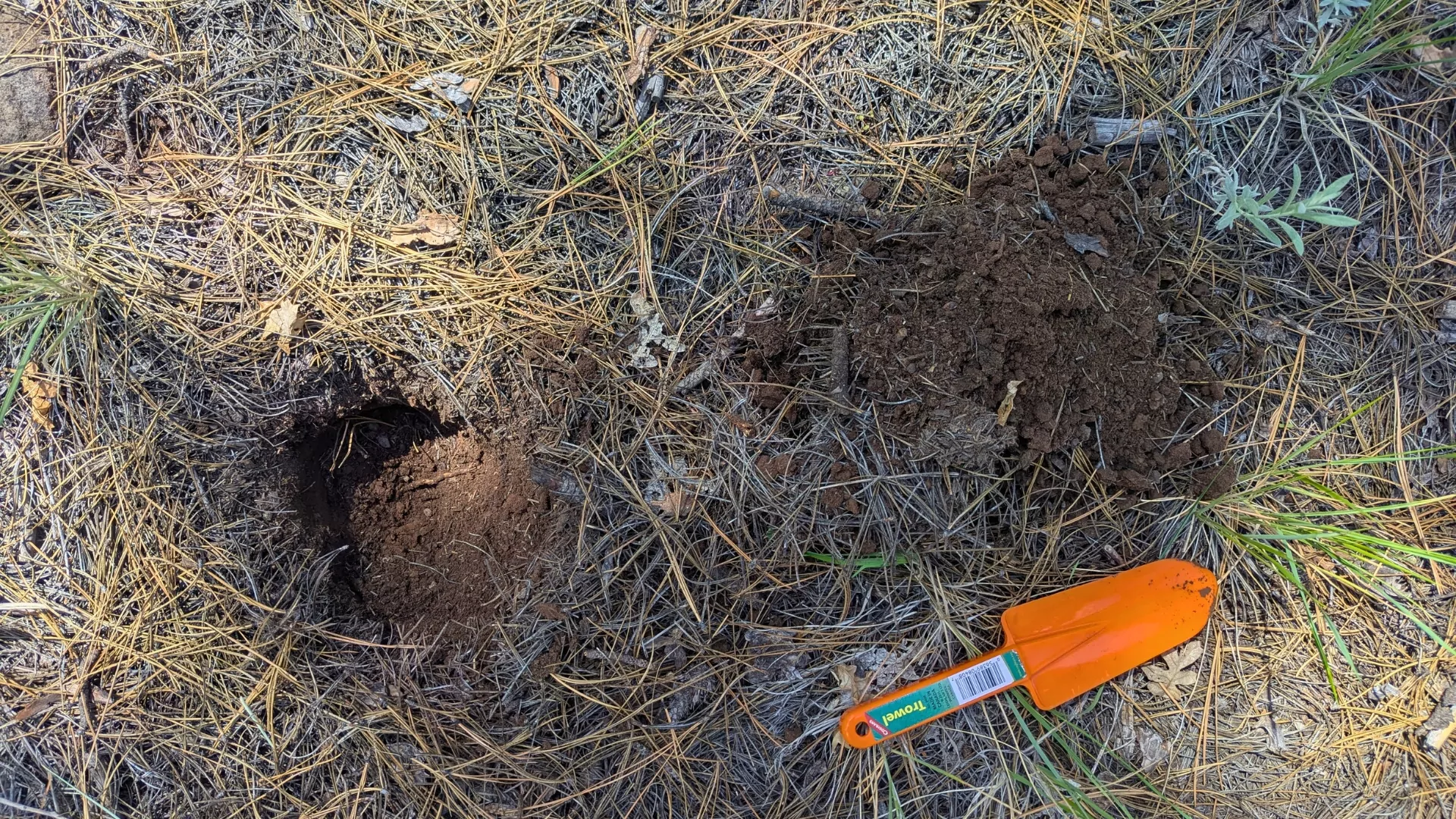
Once you’ve found an appropriate spot, it’s time to dig. A cathole should be created in organic, rich soil rather than sand, gravel, snow, or barren surfaces if possible. Organic matter contains microbes that help break down human waste much more efficiently.
Use your trowel to remove the top layer of soil gently so it can be replaced later. Digging slowly also avoids damaging plant roots unnecessarily. A well-constructed cathole blends back into the environment once filled and covered properly.
Depth: Why 6 to 8 Inches Matters
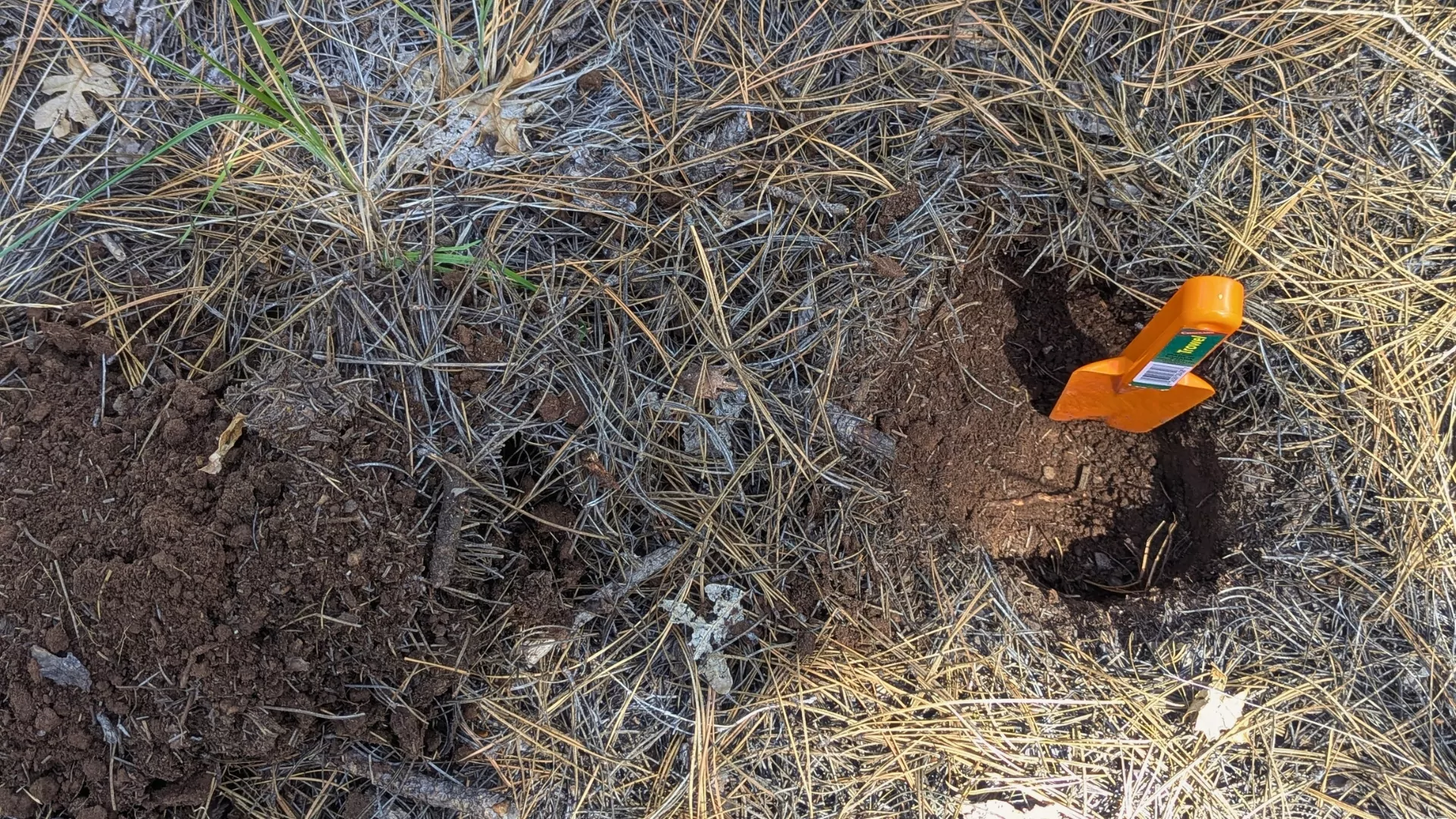
Depth is one of the most misunderstood parts of pooping outside, but it’s crucial. A cathole should be 6 to 8 inches deep and about 4 to 6 inches wide. This depth provides the right balance of microbial activity: shallow enough that organisms can break down the waste, but deep enough to prevent animals from digging it up.
If you dig too shallow, the waste may be exposed by erosion. If you dig too deep, decomposition slows because the soil has less oxygen and fewer microorganisms. To check depth quickly, measure the length of your trowel in advance so you know what 6 to 8 inches looks like when you’re in the backcountry.
Deposit: How to Go and What to Leave Behind
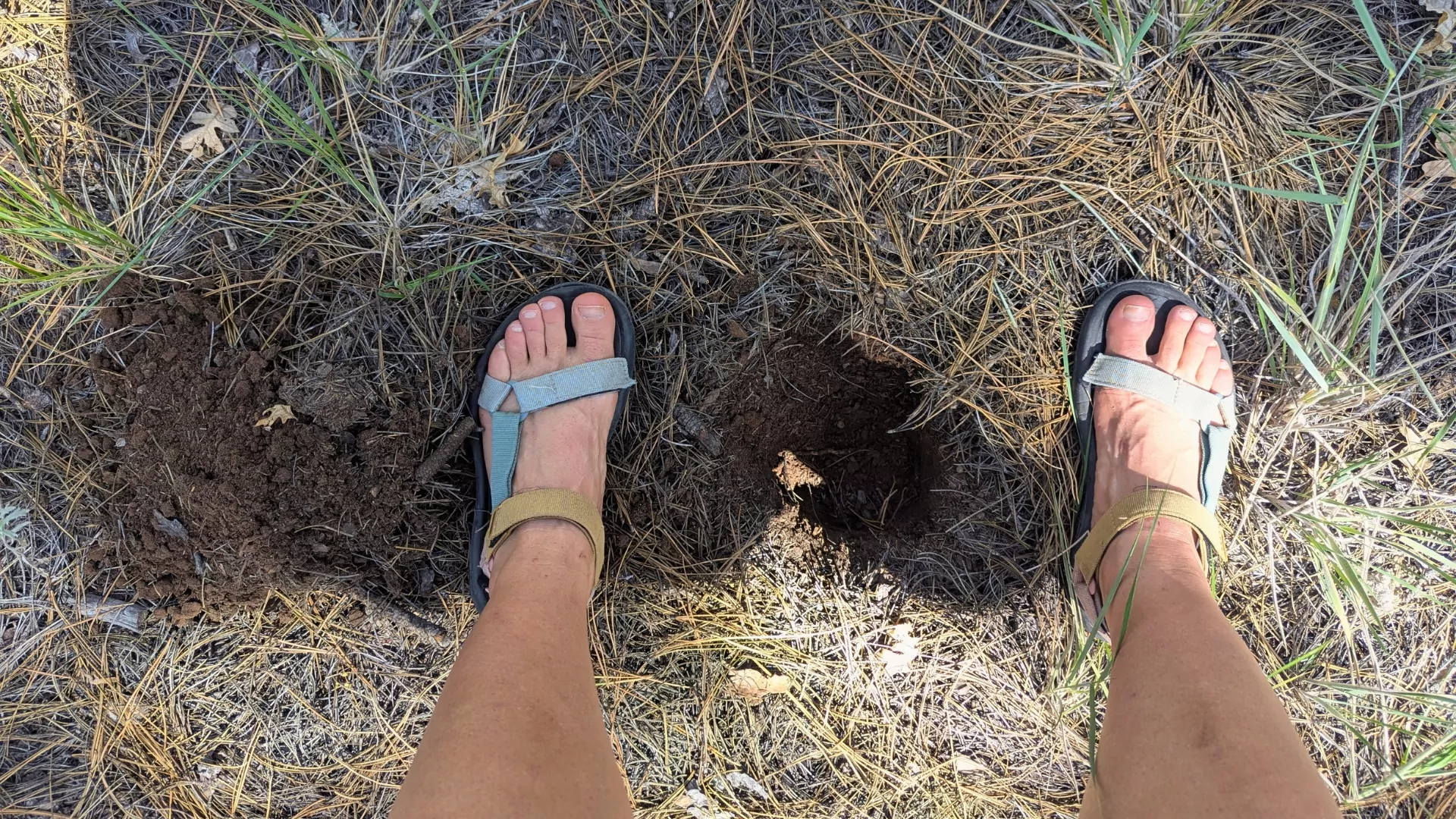
Once the hole has been dug, it’s time to deposit. Position yourself over the hole in a comfortable squat. After you go, use only as much toilet paper as you absolutely need and be sure to bring a baggie for carrying out your used toilet paper.
After depositing your waste, stir a small amount of natural soil into the hole. This “soil-to-waste contact” improves decomposition. When you’re done, return the original top layer of soil and natural materials, disguising the site completely.
Disinfect: Clean Hands Keep Everyone Healthy
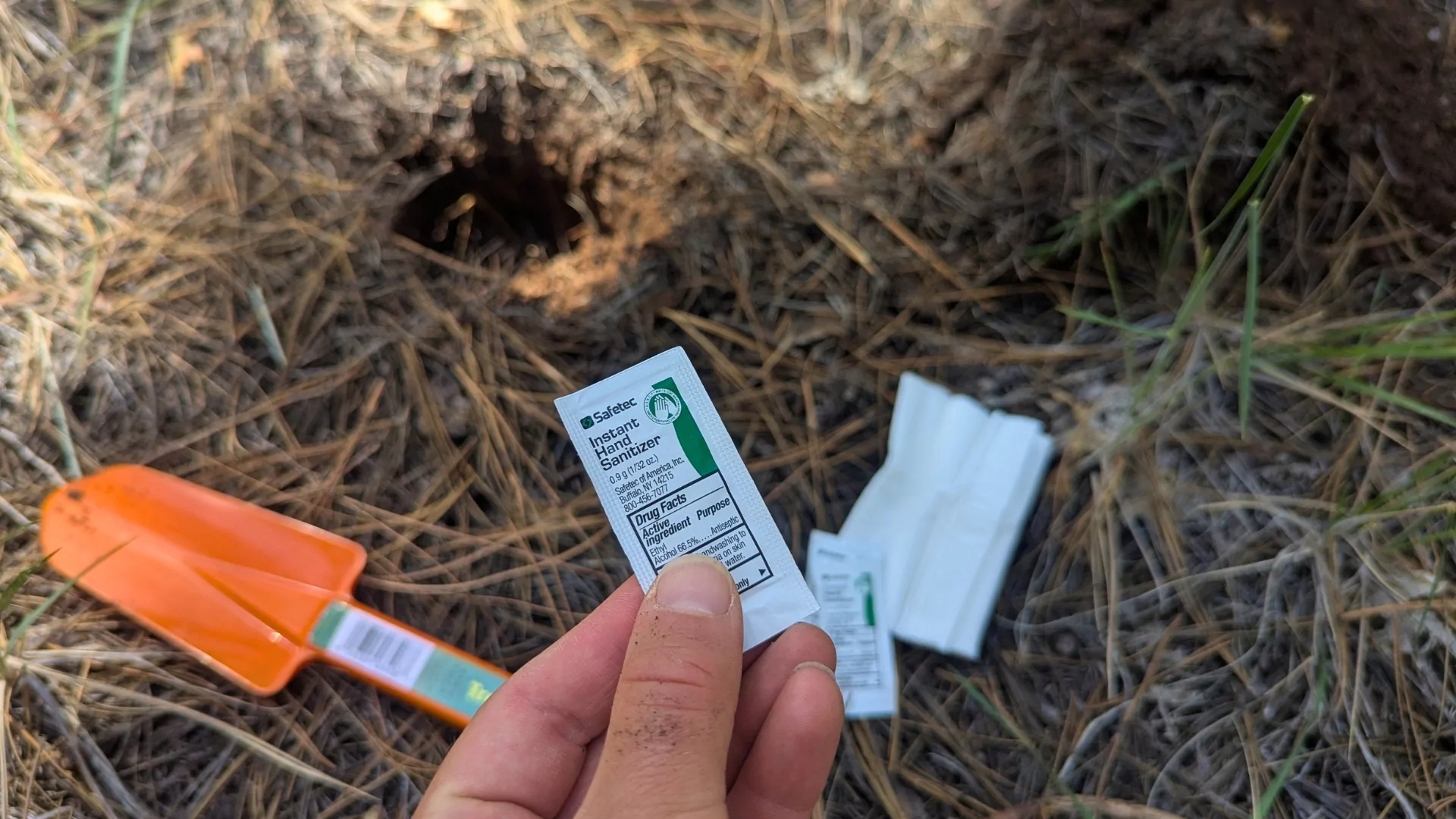
Once you’ve finished pooping outside, disinfect your hands with sanitizer or wash with soap and water immediately after handling toilet paper. A travel-size hand sanitizer bottle weighs almost nothing and eliminates the spread of bacteria, protecting both you and your companions. Some hikers also bring a small bottle of biodegradable soap to use far from water sources. If you choose this method, make sure to follow the same 200ft distance rule when hand washing.
Disseminate: Share the Knowledge and Lead by Example
The final D—disseminate—is all about education. As an experienced hiker, leading by example is one of the most powerful ways to promote responsible pooping outside practices. Teach beginners how to dig a proper cathole, explain why distance matters, and demonstrate how to use a wag bag when conditions require it.
Not all landscapes are the same. In arid environments, waste never breaks down properly. In high alpine zones, there is little soil to dig into. In narrow river corridors, all human waste must be packed out in a Waste Alleviating and Gelling or “WAG” bag. A resealable plastic bag designed to stabilize and deodorize solid human waste for safe containment and carrying out of the wilderness.
Disseminating accurate information helps keep ecosystems healthy and ensures that everyone who travels through wild places knows how to protect them.
read: How When and Where to use a Wag Bag
Final Thoughts: Respect the Places You Love
Pooping outside is part of the wilderness experience. When done well, it protects water sources, prevents pollution, and upholds the Leave No Trace ethic. It’s a simple practice built on a few key principles: recognizing the desire early, using the right devices, traveling the correct distance from sensitive areas, digging effectively, burying waste at the appropriate depth, depositing responsibly, disinfecting afterward, and disseminating good information. With these tools and practices, you can navigate pooping outside with confidence and help keep the backcountry pristine for future adventurers.