

Thorofare Adventure
Guided Backpacking Trips
7 Days, 6 Nights
44MI / 70KM
Description
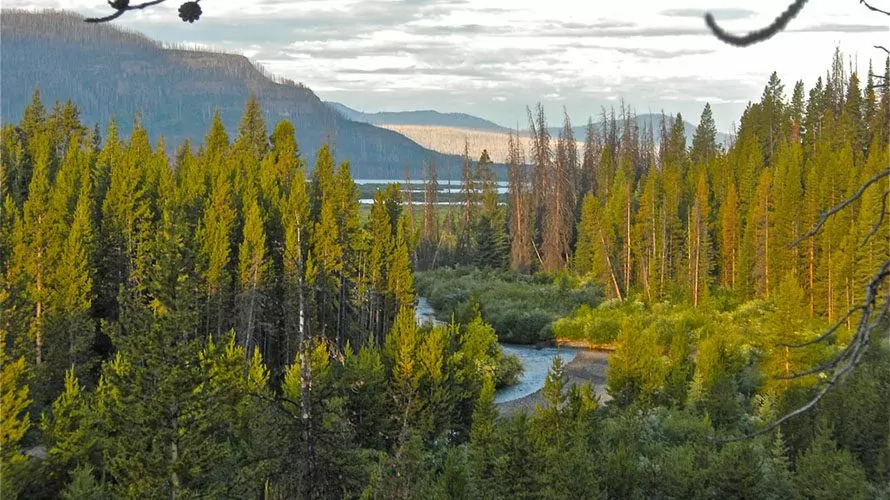
Do you want to have an unforgettable adventure this summer? If so, the Thorofare backpacking trip is for you! This trip is a 7 day/6 night hiking adventure into the headwater basin of the Yellowstone River, arguably the most pristine and remote area in the Continental United States. Rich with wildlife, mountain views, vast meadow systems, roaring rivers, crystal clear creeks, and feeling of wildness, this trip is truly spectacular!
We catch a boat shuttle from Bridge Bay Marina to the beginning of our hike along the eastern edge of Yellowstone Lake. From here we hike to the South end of the lake, where the mouth of the Yellowstone River marks the beginning of the Thorofare Country. For 3 more days we hike up the Yellowstone River into some of the most remote wilderness in the continental United States. The chances of seeing wildlife are very good (although never guaranteed of course), as this area is the Eden of Yellowstone’s animal habitat. Bring your fly rod along if you’re a fisherman, and you’ll have the opportunity to catch 20 inch native cutthroat trout. Bring your camera along if you’re a photographer, and you’ll be shooting pictures of the most pristine area in Yellowstone. On day 5 we begin our hike back to Yellowstone Lake, exploring and scouting for wildlife along the way.
Need to Know: March 1st Permits
Due to Yellowstone’s permit system, which issues backcountry hiking and camping permits on March 1st each year, it’s beneficial to register before February 28th of the year you’d like to hike with us. Give us a call at 1-800-715-HIKE (4453) to learn more!
Trip Details
-
Trip Type
Guided Backpacking Trips -
Trip Length
7 Days, 6 Nights -
Daily Hiking Distance
6-10 mi -
Group Size
2-8 Guests
What's Included
-
 Top-of-the-line tent, backcountry sleeping pad and multi-day backpack
 -
High quality, synthetic sleeping bag (professionally laundered after every use)
-
Use of trekking poles
-
All meals are included from breakfast the first day through lunch on the last day
-
Trained hiking guide(s) with years of personal wilderness and hiking experience, medical certifications, and a passion for leading people into breathtaking landscapes. See Guide Bios.
-
Roundtrip transportation from your hotel in Jackson, WY
-
Entrance fees and national park permits
-
Bear safety equipment including bear spray cannisters and food-hanging gear
-
Emergency equipment including a company-issued first-aid kit and communication device
-
Mandatory 5% national park fee that passes through directly to Yellowstone
What's Not Included
-
 Clothes, raingear, and footwear
 -
Sunscreen, toiletries and personal items
-
Water bottles and a headlamp or flashlight
-
Guide gratuity (industry recommendation is 10-20% of trip cost)
Day 1
Shuttle to Trailhead: 2.5-hour drive
Hiking Mileage: 8.2 miles
Elevation Gain: 100 feet
This unforgettable Yellowstone backpacking adventure starts from Bridge Bay Marina on the north end of Yellowstone Lake, where we catch a boat shuttle that will drop us off 9 miles away along the the Southeast Arm of the lake. During the boat ride, and also once we’re hiking, we’ll have fantastic views of Mt. Doane and Mt. Stevenson. Dot and Frank Islands meanwhile aid in grasping the size of Yellowstone Lake. It is over 20 miles long, 14 miles wide and 300 feet deep. Scientists believe it is part of the ancient caldera of Yellowstone’s supervolcano. Once on shore, we’ll hike 8 miles to our camp at Beaverdam Creek, which marks the beginning of the valley of the Upper Yellowstone River. Camp for the evening is atop a bluff overlooking the creek and the expanse of the Thorofare!
Day 2
Hiking Mileage: 7.3 miles
Elevation Gain/Loss: marginal
After crossing Beaverdam Creek we hike through thick willows and enter the broad meadows of the upper valley. Moose are sometimes encountered lounging among the willows. Another mile of hiking brings us to burned forests from the fires of 1988. Now over a quarter century old, the cleansing, regenerative effects of the fire are clearly evident. We’ll make camp this evening in the vicinity of Trapper Creek, with spectacular views of the Trident (a series of rocky escarpments) to the south and Turret and Table Mountain to the east. Occasionally wolves can be heard howling from this part of the valley in the late evening and early morning.
Day 3
Hiking Mileage: 7.5 miles
Elevation Gain: 450 feet
The next morning we’ll hike deeper into the Thorofare, as our trip continues south, paralleling the Yellowstone River. Often following grizzly or wolf tracks on the trail, we continue to scout for wildlife as we hike. We’ll hike a short distance downstream from camp to a large tributary of the Yellowstone River named Mountain Creek. We’ll depart the valley here and hike upstream along Mountain Creek to its junction with Howell Creek. We’ll then hike a few miles up Howell Creek to camp near the park boundary. We’ll have the opportunity to sleep in one of the most remote areas of the Continental United States.
Day 4
Hiking Mileage: 4-10 miles (optional day hike)
Elevation Gain/Loss: 1250 feet
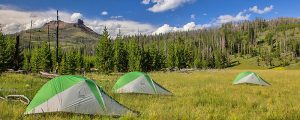
Day 4 is exciting for two reasons. The first is that we’re not moving camp! We’ll sleep in and enjoy a delicious breakfast before embarking on a spectacular day hike to Eagle Pass, the second exciting part of the day. Several miles up Howell Creek the trail steepens and ascends through classic Yellowstone subalpine terrain to Eagle Pass. This will place us just below Eagle Peak, the highest peak in Yellowstone at 11,358 feet. Here we will have brilliant views of the wild and beautiful Absaroka Mountains to the east.
Day 5
Hiking Mileage: 6.5 miles
Elevation Loss: 350 feet
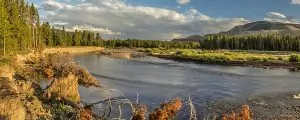
On day 5 we’ll begin our hike back toward Yellowstone Lake, enjoying the wildlife, wildness and views as we go. The views hiking back north are very different than they were on the way in. As we hike we’re watching the Yellowstone River flow into Yellowstone Lake and the Gallatin Mountains in the distance. Our camp will be near the Yellowstone if not right on its shores.
Day 6
Hiking Mileage: 9.9 miles
Elevation Loss: 150 feet
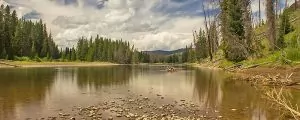
Day 6 we’ll continue hiking back through the Yellowstone River valley to a camp right on the shores of Yellowstone Lake.
Day 7
Hiking Mileage: 4.6 miles
Elevation Gain/Loss: marginal
Shuttle: 2.5-hour drive
On day 7 we’ll hike along the eastern edge of Yellowstone Lake and catch the boat shuttle back to Bridge Bay Marina. A comfortable drive through Yellowstone National Park back to our hotels ends this amazing backpacking trip.
Itinerary Note
Please Note: We always do everything in our power to follow the set itinerary, however it can change occasionally based on temporary access restrictions, weather, lodging/campground availability, guest ability/injury, natural events like fires and flooding, and other potential causes. Normal terms and conditions apply to trips with itinerary changes.
Packing List
IMPORTANCE OF BEING PREPARED
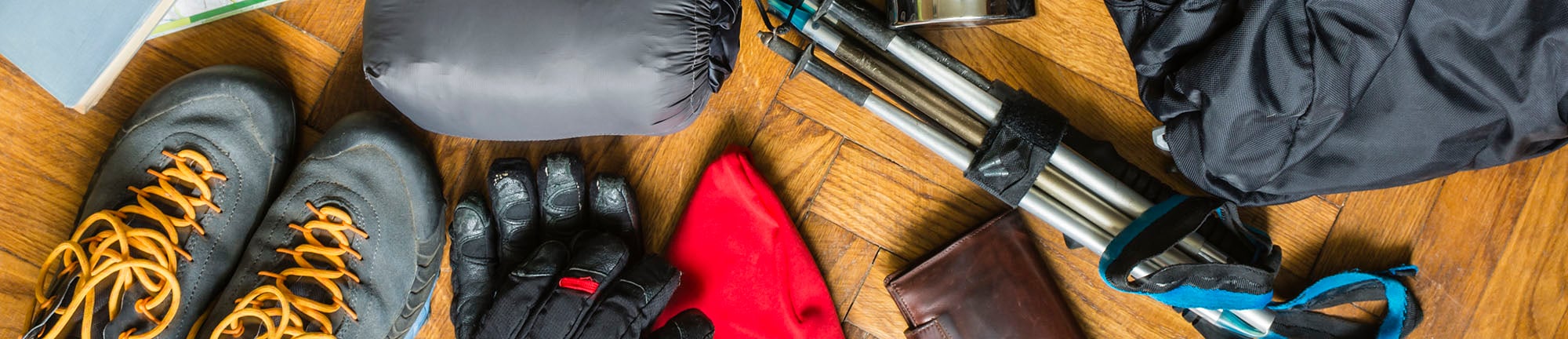
Your safety and enjoyment will depend on your level of preparedness. It is your responsibility to arrive with the items listed below. Our Gear Guide is a resource to find more information about these items and links to online options. If you have additional questions about what to pack, please ask your guide during the pre-trip contact (~10 days prior to the trip start date) or call our Adventure Consultants 7 days a week at 928-223-HIKE (4453).
Packing List Video
For more guidance on the packing list, we recommend watching our Wildland Packing List Video. A senior Wildland guide and outdoor retail expert walks us through each item with examples and insights. Click here to see the video.
STANDARD CLOTHING CHECKLIST
The following items are required for your trip unless otherwise noted. When packing, think layered clothing systems that work together and can be easily added or removed.
STANDARD CLOTHING CHECKLIST
(GG) Gear Guide: see for more info and links to product options
Supportive, lightweight, well-drained shoe or sport sandal for creek crossings and/or for camp comfort (Camp Shoes GG)
One pair for every two days of your trip, plus an extra pair to sleep in. Hiking-specific padded socks, no cotton please! (Socks GG)
( Note: wearing thin liner socks under your hiking socks can help prevent blisters )
Wide-brimmed hat or baseball cap/bandana combo (Sun Hats GG)
1-2 non-cotton, breathable short sleeve and/or long sleeve shirts (Hiking Shirts GG – Sun Hoodie GG) (Note: long sleeve shirts provide better sun protection)
Mid-weight sweater or pullover of wicking material such as merino wool, fleece or polypropylene (Mid Layers GG)
Nylon pants AND shorts, zip-offs or leggings (Shorts GG – Pants GG)
waterproof jacket and pants, breathable fabric such as Gore-Tex® or coated nylon. For the pants look for side zippers that will allow you to pull them over your boots. (Rain Jackets GG – Rain Pants GG)
Lightweight beanie and light-to-mid weight fleece or wool gloves (Hat/Gloves GG)
Down-fill or synthetic-fill insulated “puffy” jacket or warm, heavy-weight fleece jacket (Mid Layers GG)
1 pair of wicking tops and bottoms that are lightweight to midweight, synthetic wicking materials such as polyester, polypropylene, merino wool…etc. (Base Layers GG)
recommended for June/July. Aug/Sept may be needed but will be weather-dependent. (Repellent GG)
Important Note
Important Note : Please, no cotton hiking clothes and please feel free to call us if you have any questions or you can reference the Gear Guide .
GEAR CHECKLIST
2+ liters capacity, either water bottles or bladder/hose system and an additional water bottle (Hydration Bladders GG) ( Note: We recommend always having a bottle with 1 liter of capacity as a back-up in case of a hydration system failure and to use while in camp )
preferably with an L.E.D. bulb that works with AA or AAA batteries (Headlamp GG) ( Note: always test your headlamp before trips, travel/pack without batteries in device, and for longer trips (4+ days) consider a spare bulb and 1 set of spare batteries )
if you wear contact lenses, please also bring a pair of glasses – your contacts are likely to become dirty and may be difficult to clean
preferably a product containing at least 25% “DEET” (Repellent GG) ( Note: some people are sensitive to this product )
please inform your trip leader of any medications you are taking
small amounts, travel sizes and/or just what you need for the trip (important that they are small!)
for any shopping you would like to do and for consideration of tipping your guide
( Note: industry tipping recommendation is 10-20% of the trip cost based on your level of satisfaction )
Important Note
Important Note : We need to be “bear aware” on our trip. All food, toiletries, and scented items must be secured each night and never left in tents or backpacks overnight. Please keep scented items to a minimum and bring the smallest amount necessary for your trip (travel size items are perfect) in order to best fit into bear canisters or into bear bags to be hung away from camp each night.
OPTIONAL ITEMS
please see information about bringing your own below (Sleeping Bags GG).
As a Wildland guest, you can enjoy a 20% discount off Leki trekking poles (reservation number required.) Click here for discount. Trekking poles are provided for guests who do not bring their own. (Trekking Poles GG)
only if swimming is an option on your trip, some guests prefer to swim in quick drying hiking clothes, sports bra, etc…
recommended for wet or snowy conditions (Gaiters GG)
lightweight, compressible and packable (Camp Pillow GG) ( Note: many guests use their extra clothing in a stuff sack with a bandana as a pillowcase, and it works well )
various sizes for better organization of clothing & gear, and/or to help create a camp pillow, etc.
( Note: A lightweight waterproof stuff sack can be extremely useful in wet conditions )
consider bringing any joint braces that may be currently needed or from past injuries (i.e. knee, ankle, elbow, etc…)
lightweight paperback book, magazine or small notebook/pen for journaling
for camera, headlamp or other electronics
Small, lightweight devices to recharge electronics (Power Bank GG)
lightweight, compressible and packable – bandanas also work (Camp Towel GG)
optional, lightweight and packable equipment for fly-fishing or reel-casting. A license may be required. Check with your guide about fishing opportunities and requirements for your trip.
DO NOT Bring
– per our terms and conditions no firearms or other weapons are permitted, including knives with blades longer than 4 inches
– including marijuana, which is illegal on federal lands and in national parks
TRAINING
Training is extremely important for you to maximize your enjoyment! The more physically prepared you are, the more fun you’ll have! Click below to read our training recommendations.
Travel, Transportation, Meeting & Lodging

MEETING TIME & PLACE
You will meet your guide and group at the Mountain Modern in Jackson, WY for an orientation meeting at 5:00 pm the evening before the trip begins. Your guide will go through the packing list, communicate the first day’s logistics, and answer any last-minute questions you have.
PICK UP Locations
- Jackson, WY
Your guide will coordinate the time of pick up during the pre-trip orientation meeting.
You can access Jackson from Driggs, Idaho using the START bus – START Bus | Jackson, WY
ARRIVAL AND DEPARTURE DATES
Travel to and from the trip starting point is not included in the cost of our trips. Please plan on arriving the day before the trip leaves and departing the day after getting back from the field.
TRIP CONCLUSION
This trip will conclude at approximately 7:00 pm on the last day with drop-off in Jackson, WY.
GATEWAY CITIES
Jackson , WY
Jackson Hole Airport is served by several national carriers. Several companies provide shuttle or taxi services into Jackson from the airport. Advance reservations are recommended. Hotel shuttles, Uber and Lyft are also options.
Idaho Falls, ID
Idaho Falls is home to a regional airport serviced by several national carriers. Flights tend to be less expensive than Jackson. Salt Lake Express (800-356-9796 or 208-656-8824) offers two daily shuttles from Idaho Falls to Jackson.
Salt Lake City, UT
You can also fly into Salt Lake City and drive to Jackson Hole. It is a 4.5-hour drive from Salt Lake City to Jackson on good roads. Salt Lake Express (800-356-9796 or 208-656-8824) and Mountain States Express (307-733-4629) offer daily vans from Salt Lake City to Jackson. Advance reservations required.
STORAGE OF PERSONAL ITEMS & VEHICLES
The most secure option for your luggage will be to store it with the hotel you’ll be using before and after the trip if they allow it. The best option for your vehicle is long term parking at the Jackson Hole Airport. If you run into problems with where to store luggage or vehicles, please let us know.
Pre & Post-trip on request lodging
We secure limited amounts of pre and post trip lodging in Jackson, WY as an optional add-on for guests of this trip. This lodging is on request, and is available on a first come, first serve basis. If interested, please reach out directly to our team to check availability.
RECOMMENDED LODGING
If booking pre- and post-trip lodging on your own, we recommend the below-listed accommodations. Staying in downtown Jackson is an enjoyable experience with fine dining and a diversity of great food, shopping, a lively town square, and fresh mountain air. Make your reservations early as Jackson is a tourist community and rooms book early.
JACKSON
Mountain Modern Inn (Recommended*)
* This is also the location of the pre/post trip on request lodging
Website / Phone: 307-733-4340
49er Quality Inn and Suites
Website / Phone: 307-733-7550
Antler Inn
Website / Phone: 307-733-2535
Elk Country Inn
Website / Phone: 307-733-2364
Wyoming Inn of Jackson Hole
Website / Phone: 307-734-0035
The Lexington at Jackson Hole
Website / Phone: 307-733-2648
Super 8 by Wyndham Jackson Hole
Website / Phone: 307-733-6833
The Cache House (Hostel)
Website / Phone: 307-733-3668
Trip Insurance
We strongly recommend purchasing trip insurance. We designed our terms and conditions with trip insurance in mind. When you register for a trip, your spot is no longer available to other guests. Therefore, if you discover that you are unable to travel, no refund is available past a certain point. With trip insurance, your payment to Wildland may be covered, but also your flights, hotels and other travel costs can also be insured.
Read more about our trip insurance recommendations.
Pack Weight & Contents
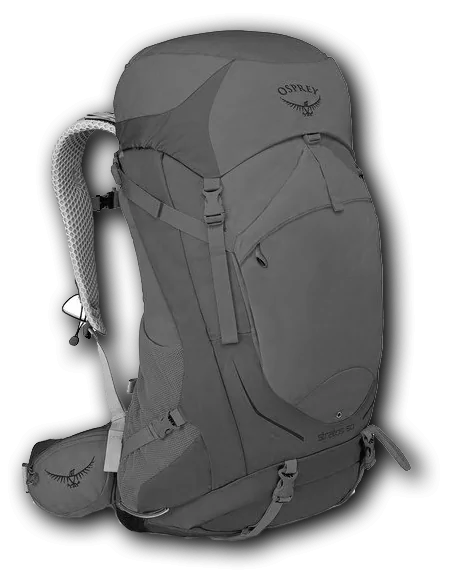
You will be hiking with a multi-day backpack that we provide. You’re also welcome to bring your own. The contents will be what you need for the trip – tent, sleeping bag, sleeping pad, clothing, rain gear, water, personal items, and a share of group food/gear.
ESTIMATED PACK WEIGHT: 45+ POUNDS
BRINGING YOUR OWN SLEEPING BAG
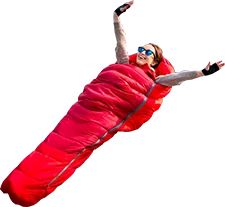 Some guests choose to bring their own sleeping bag. We supply high quality, synthetic fill bags that are professionally laundered after every trip. Synthetic fill is non-allergenic, insulates when damp and stands up well to repeated washings, but is heavier and bulkier than down. If you’re able to bring your own down sleeping bag, there are multiple benefits. If not, we’ve got you covered!
Thinking about purchasing a sleeping bag for your trip? Take a look at our Best Sleeping Bags Guide for our top suggestions.
SLEEPING BAG TEMPERATURE RATING NEEDED FOR THIS TRIP: 0-15° F
Check The Weather Forecast For Your Trip
We recommend using NOAA’s website (www.weather.gov) for the most accurate 5-day weather forecasts. Click here to see a forecast for Yellowstone National Park.
Being a Northern mountain environment, Yellowstone is prone to sudden temperature and weather shifts. This is an exciting aspect of being in Yellowstone. On the Spring/Fall Trekking Adventure in June, snow is a slight possibility, and the rest of the summer you’re likely to get rained on at least once during your trip. To be fully prepared, please follow the recommended clothing list closely (this list comes as part of your trip packet when you register). See below for average summer temperatures in Yellowstone:
Average Temperatures (Fahrenheit)
| Month | High | Low |
|---|---|---|
| June | 70° | 42° |
| July | 80° | 47° |
| August | 78° | 45° |
| September | 68° | 37° |
Guide Shifts

Guides are required to take 10-12 hours off each 24-hour period to sleep, recuperate, take personal time, take rest breaks…etc. and be uninterrupted for a minimum of 8 hours each night. We ask guests to respect these requirements and to not interrupt guides’ off time and sleep time unless there is a true emergency.
Tipping Your Guide
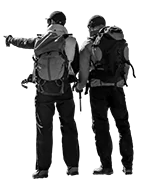

Tipping your guide is greatly appreciated! Wildland guides, and outdoor/backcountry guides in general, do much more than lead guests down the trail. Although supported by amazing in-town staff, they often work independently in the field due to permit and logistical constraints. The guide is responsible for the group’s safety, menu planning (including dietary restrictions), cooking for the group, prepping and taking care of the gear, handling livestock (on stock-supported trips), driving, complying with government regulations, ensuring guest satisfaction, and generally making sure the tour runs smoothly. They wear many hats and are extraordinary at what they do!
The industry standard tip amount for hiking and backpacking guides is between 10% and 20% of the tour cost per person, depending on your level of satisfaction. If you have any questions about tipping, feel free to call us 7 days a week at 800-715-HIKE (4453)!
Group Travel
Please take the time to clearly understand the trip you’re registering for, and select a tour that matches your ability level.
It is possible there will be a discrepancy in fitness levels on your trip. Consider that the trip may be a once in a lifetime opportunity for your fellow travelers and it is important to respect each guest’s individual condition, needs and desires.
Finally, guided groups are required by land management agencies to stay together on the trail. Hiking together can require patience and flexibility. If hiking at a very specific pace is extremely important to you, you may want to consider booking a private trip.
Essential Eligibility Criteria
Essential Eligibility Criteria (“EEC”) have been specifically identified to help you understand the skills and abilities necessary to participate on each Wildland trip, and they apply uniformly to all potential trip participants, irrespective of the presence or absence of any disability.
Once you identify a trip in which you may be interested, please carefully review the EEC and itinerary details. If after reviewing the EEC that apply to your desired trip, you determine you need an accommodation in order to meet the EEC, please contact us prior to registering to discuss your requested accommodation.
The EEC exist for your own safety and the safety and enjoyment of all participants. If you are unable to meet the EEC for the trip, with or without an accommodation, you are not eligible for that trip. If you register and arrive for a trip for which you do not meet the EEC, you will be disqualified from participation on the trip and will be dismissed or evacuated from the trip without a refund.